
UBIGENE

Comprehensive CRISPR Gene Editing Solutions to Power Your Research: KO Cell Lines, CRISPR Screen & More

CRISPR-iScreen™ Screening

Integrated CRISPR screening solution that connects all steps of the workflow, enabling efficient, high-throughput genetic target discovery and functional analysis.

Chat with an Expert

CRISPR Screening Service

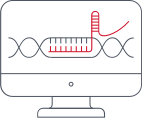
CRISPR libraries are high-throughput gene screening platforms based on the CRISPR/Cas9 system. Through functional screening, enrichment, and deep sequencing analysis, this approach enables the identification of phse, high knockout efficiency, and minimal off-target effects, CRISPR library screening has become a preferred platform for large-scale functional genomic studies.

Exploring the CRISPR/Cas9 Library: Precision Targeting to Uncover Essential Genes>>


Application

Know more about CRISPR-Cas9 Screening

More Details

Based on its proprietary CRISPR-iScreen™ technology, Ubigene provides comprehensive, one-stop CRISPR screening services, including CRISPR-KO, CRISPRa, and CRISPRi customized libraries. The platform supports the entire experimental workflow — from high-throughput sgRNA library construction, viral packaging, and cell transduction, to drug selection, high-throughput sequencing, and bioinformatic data analysis.In addition to in vitro studies, Ubigene also offers in vivo CRISPR screening services to enable more physiologically relevant target discovery. Multiple delivery options are available to meet diverse research needs.

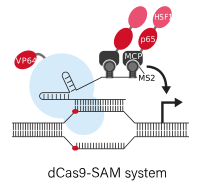
CRISPRa Library
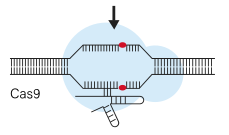
CRISPR-KO Library
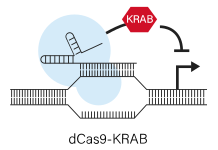
CRISPRi Library

Ubigene CRISPR-iScreen™ Technique

CRISPR-iScreen™ is antechnology independently developed by Ubigene, designed to enable efficient and precise CRISPR screening. This technology provides researchers with a powerful and reliable tool for gene function studies and drug target discovery.

Proprietary High-Efficiency Competent Cells

Fully Optimized Cell Pool Preparation Process

Diversified CRISPR Screening Platforms

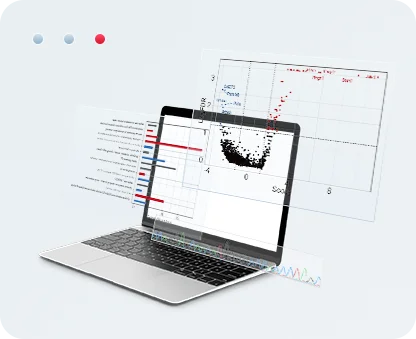
iScreenAnlys™ CRISPR Library Analysis System

*For research use only. Not intended for human or animal clinical trials, therapeutic or diagnostic use.

CRISPR Screening Services Overview

CRISPR Library Plasmid

Ubigene's CRISPR library plasmid services encompass gRNA design, primer array synthesis, vector assembly, plasmid preparation, and NGS-based validation, ensuring >99% coverage and <10% uniformity deviation. A portfolio of 35+ off-the-shelf library plasmids is also available, enabling flexible experimental design and supporting high-throughput CRISPR screening.

Virus & Cell Pool

Ubigene employs a third-generation, high-safety viral packaging system to produce viruses with titers of ≥1×10⁸ TU/ml. Low multiplicity-of-infection (MOI) transduction enables the construction of high-quality pooled cell libraries, supporting direct drug screening. Over 400 off-the-shelf library Cell Pools are also available, providing flexibility and efficiency for large-scale functional screening experiments.

In vitro Screening

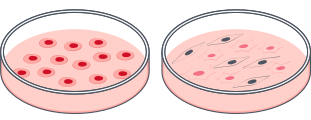
By integrating various selective pressures and phenotypic enrichment methods, Ubigene develops tailored functional screening pipelines. The multifaceted phenotypic screening platform enables precise adaptation to diverse experimental requirements, supporting high-throughput and efficient discovery of critical genetic targets.

In Vivo Screening

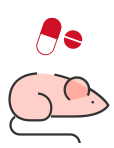
In vivo CRISPR library screening allows the faithful replication of physiological microenvironments and dynamic biological processes, facilitating the accurate determination of gene function in vivo. Ubigene has successfully executed multiple in vivo screening studies, delivering reliable technical support for functional genomics and therapeutic target discovery.

NGS Sequencing

DNA is extracted from Baseline, negative control (NC), and experimental samples for next-generation sequencing (NGS) and gRNA differential analysis. Ubigene's platform facilitates the accurate identification of candidate targets, providing robust support for functional genomics and drug discovery studies.

CRISPR Screening Workflow

Prepartion Stage

gRNA design

Chip synthesis of Oligo Pool
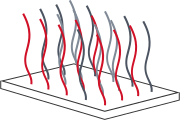
Plasmid construction
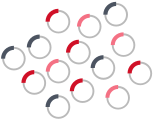
Lentivirus packaging
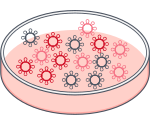
Screening Stage

Cell Pool Construction (Cell infection by lentiviral library)
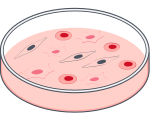
Cell screening (Positive or negative screening byapplying screening pressure)

Analysis Stage

PCR amplification

Sequencing

Analyze the data and find out candidates
Application

Explore a practical example of CRISPR screen workflows and applications

More Details
CRISPR-iScreen™ Library Plasmid
35+

Plasmid coverage>99%, uniformity<10

Learn more
CRISPR-iScreen™ Library Virus
150+

Strong activity, high titer, ready-to-use

Learn more
CRISPR-iScreen™ Library Cell Pool
400+

Cell coverage rate up to 99%

Learn more

Case Studies

Screening functional genes of tumor

Negative screening of gene pairs with synthetic lethality

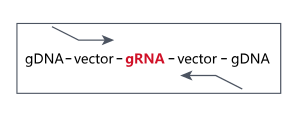
Synthetic lethality refers to the phenomenon that when two non-lethal mutant genes occur alone, they will not cause cell death, but when they occur simultaneously, they will cause cell death, which is one of the new research directions in the field of antitumor drugs. Because tumor cells often carry many point mutations, how to specifically kill tumor cells with high mutation rate without affecting normal cells is a major pursuit of antitumor drug research and development. Starting from the idea of synthetic lethality, Shen et al [2] designed a dual-gRNA library to screen the synthetic lethal interaction network. Different from the general sgRNA library, each vector in the dual-gRNA library contains two gRNAs, one targeting common mutated tumor suppressor genes in tumors and the other targeting genes that can be perturbed by anticancer drugs. They used this system to screen 73 genes in three experimental cancer cell lines (human cervical cancer HeLa, lung cancer A549 and embryonic renal cell carcinoma 293T), with a total of about 150000 gene combinations. By detecting gRNA abundance changes at different time points, they further analyzed and screened 120 synthetic lethal interactions, providing new targets for the development of new cancer drugs.

View Picture

View Picture

Viral infection related study

Screening of HIV therapeutic targets

AIDS caused by HIV infection is a serious threat to human life and health. It is of great significance to clarify the molecular mechanism of HIV breaking through the host cell defense system and develop new targets for HIV treatment. Park et al. [3] infected cas9 virus on CCRF-CEM cells stably expressing CCR5 hygR and HIV-1 LTR-GFP, and screened a clone (GXRCas9 cell) that highly expressed CCR5 before HIV infection and low expressed EGFP but high expressed EGFP after infection as a tool cell for screening HIV infection targets. Specifically, GXRCas9 cells were infected with a lentiviral library containing 187536 sgRNAs (targeting 18543 genes), and these T cells lacking different receptors were infected with the HIV virus strain JR-CSF. Then, GFP negative and positive T cells were sorted out by flow cytometry, and the GFP negative cell population and the uninfected HIV virus cell population were sequenced to analyze the difference in sgRNA abundance between the two groups of cells. Finally, five genes with the largest change in sgRNA abundance were screened out. Among them, CD4 and CCR5 are the receptors of HIV-infected T cells. TPST2 and SLC35B2 modify CCR5 to facilitate the binding of HIV, while the gene encoding leukocyte adhesion factor ALCAM is related to the transmission of HIV between cells. The five genes screened do not affect the survival of T cells after being knocked out, but can make T cells resist HIV infection. Therefore, these five genes can be used as potential targets for HIV treatment, providing new ideas and ways for the prevention and treatment of AIDS.

View Picture

Antibody target screening

Recognition of monoclonal antibody specific target antigens and their epitopes

It is quite simple to use peptides or purified proteins to verify antibodies in immune experiments, but it is relatively difficult to use whole cells or other complex antigens to verify antibodies. If no antibody reactivity is detected in Western blotting and immunoprecipitation, a variety of gene manipulation level techniques need to be applied to determine the antigen specificity of mAbs. BF4 is an antibody that can bind to the viral biofilm on the surface of uninfected lymphocytes, neutrophils and HTLV-1 infected cells. Zotova et al [4] used MT2 cells (human T cell lymphotropic virus type I HTLV-1 chronically infecting T cells) as immunogen to trigger mouse immunity and obtained a HTLV-1 biofilm specific monoclonal antibody BF4. Based on the idea of screening BF4 antigen knockout cells by transducing CRISPR knockout library into BF4 positive cells, they transduced GeCKO library to CEM T and Raji/CD4 B cells to sort out cells that did not bind to BF4. After two rounds of repeated sorting, the proportion of negative cells reached more than 99%. Researchers sequenced these cells and found that about 80% of sgRNAs targeted CD82. BF4 was confirmed to be a specific antibody against CD82.

View Picture

Signal pathway

Studying the mechanism of pyroptosis

Pyroptosis is an immune defense response initiated by the body after sensing the infection of pathogenic microorganisms. Inflammation-activated caspase-1 and caspase-4, Caspase-5 and caspase-11, which recognize bacterial lipopolysaccharide, can cause pyroptosis, but the mechanism remains unknown. Shi et al [5] first established a lipopolysaccharide (LPS) electroporation method that can induce pyroptosis in more than 90% of cells, and then transduced the CRISPR knockout library into Tlr4-/- iBMDMs that can normally respond to lipopolysaccharide stimulation, and sequenced the cells that survived pyroptosis induced by lipopolysaccharide. The analysis results showed that four of the five sgRNAs targeting gasdermin D (GSDMD) gene had the top 30 copy numbers, and two of them were in the top 10 positions. The subsequent results also further proved that the N-terminus of GSDMD could induce pyroptosis. In summary, researchers used CRISPR library to conduct genome-wide genetic screening, successfully screened the gene GSDMD that can inhibit pyroptosis after knockout, and clarified the molecular mechanism of GSDMD as an inflammatory caspase substrate protein that can trigger pyroptosis after being cleaved.

View Picture

View Picture

FAQs

1. Why is CRISPR screening important for gene function studies?

Traditional gene function studies mainly rely on forward genetics and reverse genetics. Forward genetics, often based on high-throughput multi-omics analyses, is expensive and makes it difficult to establish a direct link between gene targets and phenotypes. Reverse genetics involves direct gene perturbation at the cellular or organismal level, enabling clear causal relationships between genes and phenotypes. However, it can be costly, labor-intensive, and heavily dependent on prior knowledge. CRISPR library screening combines the high-throughput capacity of forward genetics with the causal clarity of reverse genetics, allowing researchers to unbiasedly identify phenotype-associated functional targets from large gene sets. This makes it a powerful and efficient tool for large-scale functional genomics research.

2. What are the key advantages of CRISPR library screening?

  • Establishes a direct causal relationship between genes and phenotypes
  • Enables unbiased, systematic functional exploration across a large number of genes
  • Flexible and highly customizable screening systems
  • Scalable with broad applicability of screening data
  • Cost-effective and efficient for large-scale functional studies
  • Features high specificity and low off-target effects

3. What research areas commonly use CRISPR library screening?

CRISPR screening is widely applied in oncogenesis, drug resistance, and viral infection studies to identify key genetic targets. It is also used to explore unknown gene functions in areas such as signaling pathways, immunology, and metabolism. In addition, CRISPR library screening can be adapted and optimized for more complex research systems, including stem cell models and aging studies, expanding its potential across a broad range of biological and disease research fields.

4. What is the CRISPR screening in T cells?

CRISPR screening in T cells uses gRNA libraries to target genes. T cells with altered genes are exposed to selection pressures like immune stimuli. This helps identify genes vital for T - cell functions such as activation and antigen recognition, advancing understanding of T - cell biology and immunotherapy.

5. What is the difference between RNA sequencing and CRISPR screen?

In summary, RNA-seq measures gene expression levels, while CRISPR screens identify functional roles of specific genes through genetic perturbation.
Learn more about their differences: Target Screening: CRISPR Library vs Traditional Omics

6. What is the result of the CRISPR screening?

CRISPR screening results in identifying genes linked to a specific phenotype. gRNA libraries target genes for disruption or activation. After selection based on the phenotype, gRNAs in surviving/altered cells are sequenced. In knockout screens, disrupted genes affecting survival are found; in activation screens, activated genes causing a phenotype are identified. This reveals gene functions, pathways, and potential therapeutic targets.

7. How long does it take to do a CRISPR screen?

The duration of a CRISPR screen can vary significantly depending on the type of screen and specific experimental conditions. Here are general timelines for positive and negative CRISPR screens:

  • Positive CRISPR Screens• Typical Duration: 1-2 weeks.
  • Negative CRISPR Screens• Typical Duration: 3-4 weeks.

Key Considerations

  • Library Complexity: Ensure the initial cell population is large enough (e.g., 500x library complexity) to maintain sgRNA representation.
  • Antibiotic Selection: Start antibiotic selection 72 hours after transduction to stabilize transduced cells.
  • Genetic Drift: Avoid prolonged culture periods to prevent genetic drift, which can obscure results.

The exact duration may vary based on cell type, growth rates, and specific experimental conditions.

8. How much does the CRISPR library cost?

Time-limited special offer $299 get 100ug CRISPR library plasmid. Contact us now

References

[1]Shalem O, Sanjana NE, Hartenian E, Shi X, Scott DA, Mikkelson T, Heckl D, Ebert BL, Root DE,Doench JG, Zhang F. Genome-scale CRISPR-Cas9 knockout screening in human cells. Science.2014 Jan 3;343(6166):84-87. doi: 10.1126/science.1247005. Epub 2013 Dec 12. PMID: 24336571; PMCID: PMC4089965.
[2]Shen JP, Zhao D, Sasik R, Luebeck J, Birmingham A, Bojorquez-Gomez A, Licon K, Klepper K,Pekin D, Beckett AN, Sanchez KS, Thomas A, Kuo CC, Du D, Roguev A, Lewis NE, Chang AN,Kreisberg JF, Krogan N, Qi L, Ideker T, Mali P. Combinatorial CRISPR-Cas9 screens for de novo mapping of genetic interactions. Nat Methods. 2017 Jun;14(6):573-576. doi: 10.1038/nmeth.4225. Epub 2017 Mar 20. PMID: 28319113; PMCID: PMC5449203.
[3]Park RJ, Wang T, Koundakjian D, Hultquist JF, Lamothe-Molina P, Monel B, Schumann K, Yu H, Krupzcak KM, Garcia-Beltran W, Piechocka-Trocha A, Krogan NJ, Marson A, Sabatini DM, Lander ES,Hacohen N, Walker BD. A genome-wide CRISPR screen identifies a restricted set of HIV host dependency factors. Nat Genet. 2017 Feb;49(2):193-203. doi: 10.1038/ng.3741. Epub 2016 Dec 19.PMID: 27992415; PMCID: PMC5511375.
[4]Zotova A, Zotov I, Filatov A, Mazurov D. Determining antigen specificity of a monoclonal antibody using genome-scale CRISPR-Cas9 knockout library. J Immunol Methods. 2016 Dec;439:8-14.doi: 10.1016/j.jim.2016.09.006. Epub 2016 Sep 21. PMID: 27664857.
[5]Shi J, Zhao Y, Wang K, Shi X, Wang Y, Huang H, Zhuang Y, Cai T, Wang F, Shao F. Cleavage of GSDMD by inflammatory caspases determines pyroptotic cell death. Nature. 2015 Oct 29;526(7575):660-5. doi: 10.1038/nature15514. Epub 2015 Sep 16. PMID: 26375003.

Contact Us

Simply fill out the form below to leave your inquiry
— we will respond within 24 Hours

* Name

* Email

* Institution

* Products & Services of Interest

If email is not available, how else can we reach you?

How did you hear about us?

Logo
E-mail: info@ubigene.com
WhatsAPP: +86 153 6067 3248
TEL: +86 153 6067 3248(Int'l)
Copyright © 2025 Ubigene. All rights reserved.