

KMT2D Knockout cell line (SK-MES-1)

Red cotton OmniCell bank

 Online inquire
Overview
CRISPR knockout cell lines are engineered through targeted genome editing to eliminate gene function, supporting studies of cellular biology, disease mechanisms, and drug discovery.
KMT2D (lysine methyltransferase 2D) encodes a histone methyltransferase that catalyzes methylation of lysine 4 on histone H3. It functions as part of the ASCOM transcriptional regulatory complex and contributes to regulation of genes including beta-globin and estrogen receptor targets. Mutations in KMT2D cause Kabuki syndrome, making it relevant to studies of histone modification, transcriptional regulation, and developmental biology.
SK-MES-1 is a human lung squamous cell carcinoma cell line established from the pleural effusion of a 65-year-old male patient with lung squamous cell carcinoma in 1970. The cell line is widely used as a model for studying lung squamous cell carcinoma biology, tumor progression, molecular mechanisms, and evaluation of anticancer therapies.
Before delivery, each clone is authenticated by STR, tested for sterility and mycoplasma, and genotype‑verified by two‑round PCR‑sequencing. Comprehensive QC data accompany every shipment to support reproducible research.

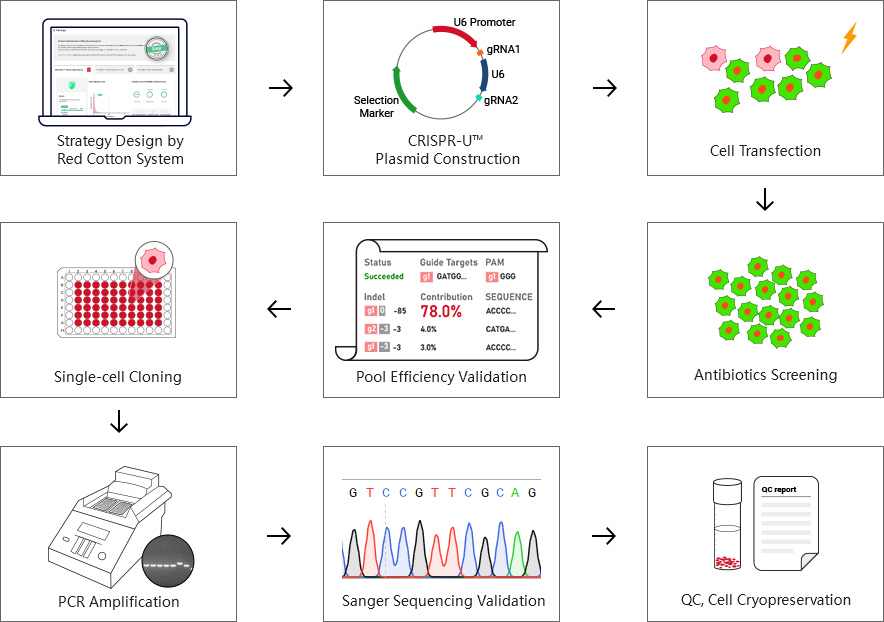
Product Overview
Key Advantages

Cas9 cell lines in our cell bank can stably express Cas9 protein. Each Cas9 Stable Cell Line is easy to use and enables gene knockout simply by transfecting gRNA, while transfection of gRNA and donor DNA results in gene knock-in or point mutations

These Cas9 stable cell lines have been used to construct the KO cell lines for various genes, gene KO efficiency 5-10 times improved.

Selected cells, low passages, good cell condition, high activity, applicable for all kinds of gene-editing experiments.
Quality Control Specifications

Intended use
For research use only. Not intended for human or animal clinical trials, therapeutic or diagnostic use
Unpacking and Storage Instructions
Handling procedure
References
FAQ
Related Popular Products
 Download


Contact Us
Simply fill out the form below to leave your inquiry
— we will respond within 24 Hours
* Name
* Institution
* Products & Services of Interest
If email is not available, how else can we reach you?
How did you hear about us?