

UBIGENE

Comprehensive CRISPR Gene Editing Solutions to Power Your Research: KO Cell Lines, CRISPR Screen & More

Luciferase Reporter Cell Lines Service

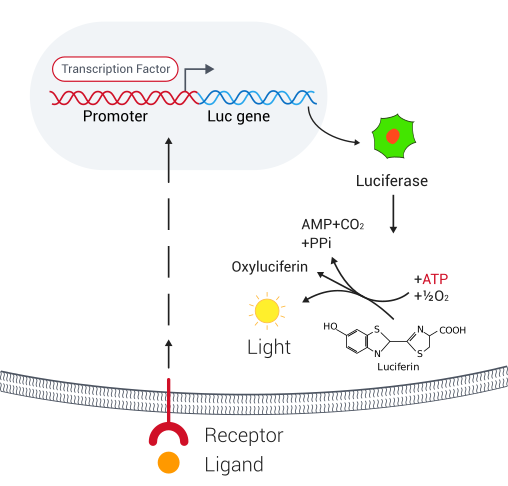
Ubigene's reporter cell lines couple pathway-specific response elements with reporter genes. Pathway activation drives reporter expression, enabling quantitative measurement of signaling activity via reporter protein or fluorescence readouts.

Chat with an Expert

Luciferase Reporter Cell Lines

Our cell lines feature the firefly luciferase reporter system, a trusted and widely used tool for studying cell signaling pathways. In these cells, the firefly luciferase gene is placed under the control of a response element specific to your pathway of interest. When the pathway is activated, transcription factors bind to the response element, triggering luciferase expression. Consequently, quantitative analysis of pathway activity can be precisely achieved by measuring downstream reporter protein activity or fluorescence intensity.

Reporter cell lines are established by stably integrating reporter constructs (e.g., fluorescent proteins, luciferases) into the host cell genome. This approach permits real-time, quantitative monitoring of intracellular signaling dynamics and transcriptional activity. With key advantages including precise quantification and outstanding sensitivity, these cell lines are widely used in diverse research areas, including signal transduction studies, drug screening, target validation, receptor activation studies, and mechanistic research.

Application
Signaling pathway mechanism research
High throughput drug screening and efficacy evaluation
Receptor-ligand interaction studies
In vivo imaging and in vivo tracking
Studies on Gene Expression Regulation and Epigenetics
Luciferase (Luc) Stable Cell Line
Generated using lentiviral transduction technology, capable of stably expressing Firefly Luciferase (Luc).
300+ Luc Stable Cell Line|As Fast as 1 wks

Luciferase Reporter Cell Line Service Detail

Cell type

Tumor cells, conventional cell lines

Modification Method

Lentiviral transduction

Delivery

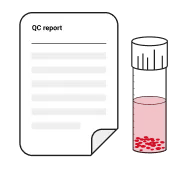
1.Cryopreserved cells 2. Quality control (QC) report.

Quality Control (QC)

Functional activity validation data (critical data including dose-response curves modulated by signaling pathway activators or inhibitors).

Turnaround Time / Price

Please inquire for details.

Additional Quality Metrics

Verified via STR profiling; tested for bacteria, fungi, and mycoplasma; tested for post-thaw cell viability.

* All delivered experimental results and products are strictly limited to research use only and cannot be applied in diagnosis, therapeutics, clinical settings, or other non-research purposes.

Technical Advantages

High-Efficiency Precision Gene Editing Platform:
Utilizing the proprietary EZ-editor™ platform coupled with extensive expertise in genome editing and transcriptional regulation, ensuring high efficiency and precision during the integration of response elements.
High-Efficiency Precision Gene Editing Platform:
Extensive Repository of Cell Types
Successful generation of over 10,000 gene-edited cell lines, covering a wide variety of common as well as hard-to-transfect cell types to satisfy diverse customization requirements.
Extensive Repository of Cell Types
Strict Sterile QC System
Detection for 75 common and rare mycoplasma species, ensuring contamination-free cultures and exceptional batch-to-batch reproducibility.
Strict Sterile QC 
System
Comprehensive Validation Platform
Supported by a multi-parametric phenotypic analysis analysis platform for robust functional activity validation of reporter gene cell lines.
Comprehensive Validation Platform

Workflow and Quality Control

1. Lentiviral vector construction

2. Lentiviral transduction

3. Antibiotic selection for stable polyclonal cell pools
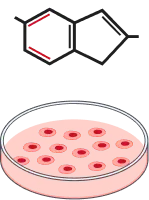
4. Functional activity validation

5. Product delivery
Case Studies

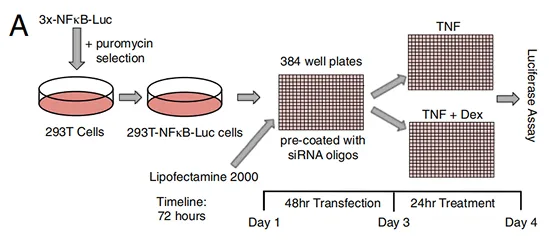
1. Tumor suppressor protein p53 is a regulator of NF-κB repression by the glucocorticoid receptor
Utilized Reporter Cell Lines:
Cell lines engineered for stable expression of the NF-κB luciferase reporter, including:
293T Cells: Stably transfected with a 3x NF-κB-luc reporter construct.
THP-1 Cells (Human Monocytic Cell Line): Lentivirally transduced with a 5x NF-κB-luc-mPGK-mCherry reporter construct.
Application:
These reporter models were deployed in a high-throughput siRNA screen to identify novel genetic modulators of glucocorticoid receptor (GR)-mediated repression of NF-κB activity. The study successfully identified and validated p53 as a critical regulatory factor in GR-mediated NF-κB inhibition, uncovering a novel molecular mechanism underlying inflammation and glucocorticoid resistance within the tumor microenvironment.

View Picture

Figure 1. Operational workflow and schematic diagram of the NF-κB luciferase reporter cell line.

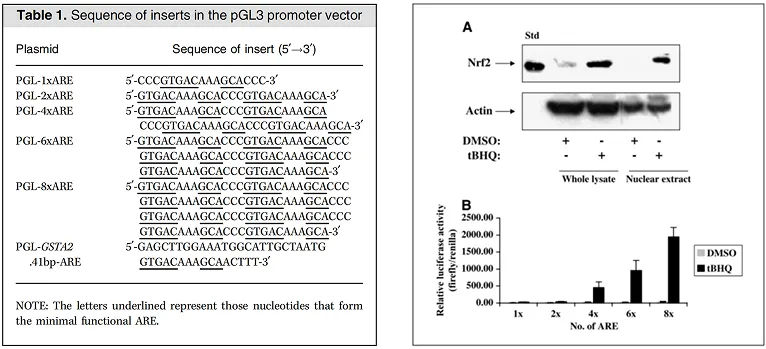
2. Generation of a Stable Antioxidant Response Element-Driven Reporter Gene Cell Line and Its Use to Show Redox-Dependent Activation of Nrf2 by Cancer Chemotherapeutic Agents
Utilized Reporter Cell Lines:
Development of an ARE (Antioxidant Response Element)-driven luciferase reporter line derived from human breast cancer MCF7 cells, designated as AREc32. The construct contains eight tandem repeats of the ARE core sequence (derived from the rat GSTA2 and mouse gsta1 promoters) upstream of an SV40 promoter driving firefly luciferase expression. This cell line exhibits high sensitivity to Nrf2 activators (e.g., t-BHQ, sulforaphane), yielding a 10- to 50-fold induction range.
Application:
Deployed for the screening and validation of Nrf2-ARE pathway activators, including established antioxidants, electrophilic compounds, and select chemotherapeutic agents.
Investigated the modulating effects of cellular redox status (e.g., GSH depletion and antioxidant intervention) on ARE transcriptional activity.
Profiled the inductive capacity of various chemotherapeutic agents (including cisplatin, melphalan, carmustine, and chlorambucil) on ARE activity, evaluating whether pre-treatment with the GSH synthesis inhibitor BSO potentiated this induction.

View Picture

Figure 2. Construction, characterization, and validation of the Nrf2-ARE luciferase reporter cell line.
to-top

Contact Us

Simply fill out the form below to leave your inquiry
— we will respond within 24 Hours

* Name

* Email

* Institution

* Products & Services of Interest

If email is not available, how else can we reach you?

How did you hear about us?

Logo
E-mail: info@ubigene.com
WhatsAPP: +86 153 6067 3248
TEL: +86 153 6067 3248(Int'l)
Copyright © 2025 Ubigene. All rights reserved.