


Gene Overexpression Cell Line Service
Gene overexpression cell lines are important tools for studying gene function, disease mechanisms, and drug action. By increasing the expression level of a specific gene, they enable functional enhancement of the gene. They can also be applied in rescue experiments to validate phenotypic recovery following gene knockout.
Overexpression vectors are introduced into cells via lentiviral infection or nucleofection. Cells are then subjected to compound selection based on an optimized concentration until all control cells are eliminated, resulting in stable gene-expressing cell lines. Ubigenetech's proprietary EZ-OE™ technology differs from conventional lentiviral or transposon-based methods by enabling site-specific genomic integration and single-copy insertion, while offering lower cost and faster turnaround.



EZ-OE™ Technology introduction
Ubigene's proprietary EZ-OE™ technology is a genome engineering platform that enables precise and stable integration of exogenous DNA without the use of viruses, ensuring safe and efficient gene expression. This technology provides research and industrial customers with safe, stable, and high-expressing cell lines, accelerating gene function studies, protein expression optimization, and the screening and evaluation of candidate therapeutics.

Multiple Vector Systems Available
A variety of transfection methods are available, including lentiviral, plasmid, and electroporation, providing flexible options to match different cell types.
Selectable Markers: EGFP, mCherry, Luciferase, Puromycin, Neomycin, and others.

Extensive Experience
Over 300 successful gene editing projects delivered, providing stable and reliable overexpression cell lines.

Comprehensive Quality Control
Multi-dimensional validation, including RT-qPCR, ensures accurate gene overexpression or knockdown efficiency.

Broad Cell Type Coverage
Compatible with cancer cell lines and standard cell types, supporting a wide range of experimental models.
Overexpression Cell Line Service

Cell type
Various types of cells including tumor cell lines, regular cell lines

Deliverables
Cell pool/Single-cell clone

Turnaround
Please Inquire

Price
Start from $2145
 Contact Us
 Digestive System

Endocrine System

Respiratory System

Reproductive System

Circulatory System

Blood and lymphatic System

Brain and Nervous System

Urinary System

Skeleton, Articulus, Soft Tissue, Derma System

Stem Cell Lines

Ocular, Otolaryngologic and Oral System

Workflow
Plasmid with Selection Marker
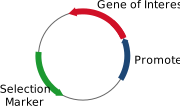

Cell Transfection/ Infecting

Selection

Expansion
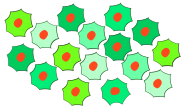
Clone Expansion & Single - cell Clone Isolation
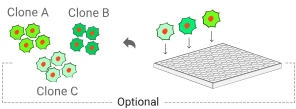
Expression Detection
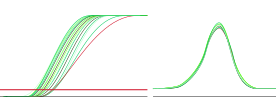
QC and Cryopreservation
Plasmid with Selection Marker
Cell Transfection/ Infecting
Selection
Expansion
Clone Expansion & Single - cell Clone Isolation
Expression Detection
QC and Cryopreservation
Representative publications
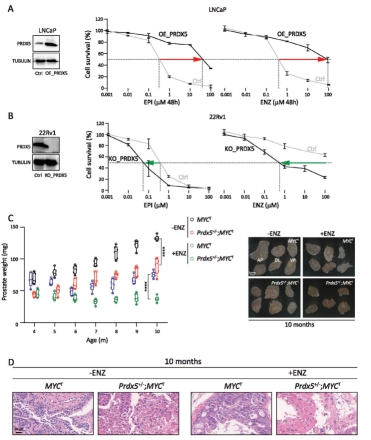
Overexpressing PRDX5 protein on LNCaP cell line
IF=15.1
Advanced Science
Identification of PRDX5 as A Target for The Treatment of Castration-Resistant Prostate Cancer
Recently, Dr. Rong Wang, from a research group led by Professor Yong Q Chen from Jiangnan University, China, published a research paper titled "Identification of PRDX5 as A Target for The Treatment of Castration-Resistant Prostate Cancer" on Advanced Science (IF=15.1). In this study, CRISPR-Cas9 PRDX5 knockout 22Rv1 cells and LNCaP cells with lentiviral overexpression of PRDX5 gene constructed by Ubigene were used to discover the new mechanism of PRDX5 affecting the progress of castration-resistant prostate cancer (CRPC) by regulating redox , and to explore the therapeutic effect of its targeting new small molecule drug Polaprezinc (POL) on CRPC in cells, animals and clinic. It provides a new target for clinical drug resistance of prostate cancer, and provides the possibility of new drugs combined with antiandrogen for patients with CRPC, so as to prolong the life cycle of patients with CRPC. View details
View Picture
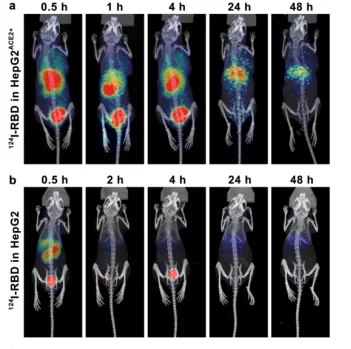
HeLa and HepG2 cell lines overexpressing ACE2
IF=8.2
Acta Pharmacologica Sinica
SARS-CoV-2 receptor binding domain radio-probe: a non-invasive approach for angiotensin-converting enzyme 2 mapping in mice
In order to verify the affinity of angiotensin-converting enzyme ACE at the cellular level, the author successfully constructed 124I-RBD as a novel targeted molecular probe for COVID-19 for the first time with the help of HeLa and HepG2 cell lines overexpressing ACE2 provided by Ubigene and confirmed that 124I-RBD antibody has high affinity and selectivity for ACE2 through the binding experiment of RBD and human ACE2 receptor. View details
View Picture
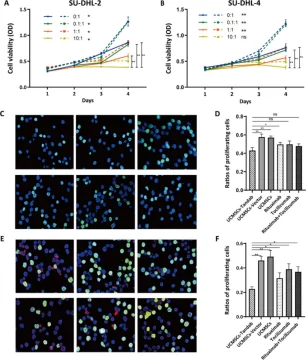
MSCs overexpression Tandab
IF=7.5
Stem Cell Research & Therapy
Construction of tandem diabody (IL-6/CD20)-secreting human umbilical cord mesenchymal stem cells and its experimental treatment on diffuse large B cell lymphoma
This paper uses the Tandab overexpression stable cell line constructed by Ubigene and empty control stable cell line to study the therapeutic effect of Tandab overexpressing MSCs on diffuse large B-cell lymphoma (DLBCL). The results showed that Tandab(IL-6/CD20) protein could target CD20-positive DLBCL cells, inhibit IL-6-related signaling pathway, and eliminate the promoting effect of IL-6 on lymphoma cells, which provided a potential strategy for the treatment of DLBCL. View details
View Picture
CT26 cells overexpressing luciferase
IF=5.2
Cancers
Gas Flow Shaping via Novel Modular Nozzle System (MoNoS) Augments kINPen-Mediated Toxicity and Immunogenicity in Tumor Organoids
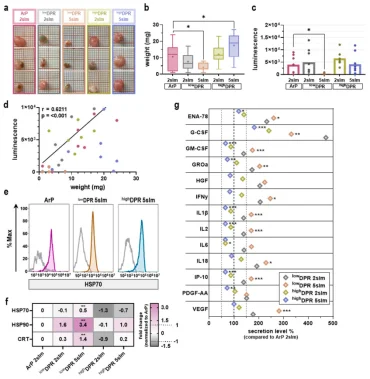
Gas plasma is a new tool for cancer treatment, among which the cold plasma jet kINPen has the most significant function. This study developed the MoNoS system to improve the flow properties of kiNPen using mouse CT26 cells overexpressing luciferase provided by Ubigene as research materials. Research has found that under clinically relevant raw gas flux, kINPen therapy adapted to MoNoS can significantly reduce cancer cell growth and increase tumor immunogenicity, while verifying its safety. This result further demonstrates the feasibility of using flow-shaping adapters (such as MoNoS) to enhance gas plasma jet therapy for cancer. View details
View Picture
 Promotions