
UBIGENE

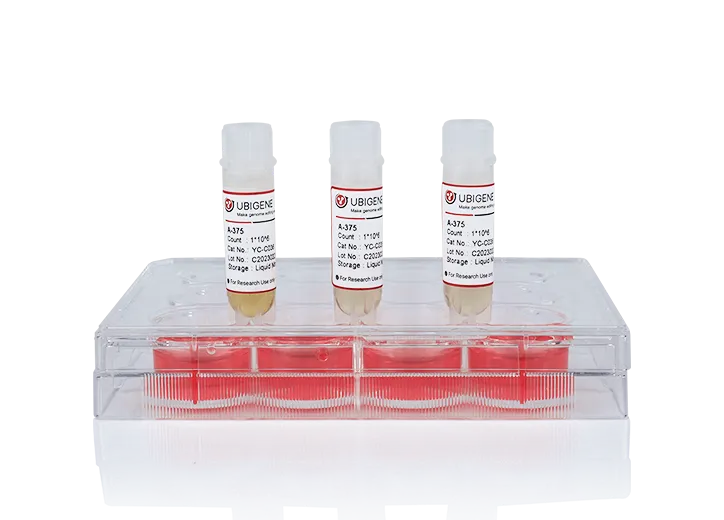
Syk Knockout cell line (BV2)

banner

Red cotton OmniCell bank

10000+
Gene Knockout Cell Lines
2000+
Luc/EGFP/Cas9 Tool Cell Lines
1000+
Wild-type Cell Lines
Syk Knockout cell line (BV2) WB 1490
Copy Product Info
Catalog#
YKO-M202
Species
Mouse
Target Cell Line
BV2
Size
1*10^6
Gene
Syk
Storage conditions
Shipped on dry ice; Store in liquid nitrogen

Overview

Gene knockout cell lines are generated using CRISPR-Cas9 based technology to precisely disrupt target genes, enabling functional genomics research, disease modeling, and target validation.

The BV2 cell line is a widely utilized murine microglial model derived from v-raf/v-myc-immortalized neonatal mouse microglia. Characterized as a premier in vitro system for investigating central nervous system (CNS) pathophysiology, this model effectively retains critical morphological and functional features of primary microglia. Biochemically and phenotypically reactive, BV2 cells serve as a robust discovery platform for studying neuroinflammation pathways, neurodegenerative disease progression, and immune responses via active cytokine production, phagocytosis, and direct sensitivity to inflammatory stimuli.

Before delivery, each clone is authenticated by STR, tested for sterility and mycoplasma, and genotype‑verified by two‑round PCR‑sequencing. Comprehensive QC data accompany every shipment to support reproducible research.

KO Cell Construction Strategy
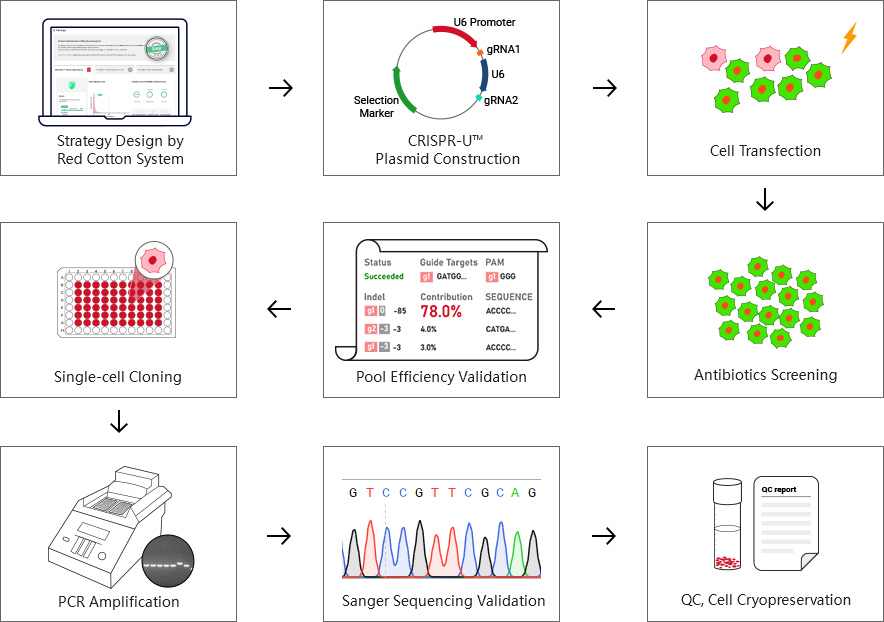
Adopting Red Cotton CRISPR Gene Editing Designer (www.rc-crispr.com), two sgRNAs targeting the Syk gene are designed to generate a knockout strategy. The two sgRNA sequences are subsequently cloned into the EZ-editor™ vector and introduced into BV2 cells via electroporation or lentiviral transduction. Single-cell clones are then generated using the limiting dilution method. Genomic DNA from individual clones is subjected to nucleic acid lysis and PCR amplification using the EZ-editor™ Monoclone Genotype Validation Kit (Cat# YK-MV-1000). The edited loci are further verified by Sanger sequencing to confirm the genotype. After secondary validation and quality confirmation, Syk Knockout cell line (BV2) is expanded and cryopreserved for downstream applications.
KO Cell Construction Strategy

Product Overview

Syk Knockout cell line (BV2)
The Syk Knockout cell line (BV2) is generated by targeted disruption of the Syk gene in BV2 cells. This cell line is designed to investigate the role of Syk in cellular function and gene regulation, as well as its potential involvement in disease-related pathways.
KO Cell Line
Syk Knockout cell line (BV2)
Gene ID
20963
Catalog
YKO-M202
Gene Name
Syk
Product Category
Knockout(KO) Cell Line
Gene Information
Species
Mouse
Mycoplasma test
Negative
Cell Morphology
Epithelial-like,?adherent
Catalog Status
-
Culture method
90% DMEM+10%FBS
Shipping
Cryopreserved Cells shipped in dry ice
Passage ratio
1:3~1:5
Storage Condition
Liquid nitrogen
Quality Control
All KO cell products are tested and confirmed to be free of bacterial, viral, mycoplasma contamination, and other adventitious agents.
Applications
For research use only. Not intended for use in diagnostic, therapeutic, clinical, or other applications.

Key Advantages

Easy to use
Easy to use

Cas9 cell lines in our cell bank can stably express Cas9 protein. Each Cas9 Stable Cell Line is easy to use and enables gene knockout simply by transfecting gRNA, while transfection of gRNA and donor DNA results in gene knock-in or point mutations

High-efficient KO
High-efficient KO

These Cas9 stable cell lines have been used to construct the KO cell lines for various genes, gene KO efficiency 5-10 times improved.

Curated cells
Curated cells

Selected cells, low passages, good cell condition, high activity, applicable for all kinds of gene-editing experiments.

Quality Control Specifications

1. Bacteria and Fungi Test
None Detected.
2. Mycoplasma test
Negative.
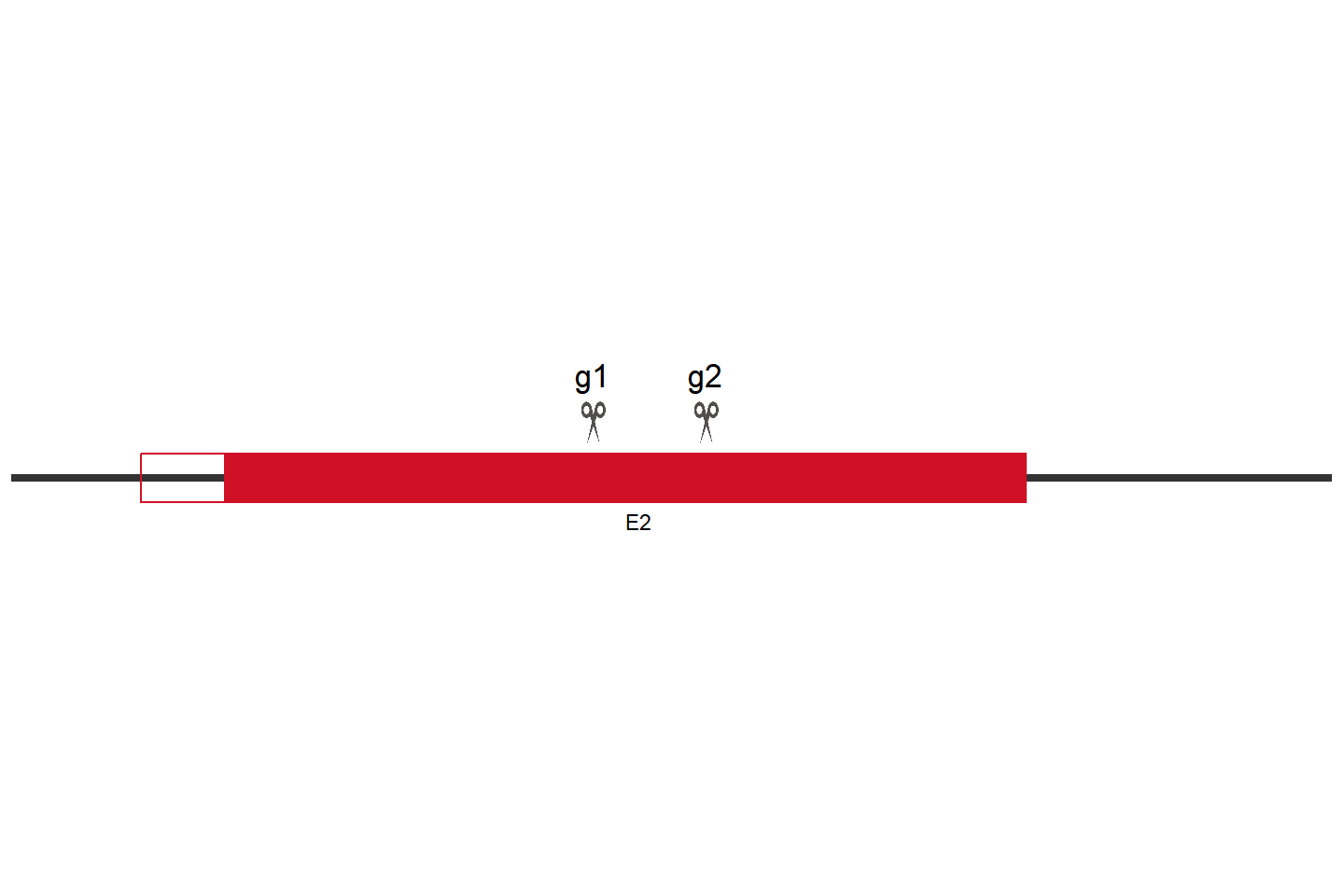
3. Knockout Strategy

Targeted knockout region: E2

Reference Transcript: Syk-203

Frameshift Mutation Strategy

4. STR Authentication

Intended use

For research use only. Not intended for human or animal clinical trials, therapeutic or diagnostic use

Unpacking and Storage Instructions

1.
Cell Reception
2.
Unpacking and storage instructions

Handling procedure

1.
Cell Thawing
2.
Cell Passaging
3.
Cell cryopreservation

References

FAQ

Q1. How to Contact Support if Issues Arise After Receiving the KO Cells?
If any abnormalities are observed after receiving the cells, please provide the following information based on the stage of use and contact us promptly for assistance:
(1) Issues upon delivery: Please provide photos of the cells at the time of receipt along with a brief description of the issue. We will offer after-sales support accordingly.
(2) Issues after thawing or passaging: Please provide microscopic images of the cells before and after thawing/passaging, along with a detailed description of the experimental procedures. Our technical team will provide professional support.
Q2. What Information Is Required When Reporting KO Cell Product Issues?
Q3. How Should the KO cell Product Be Stored Upon Receipt?
Q4. Shipping Method
Q5. Are the Knockout Cell Lines Stable for Passaging? Is Authentication Provided?

Related Popular Products

Wild-type Cell Lines
Mouse Microglia Cell Line (BV2)
Catalog#: YC-C035
Product Name: BV2
Instruction:
Size: 1*10^6
Classification: Brain & Nervous System
More
KO Cell Lines
SYK Knockout cell line (293T) WB 1490
Organism: Human
Gene Name: SYK
Gene ID: 6850
Size: 1*10^6
Catalog#: YKO-HT17178
More
SYK Knockout cell line (AC16)
Organism: Human
Gene Name: SYK
Gene ID: 6850
Size: 1*10^6
Catalog#: YKO-HB38461
More
SYK Knockout cell line (BEAS-2B)
Organism: Human
Gene Name: SYK
Gene ID: 6850
Size: 1*10^6
Catalog#: YKO-HB22978
More

Contact Us

Simply fill out the form below to leave your inquiry
— we will respond within 24 Hours

* Name

* Email

* Institution

* Products & Services of Interest

If email is not available, how else can we reach you?

How did you hear about us?

to-top
Logo
E-mail: info@ubigene.com
WhatsAPP: +86 153 6067 3248
TEL: +86 153 6067 3248(Int'l)
Copyright © 2025 Ubigene. All rights reserved.