

ZNF195 Knockout cell line (Caki-1)

Red cotton OmniCell bank
Overview
Ubigene gene knockout cell lines mediated by optimized CRISPR-Cas9 technology provide reliable in vitro models for investigating gene function, signaling pathways, disease mechanisms, and therapeutic targets.
ZNF195 (zinc finger protein 195) encodes a member of the Kruppel C2H2-type zinc finger protein family. Proteins in this family function as transcription factors that regulate gene expression through sequence-specific DNA binding. ZNF195 therefore is predicted to contribute to transcriptional regulation and cellular processes controlled by zinc finger-mediated modulation of gene expression.
The Caki-1 cell line was established in 1971 from a cutaneous metastasis of a kidney adenocarcinoma in a 49-year-old male patient. It is a human renal carcinoma cell line used as an in vitro model for studying kidney cancer biology and related molecular mechanisms.
Comprehensive quality control includes STR authentication, sterility testing (bacteria and fungi), and mycoplasma screening to ensure purity and performance. Genotype is confirmed by two rounds of PCR and Sanger sequencing, and complete validation reports are provided for make-to-order products.

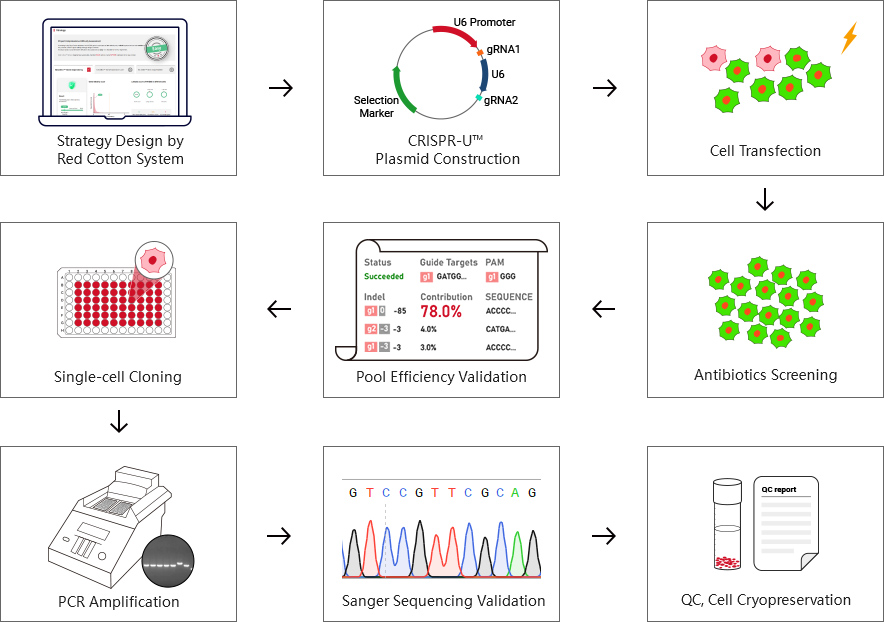
Product Overview
Key Advantages

Cas9 cell lines in our cell bank can stably express Cas9 protein. Each Cas9 Stable Cell Line is easy to use and enables gene knockout simply by transfecting gRNA, while transfection of gRNA and donor DNA results in gene knock-in or point mutations

These Cas9 stable cell lines have been used to construct the KO cell lines for various genes, gene KO efficiency 5-10 times improved.

Selected cells, low passages, good cell condition, high activity, applicable for all kinds of gene-editing experiments.
Quality Control Specifications


Targeted knockout region: EExon 2
Reference Transcript: NM_007152
Frameshift Mutation Strategy
 Download STR Report
Intended use
For research use only. Not intended for human or animal clinical trials, therapeutic or diagnostic use
Unpacking and Storage Instructions
Handling procedure
References
FAQ
Related Popular Products


Contact Us
Simply fill out the form below to leave your inquiry
— we will respond within 24 Hours.
* Name
* Institution
* Products & Services of Interest
If email is not available, how else can we reach you?
How did you hear about us?