

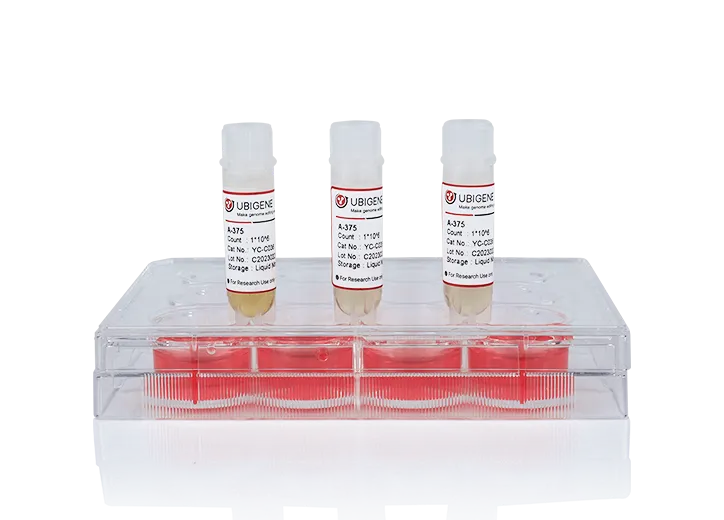
COMT Stable Expression Cell Line (THP-1)

Red cotton OmniCell bank
 download
Catechol-O-methyltransferase catalyzes the transfer of a methyl group from S-adenosylmethionine to catecholamines, including the neurotransmitters dopamine, epinephrine, and norepinephrine. This O-methylation results in one of the major degradative pathways of the catecholamine transmitters. In addition to its role in the metabolism of endogenous substances, COMT is important in the metabolism of catechol drugs used in the treatment of hypertension, asthma, and Parkinson disease. COMT is found in two forms in tissues, a soluble form (S-COMT) and a membrane-bound form (MB-COMT). The differences between S-COMT and MB-COMT reside within the N-termini. Several transcript variants are formed through the use of alternative translation initiation sites and promoters.
 For research use only. Not intended for human or animal clinical trials, therapeutic or diagnostic use.
| Sample Name | hCOMT-1CтMean | β-h_actinCтMean | ΔCтMean | ΔΔCт | Expression Rate |
|---|---|---|---|---|---|
| COMT Stable Expression Cell Line (THP-1) | 16.663 | 14.4 | 2.263 | -2.045 | 4.127 |
| THP-1_Ctrl(Puro) | 18.142 | 13.834 | 4.308 | 0.000 | 1.000 |
Intended use
For research use only. Not intended for human or animal clinical trials, therapeutic or diagnostic use
Unpacking and Storage Instructions

Handling procedure
Product Advantage

Cas9 cell lines in our cell bank can stably express Cas9 protein. Each Cas9 Stable Cell Line is easy to use and enables gene knockout simply by transfecting gRNA, while transfection of gRNA and donor DNA results in gene knock-in or point mutations

These Cas9 stable cell lines have been used to construct the KO cell lines for various genes, gene KO efficiency 5-10 times improved.

Selected cells, low passages, good cell condition, high activity, applicable for all kinds of gene-editing experiments.
Related Popular Products


Contact Us
Simply fill out the form below to leave your inquiry
— we will respond within 24 Hours.
* Name
* Institution
* Products & Services of Interest
If email is not available, how else can we reach you?
How did you hear about us?