
PYGL Stable Expression Cell Line (THP-1)

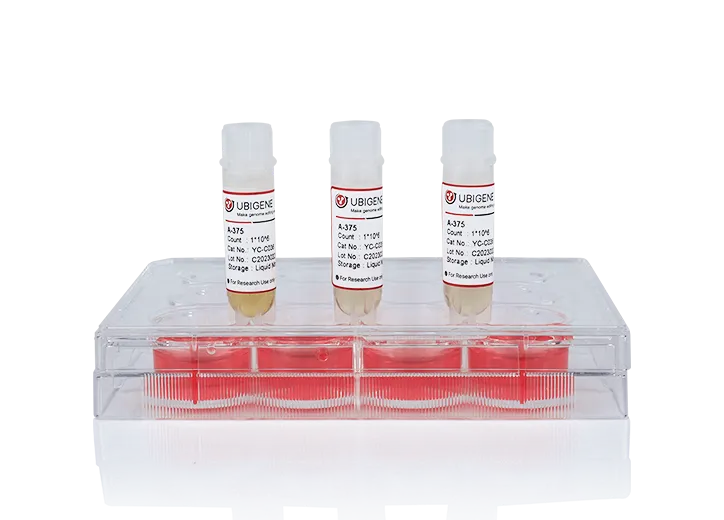
Red cotton OmniCell bank
 download
This gene encodes a homodimeric protein that catalyses the cleavage of alpha-1,4-glucosidic bonds to release glucose-1-phosphate from liver glycogen stores. This protein switches from inactive phosphorylase B to active phosphorylase A by phosphorylation of serine residue 15. Activity of this enzyme is further regulated by multiple allosteric effectors and hormonal controls. Humans have three glycogen phosphorylase genes that encode distinct isozymes that are primarily expressed in liver, brain and muscle, respectively. The liver isozyme serves the glycemic demands of the body in general while the brain and muscle isozymes supply just those tissues. In glycogen storage disease type VI, also known as Hers disease, mutations in liver glycogen phosphorylase inhibit the conversion of glycogen to glucose and results in moderate hypoglycemia, mild ketosis, growth retardation and hepatomegaly. Alternative splicing results in multiple transcript variants encoding different isoforms.
 For research use only. Not intended for human or animal clinical trials, therapeutic or diagnostic use.
Intended use
For research use only. Not intended for human or animal clinical trials, therapeutic or diagnostic use
Product Advantage

Cas9 cell lines in our cell bank can stably express Cas9 protein. Each Cas9 Stable Cell Line is easy to use and enables gene knockout simply by transfecting gRNA, while transfection of gRNA and donor DNA results in gene knock-in or point mutations

These Cas9 stable cell lines have been used to construct the KO cell lines for various genes, gene KO efficiency 5-10 times improved.

Selected cells, low passages, good cell condition, high activity, applicable for all kinds of gene-editing experiments.
Related Popular Products






Contact Us
Simply fill out the form below to leave your inquiry
— we will respond within 24 Hours.
* Name
* Institution
* Products & Services of Interest
If email is not available, how else can we reach you?
How did you hear about us?