
A Beginner's Guide to Gene Knockout


Gene Editing Practical Tips
Do You Truly Understand Gene Knockout Cell Lines?
In life sciences research, what is the most direct way to uncover a gene’s true function? The simplest answer is to knock it out and observe the consequences. This is the fundamental rationale underpinning gene-knockout studies. By artificially and permanently inactivating a specific gene, researchers can monitor the resulting cellular responses and thereby infer its normal physiological role. Today, gene-knockout technology is integral to basic research, disease-mechanism studies, and drug-target discovery. Consequently, efficiency, precision, and ease of use have become the primary concerns for researchers. In this article, we at Ubigene examine the principles, methods, applications, and latest advances of gene knockout.
Q 1: What Is “Gene Knockout”?
In simple terms, gene knockout is analogous to permanently switching off a light.By turning off a specific gene, researchers can examine whether its absence causes a cell to “lose its way” or even “cease functioning.” Unlike RNA-interference-mediated knockdown, knockout achieves complete and permanent gene disruption, making it ideal for long-term, stable studies. Unlike RNA interference (RNAi), which only transiently reduces gene expression, gene knockout is a permanent DNA-level modification that completely abolishes gene function.
Q 2: How Is a Gene “Knocked Out”?
Currently, the most widely used approach is the CRISPR/Cas9 system. Originally derived from bacteria, CRISPR/Cas9 functions as a programmable nuclease for precise genome editing. It comprises the Cas9 endonuclease and a single-guide RNA (sgRNA) that direct the complex to the target locus with high precision. Upon binding, Cas9 generates a site-specific double-strand break (DSB). During repair of the DSB, the error-prone non-homologous end-joining pathway frequently introduces insertions or deletions (indels) that permanently disrupt the open reading frame. Gene knockout can also be achieved by homologous recombination, in which donor DNA containing homology arms flanks the target locus, promoting replacement of the endogenous sequence. Although precise, this method is inefficient and technically challenging, particularly in mammalian cells.
Ubigene EZ-editor™ Platform for Accelerated Gene Editing
Although CRISPR/Cas9 has greatly simplified gene knockout, achieving high-efficiency editing across diverse cell lines remains challenging. To meet this need, Ubigene leveraged extensive in-house experience to develop the EZ-editor™ platform.
- · Proprietary gRNA-design algorithm (“Red Cotton”): predicts optimal target sites by integrating cell-line-specific genomic features.
- · Curated database of >300 cell-line-specific parameters eliminates empirical optimization.
- · High-throughput screening tools rapidly quantify editing efficiency in cell pools and validate genotypes from minimal cell numbers.
- · Optimized single-clone isolation strategy ensures recovery of high-quality edited clones.
- · Fast turnaround: most projects are completed within four weeks, accelerating research timelines.
Relative to conventional workflows, EZ-editor™ increases gene-knockout efficiency 10- to 20-fold, markedly reducing iteration cycles and conserving time and resources.
Q 3: What Are the Applications of Gene Knockout?
- · Identify driver genes in cancer, neurodegeneration, immune disorders, and other diseases.
- · Generate mechanism-of-action models and validate therapeutic targets.
- · Construct in vitro disease models.
- · Enable high-throughput screens for resistance factors and next-generation therapeutics.
For example, knocking out PD-1, KRAS, or TP53 disables key tumor-suppressive or immune-checkpoint pathways, providing models for dissecting immune evasion. These knockout cell lines are now indispensable tools in precision-medicine research.
Q 4: What Are the Differences Between Knockout, Knockdown, and Knock-in?
- · Knockout: permanent gene inactivation to study the phenotypic consequences of complete loss-of-function.
- · Knockdown: partial and transient reduction of gene expression, typically used for preliminary screening.
- · Knock-in: targeted insertion of specific mutations or tags (e.g., fluorescent reporters) to monitor protein localization and dynamics.
Representative Publications Citing KO Cell Lines
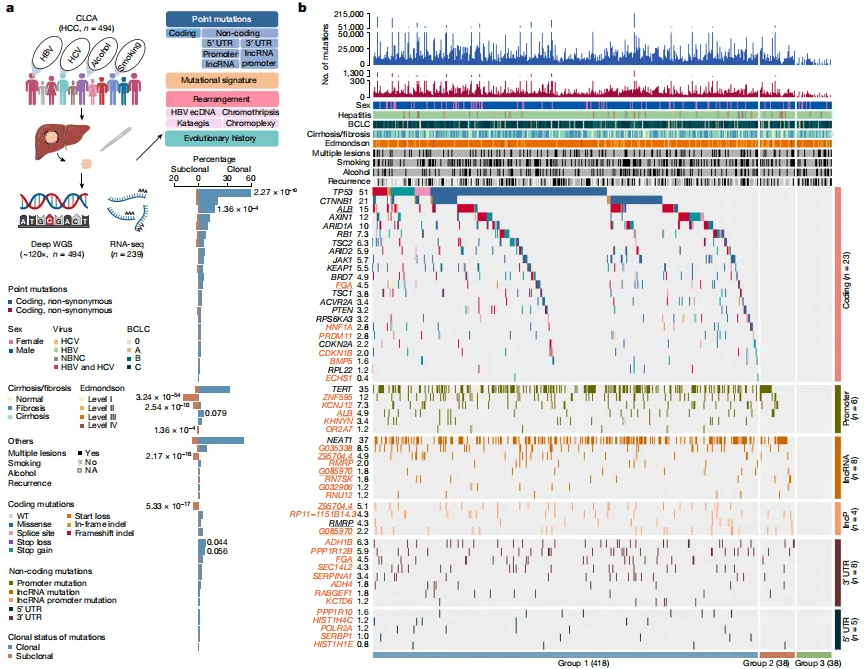
Deep whole-genome analysis of 494 hepatocellular carcinomas(Nature, IF=64.8)
Abstract:
This study generated the Chinese Liver Cancer Atlas (CLCA) and functionally validated three newly identified candidate driver events. These mutations were sufficient to induce significant changes in gene expression(Among them, PPP1R12B, KCNJ12, FGA knockout cells and overexpression lentiviruses carrying mutations were all constructed by Ubigene), and were involved in regulating various malignant phenotypes of hepatocellular carcinoma, These results confirm the validity of the new driving events found based on data analysis. View details>>
Conclusion
Ongoing CRISPR innovations have rendered gene knockout straightforward and highly efficient. With streamlined, intelligent platforms, researchers can devote more effort to scientific discovery instead of empirical optimization.
If suboptimal editing efficiencies, poor single-clone recovery, or extended timelines have hindered your projects, consider Ubigene’s EZ-editor™ platform. We have delivered high-quality gene-knockout services to hundreds of academic and biopharmaceutical partners, providing faster, more reliable technical support.
For further information, please contact Ubigene directly.
 Promotions