
Gene Knockout in RAW 264.7 Cells: Key Model for Immune & Inflammation Studies


Introduction
The RAW 264.7 cell line derived from Abelson murine leukemia virus-induced tumors in BALB/c mice is a widely utilized macrophage model. It exhibits canonical macrophage morphological and functional characteristics, including strong adherence, phagocytic activity, antigen presentation, and robust secretion of pro-inflammatory cytokines upon stimulation with lipopolysaccharide (LPS) and other ligands. Key advantages of RAW 264.7 cells include their genetic homogeneity, high proliferative capacity, and ease of culture, bypassing the limitations of primary macrophage isolation—such as laborious protocols and high batch-to-batch variability. Consequently, RAW 264.7 serves as a highly standardized in vitro model for research in immunology, inflammatory biology, and infectious diseases. Unlike other macrophage cell lines such as THP-1 (human monocytic leukemia cells requiring PMA-induced differentiation), RAW 264.7 cells express a mature macrophage phenotype natively, enabling a more direct and streamlined experimental workflow.
Applications: Inflammation, Oxidative Stress, and Host-Pathogen Models
The innate immune properties of RAW 264.7 cells make them an essential tool for studying inflammatory pathways, oxidative stress responses, and host-pathogen interactions:
- Inflammatory Response Models: RAW 264.7 cell line is highly responsive to LPS and IFN-γ, triggering canonical signaling pathways (e.g., NF-κB, MAPK) and inducing expression of key inflammatory mediators such as TNF-α, IL-6, and iNOS. This makes them typical for anti-inflammatory drug screening and mechanistic studies.
- Oxidative Stress Models: Capable of mounting robust antioxidant defenses upon challenge with oxidative agents (e.g., H₂O₂, environmental pollutants), serving as a reliable model to assess compound toxicity and antioxidant cytoprotection.
- Phagocytosis and Pathogen Infection Models: Retaining potent phagocytic machinery, RAW 264.7 cells are broadly used to investigate bacterial and fungal clearance, as well as intracellular infection kinetics (e.g., Mycobacterium spp.).
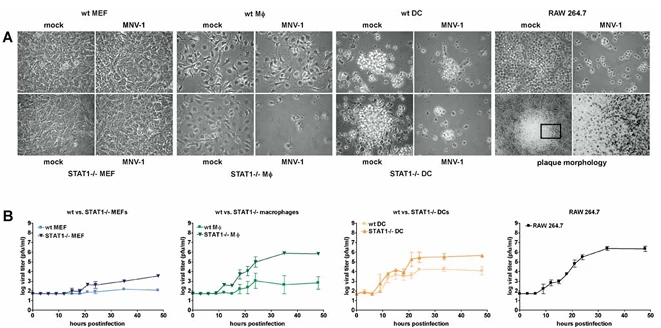
Figure 1. Viral infection model in RAW 264.7 cells
CRISPR/Cas9-Edited RAW 264.7 Cells: Functional Genomics in Immune Regulation
Leveraging the versatile applications of RAW 264.7 cells in inflammation, oxidative stress, and infection assays, researchers can utilize CRISPR/Cas9-mediated gene knockout or modification to interrogate specific target genes regulating macrophage immune responses.
Case 1: Nfe2l2 Knockout — Elucidating TET1-Mediated Regulation of Ferroptosis and AML Therapeutics
Supplied by Ubigene: Nfe2l2 Knockout cell line (RAW 264.7) , Catalog# YKO-M030
NFE2L2 (NRF2) is the master transcriptional regulator of antioxidant response, driving expression of genes within the glutathione (GSH) biosynthesis pathway and serving as a critical upstream inhibitor of GPX4-dependent ferroptosis. Utilizing a CRISPR-Mediated Nfe2l2 knockout RAW 264.7 cell line generated by Ubigene, researchers demonstrated that NFE2L2 deficiency markedly decreases baseline GCLC expression, significantly depletes intracellular GSH reserves, and sensitizes cells to ferroptosis inducers such as RSL3 and Erastin. Furthermore, the study revealed that TET1 directly activates GCLC transcription via DNA hydroxymethylation in an NFE2L2-independent manner. In Nfe2l2-KO cells, ectopic expression of TET1 restored GSH synthesis and attenuated lipid peroxidation, establishing an autonomous TET1-driven antioxidant axis. This Nfe2l2 KO model provided a critical control platform to distinguish canonical NFE2L2 pathways from novel TET1 epigenetic regulation, deciphering cross-talk within the dual ferroptosis defense network of acute myeloid leukemia (AML) cells. These findings support high-throughput screening of small-molecule inhibitors targeting the TET1/GCLC axis, offering a strategy to circumvent NFE2L2-driven chemoresistance and advance targeted combination therapies for hematologic malignancies.
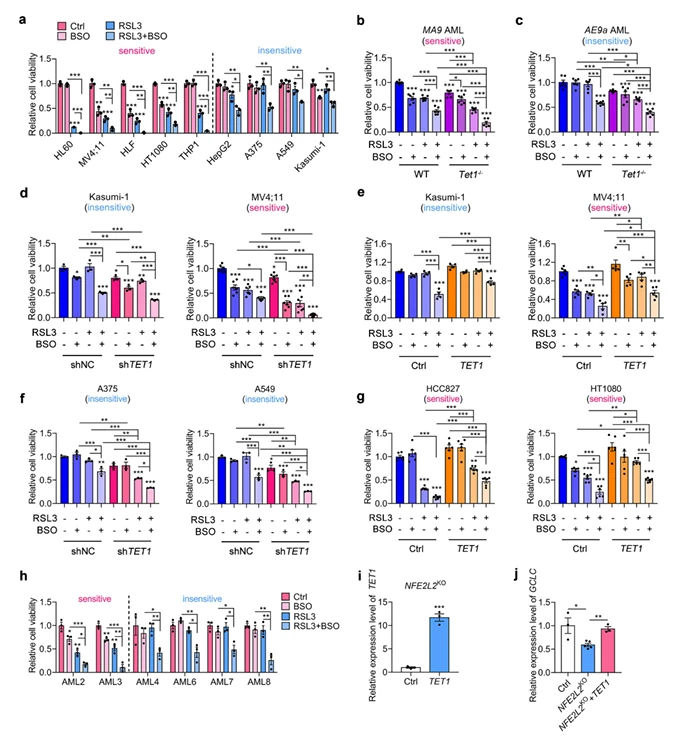
Figure 2. Nfe2l2 knockout validates that BSO treatment sensitizes cancer cells to RSL3-induced ferroptosis
Case 2: Hif1a Knockout — Uncovering Metabolic Reprogramming in FMDV Replication
Supplied by Ubigene: Hif1a Knockout cell line (RAW 264.7) , Catalog# YKO-M042
Hypoxia-inducible factor 1-alpha (HIF1A) is a master regulator of glycolytic flux, directly upregulating rate-limiting enzymes including hexokinase 2 (HK2), phosphofructokinase 1 (PFK1), and pyruvate kinase M (PKM). It plays a central role when viruses hijack host cell energy metabolism to drive viral replication. Using a CRISPR/Cas9-engineered Hif1a KO RAW 264.7 cell line generated by Ubigene, researchers demonstrated that Hif1a loss significantly downregulated HK2, PFK1, and PKM protein levels, fully abolishing foot-and-mouth disease virus (FMDV)-induced glycolytic reprogramming. Additionally, Hif1a knockout significantly reduced viral replication titers, confirming that HIF1A-dependent glycolysis is essential for efficient FMDV propagation. This cell model provided a definitive genetic tool to elucidate the host metabolic node hijacked by FMDV and characterize the autophagy-glycolysis axis during infection. The model enables screening of metabolic antiviral small molecules targeting HIF1A signaling pathways, paving the way for novel therapeutic strategies against picornaviruses.
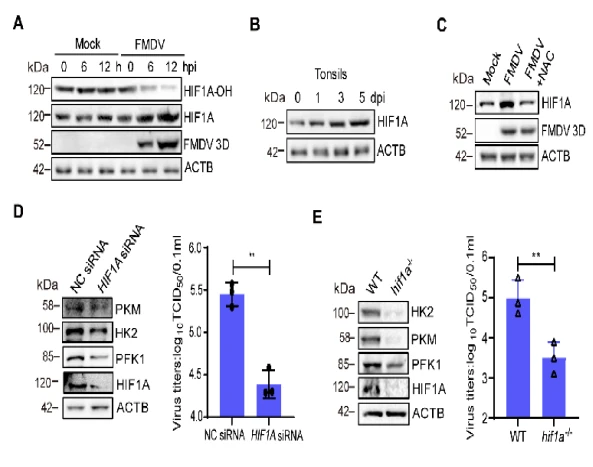
Figure 3. FMDV promotes HK2 expression through HIF1A stabilization
Ubigene EZ-editor™ Technology — Efficient Gene Editing in RAW 264.7 Cells
EZ-editor™ is a gene-editing technology independently developed by Ubigene for cell lines (based on CRISPR/Cas), designed for the efficient construction of gene knockout cells. The technology integrates multiple core capabilities, including a unique gRNA design algorithm based on the genomic characteristics of the cell line, optimized gene-editing parameters established for thousands of cell lines, precise methods for measuring Cell Pool editing efficiency, approaches for improving monoclonal formation rates, and high-throughput genotyping methods for minimal cell numbers. Compared with conventional methods, this technology achieves a gene-editing efficiency of up to 97%.
Based on the EZ-editor™ technology, Ubigene has successfully generated multiple gene knockout RAW 264.7 cell lines covering popular gene targets. Contact us to learn more!
References
- Raschke WC, Baird S, Ralph P, Nakoinz I. Functional macrophage cell lines transformed by Abelson leukemia virus. Cell. 1978 Sep;15(1):261-7. doi: 10.1016/0092-8674(78)90101-0. PMID: 212198.
- Valledor AF, Comalada M, Santamaría-Babi LF, Lloberas J, Celada A. Macrophage proinflammatory activation and deactivation: a question of balance. J Leukoc Biol. 2010 Feb;87(2):229-38. doi: 10.1189/jlb.0908598. Epub 2009 Oct 19. PMID: 19841063.
- Yang L, Lu J, Yun W, Yang X, Sun J, Ge C, Han F, Li X, Min J, Huang H, Wang F, Jiang X. TET1 as a master regulator controlling GPX4-dependent and -independent ferroptosis surveillance in acute myeloid leukemia. Nat Commun. 2026 Jan 20;17(1):1800. doi: 10.1038/s41467-026-68509-x. PMID: 41559050; PMCID: PMC12917170.
- Xue Q, Liu H, Dong Z, Zhu Y, Yang F, Cao W, Zhu Z, Zheng H. Foot-and-mouth disease virus regulates glycolysis through autophagy to drive viral replication in vivo and in vitro. Autophagy. 2026 Jul 1:1-16. doi: 10.1080/15548627.2026.2693780. Epub ahead of print. PMID: 42338171.
 Promotions