
THP-1 Gene Engineering: Knockout, Point Mutation, Knockin and Research Applications

A human leukemic cell line (THP-1) cultured from the blood of a boy with acute monocytic leukemia. Since its establishment in 1980, THP-1 cells have been widely used in the research of monocyte and macrophage related mechanisms, signaling pathways, nutrient and drug transportation. The morphological and functional characteristics of THP-1 are very similar to human primary monocytes (including cell differentiation markers). Compared with human peripheral blood monocytes (PBMC), THP-1 is easier to be cultured and has a more consistent background. Therefore, THP-1 is a commonly used acute monocytic leukemia cell line in various laboratories, and it is an ideal tool for studying immunity and inflammation.
Application of THP-1: macrophage and inflammation model
THP-1 can be differentiated into M1/M2 macrophages and release corresponding cytokines.
M1 macrophage polarization:
THP-1 can be induced to differentiate into macrophages by Phorbol 12-myristate 13-acetate (PMA), and then M1 polarization can be induced by lipopolysaccharide (LPS) and IFN -γ, releasing TNF -α, IL-6 and other cytokines. This is a typical inflammatory model.
M2 macrophage polarization:
M2 polarization can be induced by IL-4, IL-13 and macrophage colony-stimulating factor (M-CSF). TGF - β, IL-10 and other inhibitory cytokines can be released. This is similar to the process of tissue repair and reconstruction in the late stage of inflammation.
Atherosclerotic inflammation model:
Under the action of oxidized low-density lipoprotein (ox-LDL), macrophages can further become foam cells. This is a pathological cell in atherosclerotic plaques and is a chronic inflammation model.
EZ-editor™ for efficient gene editing in THP-1 cells
THP-1 is a near-tetraploid suspension cell, and the success rate of THP-1 is very low by conventional gene-editing methods. CRISPR/Cas9 is widely used to construct gene-editing THP-1 model because of its simple, high efficiency and low toxicity. EZ-editor™ , developed by Ubigene, is more efficient than general CRISPR/Cas9 in double-strand breaking, and EZ-editor™ can greatly improve the efficiency of homologous recombination, easily achieve knockout (KO) , point mutation (PM) and knockin (KI) . Ubigene can customize the gene-editing THP-1 cell line and other monocytes that you are interested in, as well as generate various genes overexpression in THP-1 cell line.
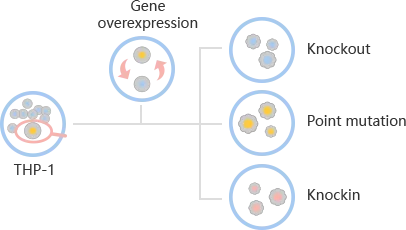
THP-1 Cell Line Gene-editing Services
Technical advantages of Gene Knockout
EZ-editor™ gene knockout THP-1 cell line : gRNA and Cas9 are transferred into THP-1 cells by nucleofection. After drug screening, single clones would be generated. Positive clones would be validated by sequencing.
Knockout Strategies:
| Type | Strategy | Application |
| Short fragment removal | Guide RNAs target introns at both sides of exon 2 and the number of bases in exon 2 is not a multiple of 3, which can cause frame-shift mutation. | Study of gene function through gene defect |
| Frame-shift mutation | Guide RNA targets the exon, and the base number of deletion is not a multiple of 3. After knockout, frame-shift mutation would cause gene knockout. | |
| Large fragment removal | Complete removal of the coding sequence to achieve gene knockout. |
Case Study:
Key genes for macrophages clearing pathogens was found by CRISPR/Cas9 mediated gene knock-out THP-1 model
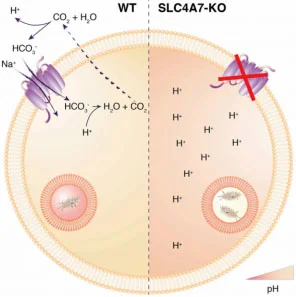
Phagosome acidification of macrophages is an essential step to eliminate pathogens. Phagosome acidification is closely related to the metabolism of macrophages and the transportation of nutrients. And the transportation of metabolites is closely related to solute carrier (SLC) protein. The researchers found that the bicarbonate transporter SLC4A7 in the SLC family is an essential gene for phagosome acidification of macrophages. In CRISPR/Cas9 mediated SLC4A7 knockout THP-1 cell line, the ability of phagosome acidification and killing bacteria was reduced. The acidity of the phagocyte was increased after the supplementation of SLC4A7. This indicates that SLC4A7 mediated bicarbonate driven in macrophages is essential for the maintenance of cytoplasmic pH and phagosome acidification.
Reference:
Sedlyarov V, Eichner R, Girardi E, et al. The bicarbonate transporter SLC4A7 plays a key role in macrophage phagosome acidification[J]. Cell host & microbe, 2018, 23(6): 766-774. e5.
Technical advantages of Point mutation (PM)
- Disease model generation: ssODN carrying point mutaion which replaces the WT sequence by HDR.
- Disease model rescuing: ssODN carrying WT sequence which replaces the mutated site by HDR.
Case Study:
CRISPR/Cas9 mediated Chronic granulomatous disease (CGD) THP-1 cell line model is helpful to develop better disease treatments
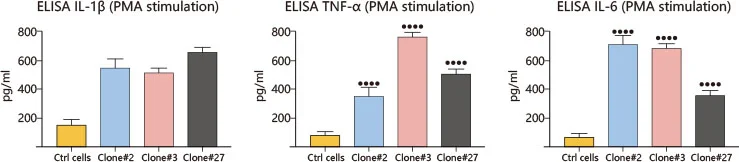
Chronic granulomatous disease (CGD) is a rare X-linked genetic disease. Due to the mutation or deficient of CYBB gene, macrophages lack nicotinamide adenine dinucleotide phosphate (NADPH) oxidase, and cannot produce hydrogen peroxide to effectively kill the invading microorganisms. This usually leads to serious repeated infections caused by bacteria, fungi and other microorganisms. Some researchers used CRISPR/Cas9 technology to knockout CYBB gene and generate point mutation c.90c>G (found in a CGD patient) in THP-1 cells, and successfully constructed the CGD model. Compared with wild-type THP-1 cells, two KO clones (#3 and #27) and a point mutation clone (#2, c.90c > G) showed decrease in H2O2 level after PMA and LPS induction, and a significant increase in IL-1β, TNF-α and IL-6 release, which was consistent with the behavior of macrophages in CGD. This CGD model provides a powerful tool for disease study and will help to develop better treatments.
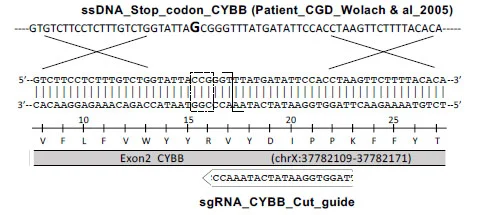
Compared with wild-type THP-1 cells, two KO clones (#3 and #27) and a point mutation clone (#2, c.90c > G) showed decrease in H2O2 level after PMA and LPS induction, and a significant increase in IL-1β, TNF-α and IL-6 release, which was consistent with the behavior of macrophages in CGD. This CGD model provides a powerful tool for disease study and will help to develop better treatments.
Reference:
Benyoucef A, Marchitto L, Touzot F. CRISPR gene-engineered CYBBko THP-1 cell lines highlight the crucial role of NADPH-induced reactive oxygen species for regulating inflammasome activation[J]. Journal of Allergy and Clinical Immunology, 2020.
Technical advantages of Gene knock in
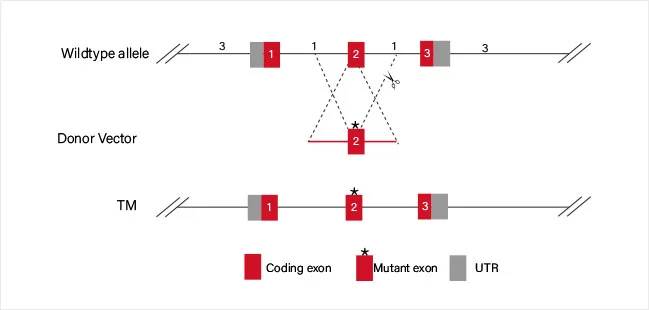
EZ-editor™ Gene Knockin THP-1 Cell Line: THP-1 cell line would be co-transfected with gRNA, Cas9 and donor vector. After drug screening, single clones would be generated. Positive clones would be validated by sequencing.
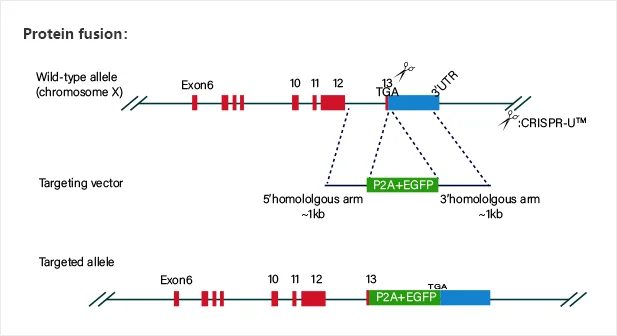
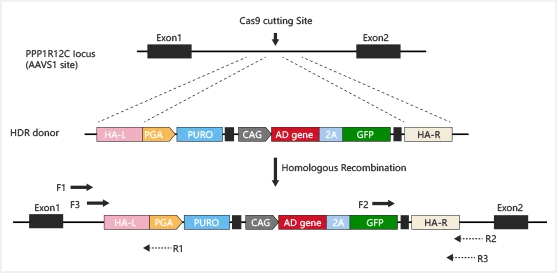
Gene knockin at Safe harbors such as hROSA26 and AAVS1 not only avoids random insertion in genome, but also achieves overexpression of target gene.
Case Study:
The signal pathway of intracellular antiviral response was confirmed by the THP-1 Cell Models of gene knock-out and knock-in.
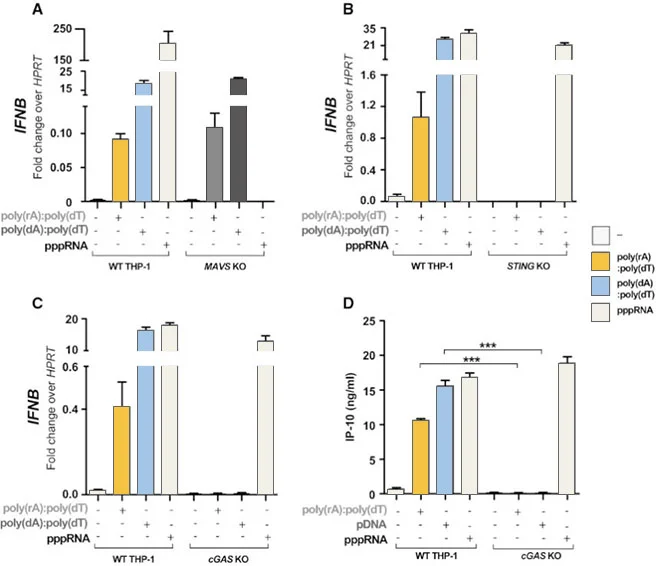
The abnormal location of DNA in the cytoplasm is usually related to virus infection or tumor. The cGAS-cGAMP-STING pathway can detect the existence of cytosolic dsDNA, and induce a strong immune response, producing interferon and activating other immune response genes. RIG1-MAVS can detect pppRNA (dsRNA, the genome of some viruses) in cytoplasm and induce immune response. Sometimes there is a complex of RNA and DNA in the cytoplasm, which usually occurs in the case of some virus infection. In order to study which pathway that the RNA-DNA complex activates the immune response, the researchers generated MAVS, cGAS, STING knockout THP-1 cell lines, and introduced dsDNA, ppRNA and RNA-DNA complex into the cells respectively. It was found that the RNA-DNA complex is activated by the cGAS-cGAMP-STING pathway.
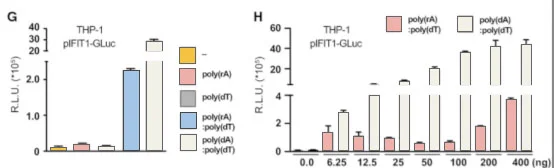
Then, the researchers used CRISPR/Cas9 technology to insert 2A-GLuc into the IFIT1 gene. IFIT1 is a typical interferon activated gene. Subsequent experiments showed that after the introduction of RNA-DNA complex, the expression of Gluc was driven by the activation of IFIT1 promoter due to the expression of interferon. These results further proved that the RNA-DNA complex in the cytoplasm activated the immune response through the cGAS-cGAMP-STING pathway.
Reference:
Mankan A K, Schmidt T, Chauhan D, et al. Cytosolic RNA: DNA hybrids activate the cGAS–STING axis[J]. The EMBO journal, 2014, 33(24): 2937-2946.
CRISPR/Cas9 mediated KO THP-1 cell line, a advanced model for the study of GD
Gaucher disease (GD) is an autosomal recessive lysosomal storage disorder caused by mutations in the acid β-glucosidase gene (GBA1), resulting in the deficient activity of acid β-glucosidase (GCase), and the subsequent progressive accumulation of glucosylceramide (GlcCer) and glucosylsphingosine (LysoGL1) within the lysosomes . Researchers have focused on developing effective GD cell models that can reproduce the genetic and phenotypic characteristics of the disease, in order to seek better pathophysiological research and develop new treatments. Eleonora Pavan et al. exploited CRISPR/Cas9 technology to edit GBA1 in the human monocytic THP-1 cell line to develop an isogenic GD model of monocytes .
Schematic representation of GBA1 editing workflow is shown in Fig.1A . WB analysis of THP-1 GBA1 mutant D2, D6 and F5 clones showed lower levels of GCase expression in comparison to THP-1 wt ( Fig. 1 B). And GCase enzymatic activity was significantly reduced in all three clones ( Fig.1 C). Among them, D2 clone had almost no enzyme activity (the remaining activity of wild-type was 1%). Because GlcCer accumulated in GD cells is transformed by lysosomal acid ceramidase into its deacetylated lipase LysoGL1 , it is considered to be a biomarker of GD. Therefore, they detected LysoGL1 in all mutant clones and found that a massive LysoGL1 accumulation was detected in THP-1 GBA1 mutant clone D2 ( Fig.1 D). Th us , the researchers chose D2 as the GD model. THP-1 GBA1 mutant cells provide a good model for further exploring the pathophysiology of G D , and can be used as an alternative research object for some cells that are difficult to obtain and difficult to proliferate in vitro, such as monocytes from GD patients, macrophages differentiated from monocytes or macrophages differentiated from IPSC.

Nrf2 -KO THP-1 cell line facilitate the study of SLE treatment
Systemic lupus erythematosus (SLE) is a multifactorial autoimmune disease. The transcription factor nuclear-factor-E2-related factor 2(Nrf2, also known asNFE2L2) mediates the transcription and expression of many antioxidant and anti-inflammatory genes. Nrf2 deficiency leads to the development of lupus-like autoimmune nephritis in aged female mice, indicating that Nrf2 is vital to the development and progression of SLE. A recent study by Mills et al. demonstrated that itaconate is a novel activator of Nrf2. Itaconate directly alkylates cysteine residues 151, 257, 288, 273, and 297 on Keap1, causing Nrf2 protein stabilization, accumulation, and activation. Additionally, a new cell-permeable itaconate derivative, 4-octyl itaconate (OI), increases the expression of Nrf2 downstream genes with antioxidant and anti-inflammatory capacities. In order to confirm that OI induced anti-inflammatory effect requires the activation of Nrf2, the researchers used shRNA to inhibit Nrf2 and constructed Nrf2 KO cell line to completely knockout Nrf2 in THP-1 cell line. As shown, the expression level of Nrf2 mRNA was significantly reduced in stable THP-1 cells with Nrf2 shRNA or the Nrf2-KO construct (Fig.2A). OI-induced Nrf2 protein stabilization (Fig. 2A), HO1/NQO1mRNA (Fig. 2C), and protein (Fig. 2B) expression, as well as NQO1 activation (Fig. 2D), were almost blocked by Nrf2 silencing or KO (Fig. 4B-D). Importantly, OI pre-treatment did not inhibit LPS-induced NF κ B activation (Fig. 2E) and TNF- α production (Fig. 2F) in Nrf2-silenced or -KO THP-1 cells.
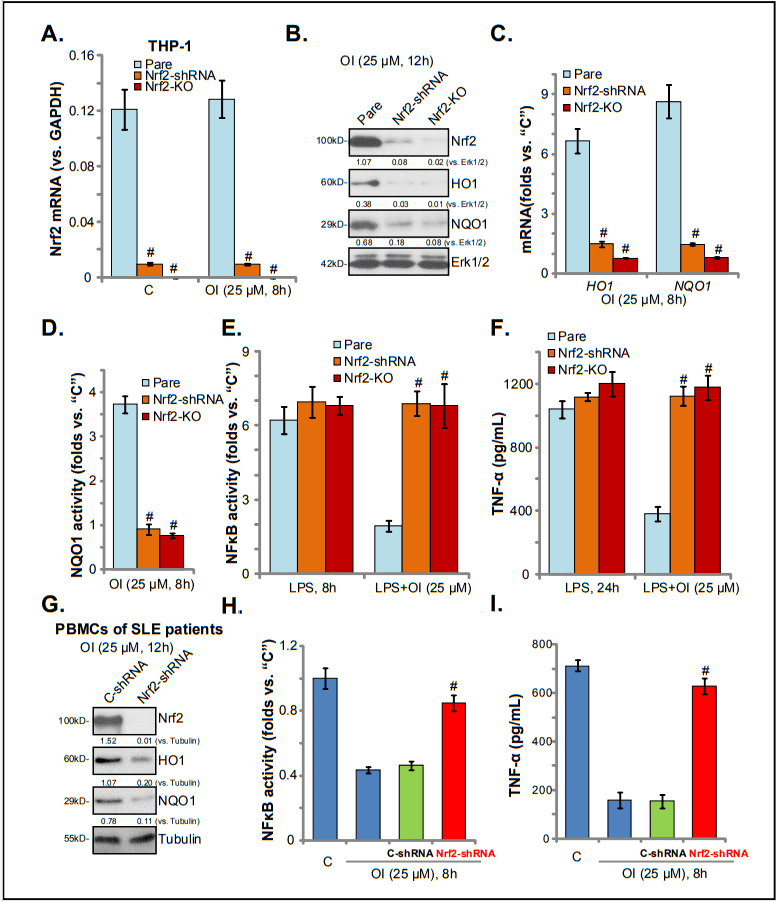
It proves that Nrf2 activation was required for OI-induced anti-inflammatory actions in THP-1 human macrophages and SLE patient-derived PBMCs. Nrf2 silencing or knockout (by CRISPR/Cas9 gene-editing method) almost abolished OI-induced anti-oxidant and anti-inflammatory actions in SLE patient-derived PBMCs and LPS-activated THP-1 cells. A key advantage of this new compound over other Nrf2 activators is that it is directly related to Keap1 and leads to Keap1 acetylation and Nrf2 dissociation, resulting in Nrf2 direct and continuous activation. Thus, OI and itaconate have important therapeutic value for the treatment of SLE.
The overexpression of IL-38 in THP-1 causes anti-inflammatory effect
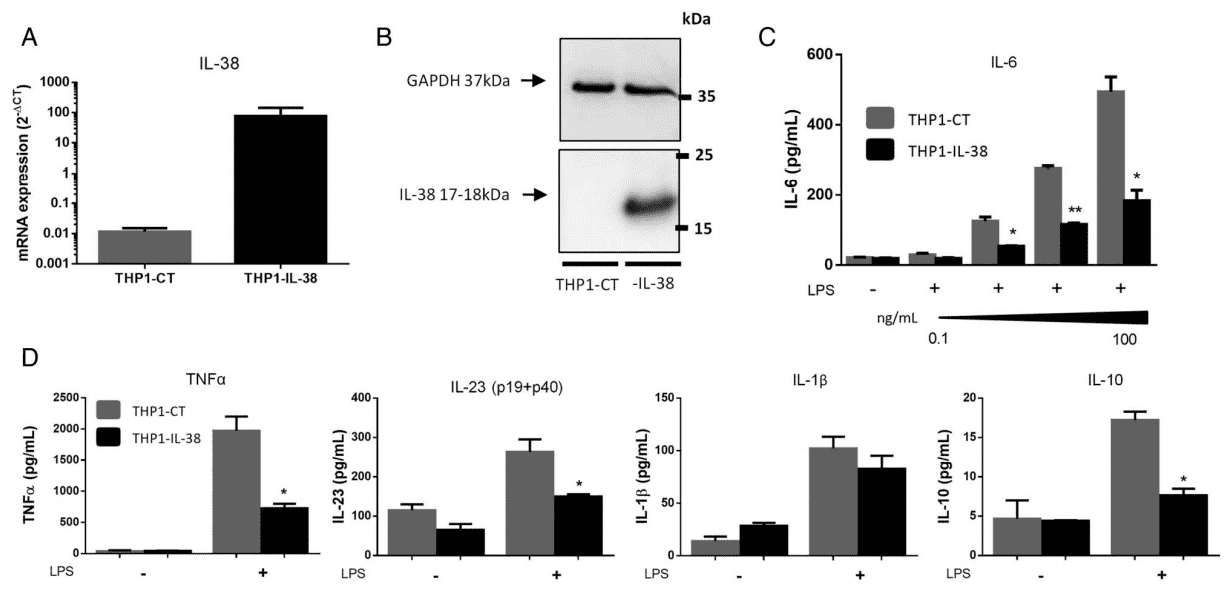
Interleukin (IL)-38 is a cytokine belonging to the IL-1 family. This cytokine is expressed in the synovium of rheumatoid arthritis (RA). It has been found that mice lacking IL-38 exacerbate arthritis. In order to study whether the overexpression of IL-38 in THP-1 monocyte line in vitro affects its cytokine production, the researchers used lentivirus transfection of THP-1 cells to overexpress human IL-38 (Fig. 3 A, B ). The results showed that overexpression of IL-38 in THP-1 significantly reduced the expression of IL-6 and IL-23p19 mRNA stimulated by lipopolysaccharide (LPS). In addition, it also significantly reduced LPS induced IL-6 and TNF α , IL-23 and IL-10 proteins secrete 2.5 times (Fig. 3C, D ), but IL-1 β was n ot affected (Fig . 3D).
This study emphasizes the anti-inflammatory effect of IL-38 overexpression in vivo: this cytokine acts on macrophages in inflammatory infiltration, has an indirect effect on Th17 cytokines, and reduces the expression of pro-inflammatory cytokines. However, whether IL-38 can be considered as a new treatment option for arthritis or other inflammatory diseases needs further experimental research.
Based on the traditional CRISPR/Cas9 technology, Ubigene has further developed EZ-editor system, which has higher gene editing efficiency. At present, Ubigene has successfully provided thousands of gene editing cell services for more than 20 countries and regions around the world, and successfully constructed a gene knockout cell bank with nearly 2000 KO cell lines. Now our in-stock KO cell line is only $1980, deliver in one week!
 Promotions