Point Mutation Cell Line Generation: HDR vs. Base vs. Prime Editing

For point mutation cell line generation, the choice between HDR, base editing, and prime editing depends on the intended edit, the target sequence, the cell type, and the required genotype.
1. Building Point Mutation Cell Lines
Researchers often need cell models carrying specific mutations to study gene function, investigate disease mechanisms, or assess drug sensitivity. For example, introducing a disease-associated mutation can reveal how a particular variant affects protein function [1] . Recreating a cancer-associated variant can help determine how it affects drug sensitivity, resistance, or cellular phenotype [2] .
These experiments typically use cell lines with a matched genetic background and a defined difference at the target locus. CRISPR–Cas9-mediated homology-directed repair (HDR), base editing (BE), and prime editing (PE) are three common approaches for introducing precise edits [3] . They differ in how they edit DNA, which mutations they can introduce, and what researchers need to consider when designing an experiment.
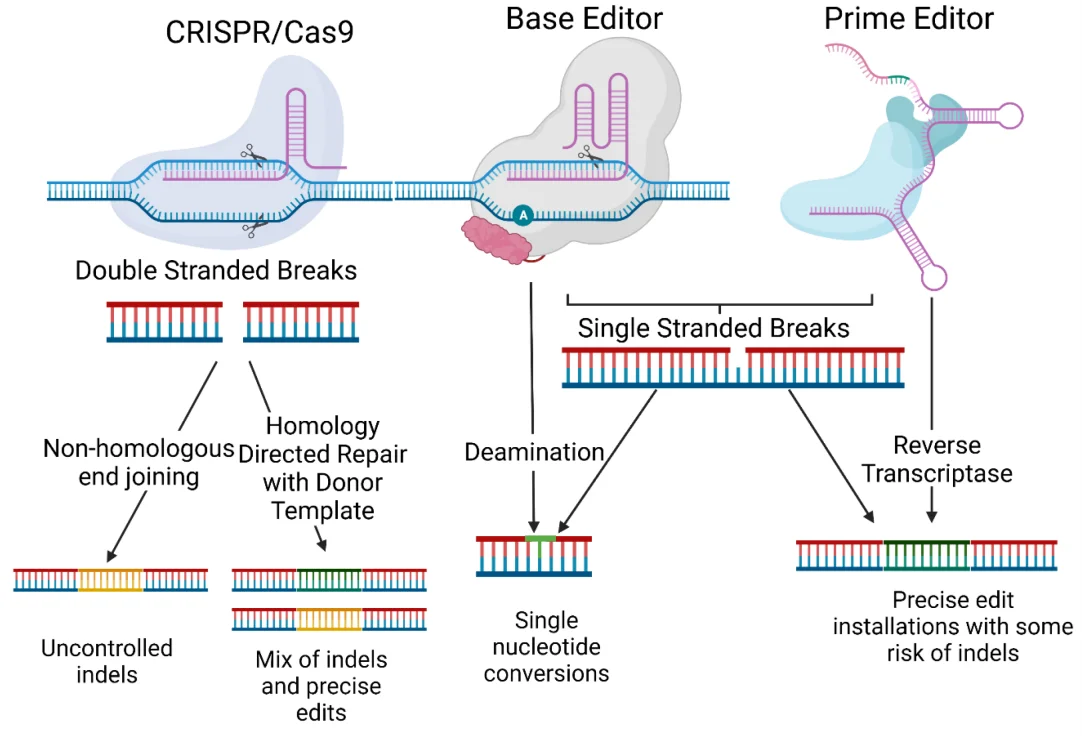
Figure 1. Comparison of the mechanisms underlying CRISPR–Cas9 editing, base editing, and prime editing [4] .
2. Three Approaches to Point Mutation Editing
Homology-Directed Repair
How it works. The Cas9 nuclease creates a double-strand break (DSB) at the target DNA site. The cell uses donor DNA carrying the intended edit as a repair template, introducing a defined base substitution or a short insertion or deletion into the genome.
The editing system can be delivered as a ribonucleoprotein (RNP) complex, in which Cas9 protein is preassembled with a single-guide RNA (sgRNA), or via a plasmid. Plasmid delivery is often paired with antibiotic selection to enrich for cells that have taken up the editing system.
When to use it. HDR is suitable for introducing a specific single-base substitution, replacing multiple adjacent bases, or making short insertions or deletions. It can also be used to generate cell models with a defined heterozygous or homozygous mutation.
Read more about using RNP delivery to improve HDR efficiency in point mutation cell lines .
Base Editing
How it works. A base editor combines a DNA deaminase with an engineered Cas protein. An sgRNA directs the editor to the target sequence, where the deaminase converts a specific base. This approach does not require a conventional DNA double-strand break or exogenous donor DNA.
Two commonly used editor types are:
- Cytosine base editors (CBEs) primarily convert C to T.
- Adenine base editors (ABEs) primarily convert A to G.
When to use it. Base editing is suitable when the intended substitution matches a conversion supported by the editor and the target base falls within its effective editing window.
Prime Editing
How it works. Prime editing uses a Cas9 nickase, a reverse transcriptase, and a prime editing guide RNA (pegRNA). The pegRNA directs the editor to the target and carries a template encoding the intended edit. The reverse transcriptase copies that sequence into the target DNA. Prime editing supports a range of base substitutions and short insertions or deletions without requiring a conventional DNA double-strand break or exogenous donor DNA.
When to use it. Prime editing can be used for base substitutions that conventional base editors cannot readily introduce, as well as for defined short insertions or deletions.
See how to choose between prime editing and RNP-mediated HDR for point mutation cell line generation .
3. Comparing HDR, Base Editing, and Prime Editing
| Design consideration | HDR | Base editing | Prime editing |
|---|---|---|---|
| Editing mechanism | Template-directed DNA repair | Deaminase-mediated base conversion | Reverse transcription of the intended edit |
| Requires a conventional DNA double-strand break | Yes, in the Cas9 nuclease workflow described here | No | No |
| Requires exogenous donor DNA | Typically yes | No | No |
| Delivery options | RNP delivery or plasmid delivery with antibiotic selection | Plasmid delivery with antibiotic selection or mRNA delivery | Plasmid delivery with antibiotic selection or mRNA delivery |
| Main edit types | Base substitutions and short insertions or deletions | Specific base conversions | A range of base substitutions and short insertions or deletions |
| Factors that limit editing | Donor design and cellular DNA repair | Supported base conversions and the editor’s editing window | pegRNA design and target sequence context |
| Key design parameters | Target site and donor DNA | Intended base conversion and editing window | pegRNA design and target sequence context |
Which editing method should you use for a point mutation? Consider base editing first if the intended substitution is supported by a cytosine or adenine base editor and the target base falls within its editing window. If base editing cannot introduce the intended change, consider prime editing for a substitution or short insertion or deletion. Consider HDR when a suitable donor DNA template can be designed and the target cell line supports efficient homology-directed repair.
4. AI-Guided Reverse Transcriptase Design Improves Prime Editing
A recent study used AI-assisted protein design to optimize the reverse transcriptase component of existing prime editors. The resulting PE8 series illustrates how improving the properties of the reverse transcriptase can improve editing performance [5] .
AI-Guided Redesign Improves Reverse Transcriptase Stability and Expression
The team redesigned the reverse transcriptase domains of PE6a, PE6c, PE6d, and PEmax. Some redesigned variants showed improved protein stability and soluble expression. After mRNA delivery, intracellular protein levels were up to approximately twice those of the corresponding original editors.
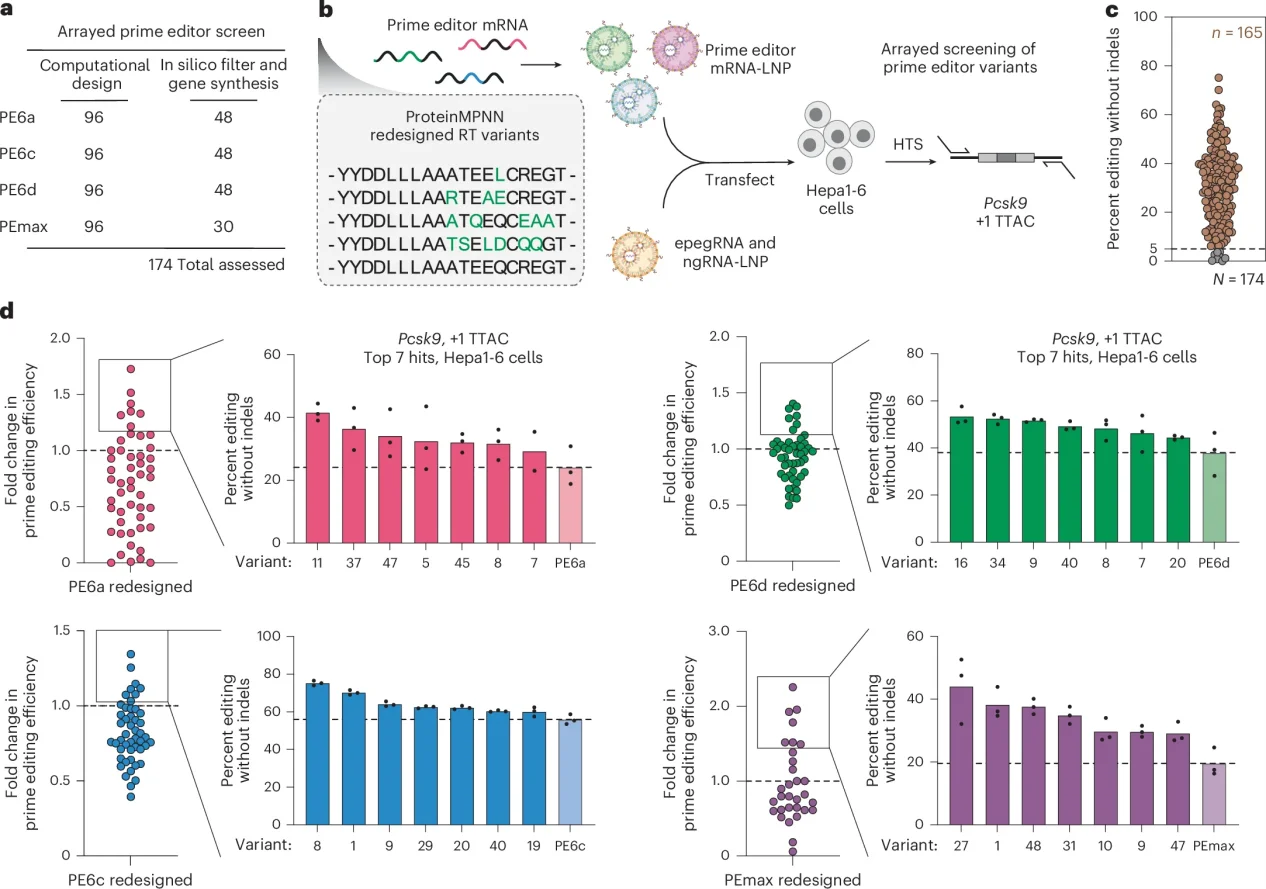
Figure 2. Editing efficiency of prime editors with redesigned reverse transcriptases.
PE8 Variants Improve Editing Across Multiple Targets
The researchers screened the redesigned editors to develop the PE8 series. They evaluated the editors across multiple genomic loci and a panel of 700 ClinVar variants associated with disease. Some PE8 variants achieved higher editing efficiency or improved correction of the target variants.
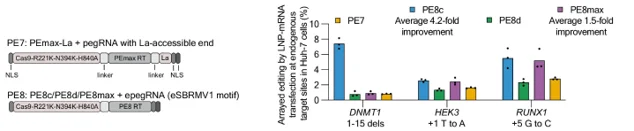
Figure 3. Editing at multiple endogenous loci in Huh-7 cells after delivery of PE8 editors as lipid nanoparticle–encapsulated mRNA.
PE8 Performs Across Cell Types and Delivery Methods
The researchers evaluated PE8 editors in primary human T cells, hematopoietic stem and progenitor cells (HSPCs), and fibroblasts. They tested several delivery approaches, including mRNA electroporation, lipid nanoparticles (LNPs), and engineered virus-like particles (eVLPs). In mice, some PE8 variants achieved approximately 1.4 to 2.9 times the editing efficiency of their corresponding original editors.
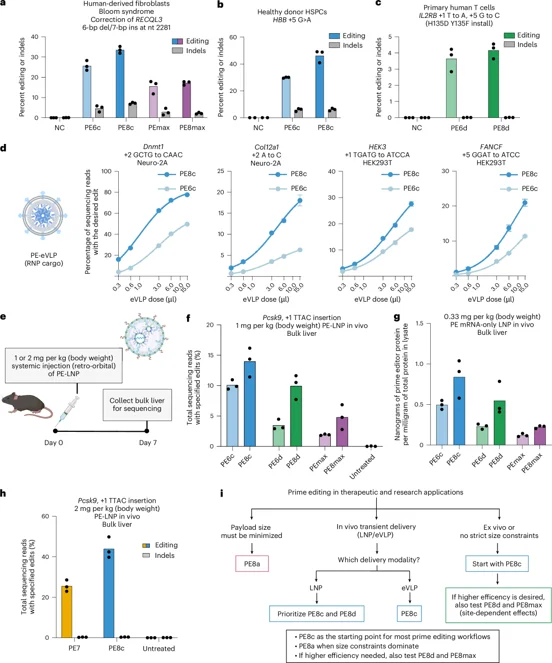
Figure 4. PE8 editing performance across delivery methods in human cells and in mice.
What the Study Adds
The study redesigned the amino acid sequence of the reverse transcriptase to improve protein stability and soluble expression, expanding the focus of editor optimization beyond catalytic activity. The researchers started with editors that had already been engineered or evolved in the laboratory and preserved key functional regions during redesign.
Prime editing can introduce a range of substitutions and short insertions or deletions, including edits that are difficult to achieve with conventional CBEs or ABEs. The PE8 study shows how reverse transcriptase optimization can improve prime editing across experimental settings and offers a reference for building cell lines with more complex edits.
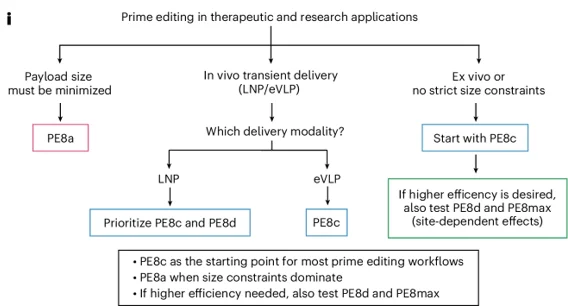
Figure 5. Suggested PE8 editors for different experimental settings.
5. Selecting an Editing Method
HDR offers flexibility for introducing substitutions and short insertions or deletions when a suitable donor and repair strategy can be designed. Base editing is well suited to a supported single-base conversion when the target base falls within the effective editing window. Prime editing extends the range of substitutions available and can also introduce short insertions or deletions.
The choice depends on the intended mutation, the sequence around the target, the cell type, and the required final genotype.
6. Ubigene EZ-HRex™ Point Mutation Technology
Ubigene developed EZ-HRex™ as an extension of its proprietary EZ-editor™ gene editing platform. EZ-HRex™ modulates the cell cycle to improve HDR efficiency. After transfection, the proportion of cells carrying the intended HDR genotype can reach up to 90% in the edited cell pool, with approximately 5- to 10-fold higher HDR efficiency compared with conventional genome editing methods.
Ubigene offers four approaches for generating point mutation cell lines: RNP delivery, plasmid delivery with antibiotic selection, prime editing, and base editing. Ubigene has successfully edited more than 500 cell types and completed over 13,000 projects. Turnaround can be as short as six weeks. These services support the development of cell models for gene function and disease mechanism studies.
References
[1] Kim HS, et al. Recent advances in CRISPR-based functional genomics
for the study of disease-associated genetic variants.
Experimental & Molecular Medicine
. 2024, 56(4), 861–869. DOI 10.1038/s12276-024-01212-3.
[2] Coelho MA, et al. Base editing screens define the genetic landscape
of cancer drug resistance mechanisms.
Nature Genetics
. 2024, 56(11), 2479–2492. DOI 10.1038/s41588-024-01948-8.
[3] Fichter KM, et al. Strategies for precise gene edits in mammalian
cells.
Molecular Therapy – Nucleic Acids
. 2023, 32, 536–552. DOI 10.1016/j.omtn.2023.04.012.
[4] Brooks IR, Sheriff A, Moran D, Wang J, Jacków J. Challenges of Gene
Editing Therapies for Genodermatoses.
International Journal of Molecular Sciences
. 2023, 24(3), 2298. DOI 10.3390/ijms24032298.
[5] Tao YA, Sakai HA, Jiang AY, et al. AI-guided redesign of
laboratory-evolved reverse transcriptases enhances prime editing.
Nature Biotechnology
. Published online May 21, 2026. DOI 10.1038/s41587-026-03149-6.
 Promotions