
Prime Editor vs Ribonucleoprotein(RNP) Method: How to Choose the Right Approach for Point Mutation Cell Line Generation?

Introduction
Point mutation cell lines are essential experimental tools for gene function validation, disease modeling, and targeted drug screening, and they are among the most widely used models in cellular gene editing. Prime editing (PE), a next-generation precision gene editing technology, has emerged as a popular choice for constructing high-precision point mutation cells, owing to its advantages of DNA double-strand break-free editing, low off-target rates, and independence from exogenous donor templates. Meanwhile, the CRISPR-Cas9 RNP method remains the mainstream approach due to its technical maturity and widespread adoption. Faced with these two commonly used technologies, how should one make the optimal choice based on experimental needs? This article compares the principles and applicable scenarios of both methods to help you select the most suitable approach for your research.
I. Comparison: Prime Editor vs. RNP Method
Gene point mutation refers to the precise rewriting of a single base sequence at a target genomic locus. Prime editors and the RNP method utilize different DNA repair mechanisms to achieve editing. The core distinction lies in whether the genomic DNA double-strand is cleaved, which also underpins their differences in cellular compatibility.
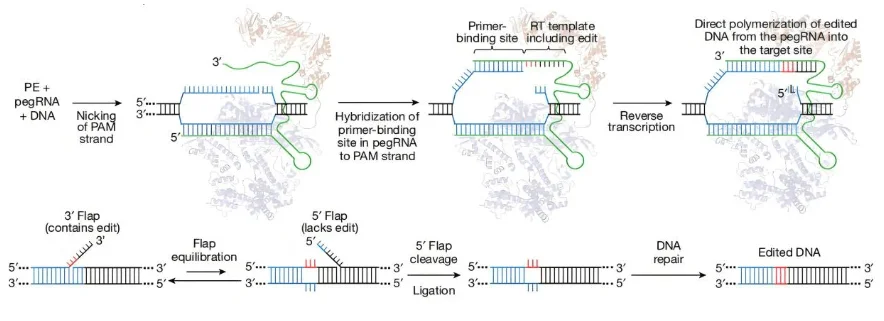
Prime editing is a next-generation high-precision CRISPR tool comprising a nickase Cas9 (nCas9) fused to a reverse transcriptase, along with a specialized prime editing guide RNA (pegRNA). Throughout the editing process, only a single DNA strand is nicked, without generating double-strand breaks (DSBs). The pegRNA carries the desired mutation template, enabling in situ synthesis of the mutant DNA fragment. This results in minimal genomic damage and extremely low levels of unintended byproducts such as indels and chromosomal aberrations.
RNP Method: Double-Strand Break-Dependent Homologous Repair Technology. As a more established CRISPR point mutation technique, the RNP method involves pre-assembling Cas9 protein and sgRNA into ribonucleoprotein complexes in vitro, which are then delivered into cells to induce DSBs at the target site. A chemically modified single-stranded oligodeoxynucleotide (ssODN) is co-delivered to serve as a repair template, harnessing the endogenous homology-directed repair (HDR) pathway to introduce the desired point mutation while repairing the DSB.
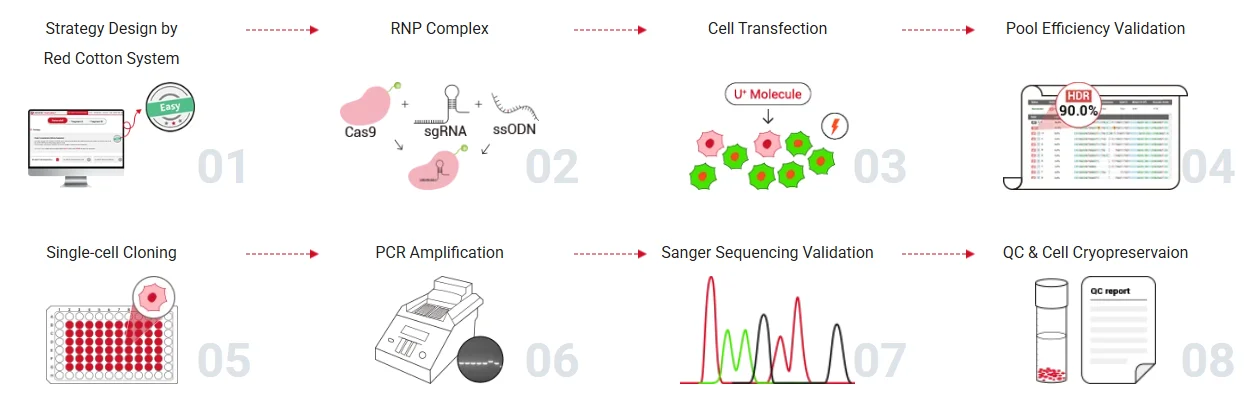
Ubigene's point mutation construction Workflow(RNP Method)
II. Prime Editor: Niche but High-Precision
Prime editing offers low-damage, high-fidelity editing and serves as a specialized tool for specific scenarios rather than routine large-scale cell line generation. Its core advantage lies in circumventing genomic instability caused by DSBs, thereby significantly reducing non-specific mutations and apoptosis. Below are representative applications of PE technology in Point Mutation Cell Line Generation.
Case 1: In Vivo Gene Repair via Prime Editing Restores Retinal Function in Blind Mice
Retinitis pigmentosa (RP), the most common inherited retinal disease (IRD), is a leading cause of genetic vision loss worldwide. In this study, rd1 mice carrying the PDE6B Y347X nonsense mutation were used as a preclinical RP model. A dual-AAV-delivered prime editing system was engineered to correct this pathogenic point mutation. In vivo editing efficiency reached 26.47 ± 13.35%, and whole-genome sequencing confirmed minimal off-target events. Functional assays demonstrated significant restoration of PDE6B protein expression and visual function, highlighting the clinical translational potential of prime editing for currently incurable inherited eye diseases.
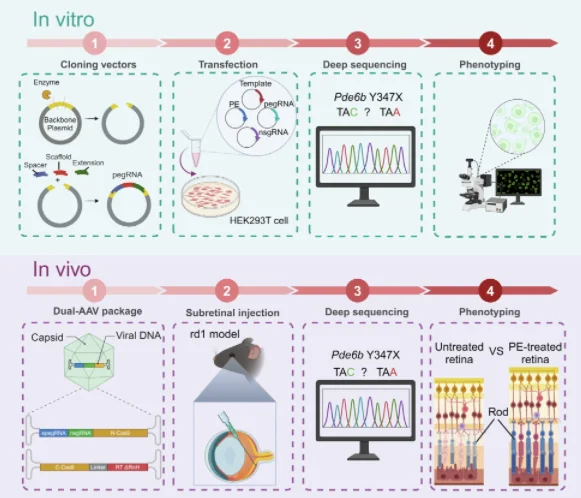
Zackery A Ely,et al.Nat Biotechnol,2024
Case 2: Prime Editing Accelerates Functional Studies of Cancer-Associated Mutations and Complex Gene Combinations
Leveraging prime editing technology, this study developed a simple and efficient approach for introducing various cancer-associated mutations in mice. Using this tool, the researchers generated animal models harboring distinct Kras oncogenic mutations across multiple organs. The approach is mutation-type agnostic and adaptable to virtually all oncogenic mutations, facilitating the screening and evaluation of targeted therapies against specific genetic alterations.
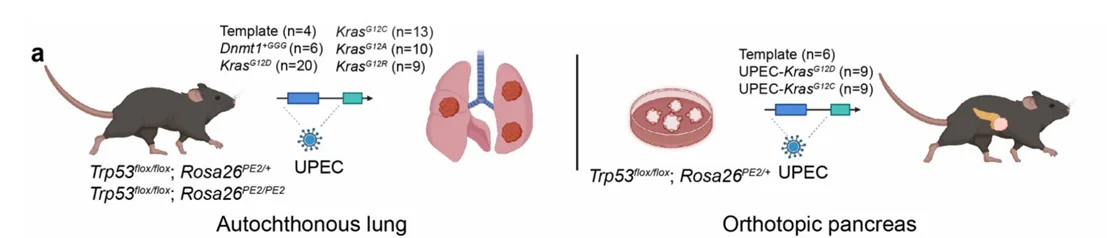
Zackery A Ely,et al.Nat Biotechnol,2024
Case 3: Prime Editing Enables Precise Epitope Engineering for Immunotherapy in AML and Other Malignancies
This study utilized base editors and prime editors to precisely edit CD123 epitopes in hematopoietic stem/progenitor cells (HSPCs). While base editors could target epitopes, bystander mutations posed safety concerns. By optimizing the prime editor, the editing efficiency of CD123 epitopes in HSPCs was increased from 5.9% to 78.9%, marking the first successful precise epitope editing in HSPCs.
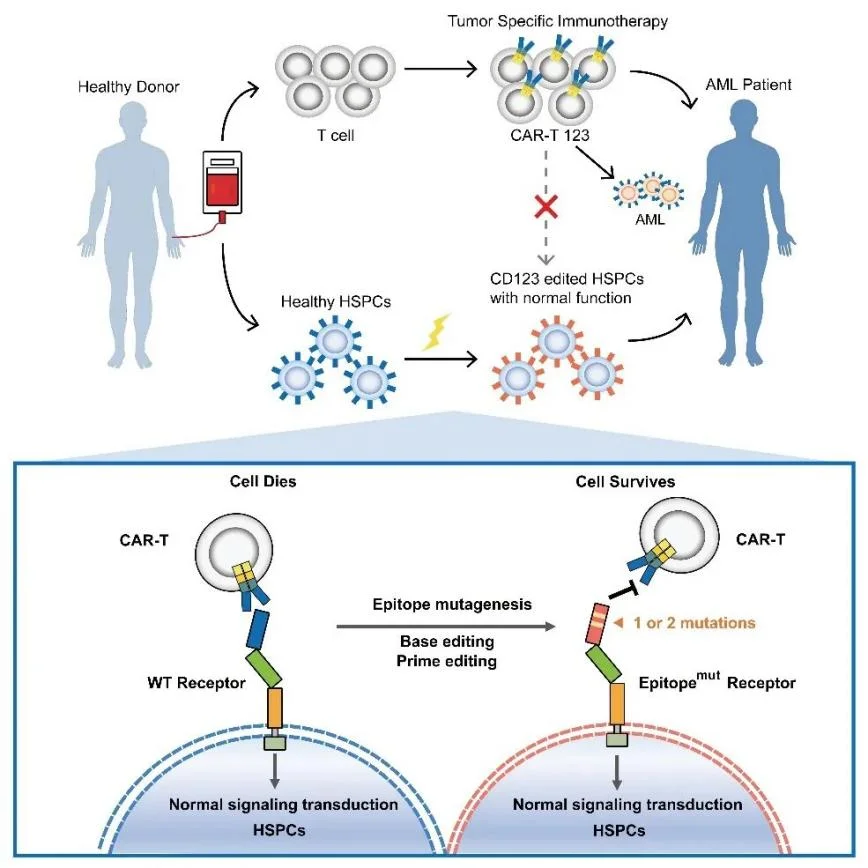
Rui-Jin Ji ,et al.Cell Stem Cell,2024
However, prime editing has limitations: pegRNA design is complex and batch-to-batch stability can be inconsistent; reagent costs are high; editing timelines are prolonged; the cell compatibility range is relatively narrow, with low editing efficiency in tumor cells and standard immortalized cell lines; and it is unsuitable for routine, large-scale Point Mutation Cell Line Generation.
III. RNP Method: The First Choice for Routine Point Mutation Cell Line Generation
The RNP method is well-established, operationally straightforward, and currently the most mature and widely used point mutation construction technology, suitable for the vast majority of routine research needs.
Cellular Compatibility: Covers >90% of Commonly Used Experimental Cells
- Highly compatible with actively dividing cells such as HEK293, HeLa, various tumor cell lines, and mouse immortalized cell lines, which exhibit high HDR activity, stable editing efficiency, and low single-clone screening difficulty.
- Suitable for standard primary cells; electroporation and lipofection parameters can be optimized to balance viability and editing efficiency.
- Applicable to large-scale construction of homologous point mutation cell libraries with high experimental reproducibility.
Experimental Scenarios: Comprehensive Coverage of Routine Point Mutation Research Needs
The RNP method supports mainstream applications including disease-associated SNV modeling, single-site gene function validation, and drug-resistant mutation cell construction. Additional practical advantages include: sgRNA design is straightforward with online tools; Cas9 protein and modified ssODNs are commercially available at lower cost; RNP complexes are rapidly degraded after delivery, eliminating genomic integration risks; multiple delivery methods are compatible, enabling easy replication even for beginners; and optimization for low-efficiency sites can be achieved by simply adjusting the ssODN structure, minimizing troubleshooting costs.
IV. How to Choose the Right Method for Point Mutation Cell Line Generation?
Both prime editing and the RNP method have distinct strengths and limitations—neither is inherently superior, but rather suited to different scenarios. The optimal choice depends on your specific experimental requirements.
| Prime Editor (PE) | RNP Method | |
|---|---|---|
| Best For | Sensitive stem cells, sites lacking PAM sequences, high off-target risk loci, experiments requiring minimal byproducts | The majority of immortalized cell lines, standard primary cells, routine single-base point mutation modeling |
| Key Advantages | No DSBs, low off-target | Mature, widely applicable, cost-effective, simple operation, good reproducibility |
| Recommended Use | Small-scale, high-budget, specialized projects | Routine large-scale or standard projects balancing efficiency and stability |
Ubigene Point Mutation Services
Based on its proprietary EZ-editor™ platform, Ubigene Biosciences has developed the next-generation editing system – EZ-HRex™ technology . By introducing the U + molecule, this technology achieves an HDR genotype proportion of up to 90% at the cell-pool level, significantly improving the efficiency of point mutation and fragment knock-in.
Ubigene offers 4 editing solutions to meet diverse mutation requirements:
RNP method | Prime editing | Base editing | Antibiotic-based knock-in
We recommend the do-it-yourself point mutation cell package! With the innovative HDR-U + molecule, homologous recombination efficiency is boosted to 90%, allowing you to easily complete point mutation experiments starting at just $4980. Custom gene point mutation services are also available. Please contact us for more information!
For inquiries, please contact us >>>References
[1] Fu, Y., He, X., Ma, L. et al. In vivo prime editing rescues
photoreceptor degeneration in nonsense mutant retinitis pigmentosa. Nat
Commun 16, 2394 (2025).
[2] Ely ZA, Mathey-Andrews N, Naranjo S, et al. A prime editor mouse to
model a broad spectrum of somatic mutations in vivo. Nat Biotechnol.
2024 Mar;42(3):424-436.
[3] Ji RJ, Cao GH, Zhao WQ, et al. Epitope prime editing shields
hematopoietic cells from CD123 immunotherapy for acute myeloid leukemia.
Cell Stem Cell. 2024 Nov 7;31(11):1650-1666.e8.
 Promotions