
Research Frontier | CAR-adapted PIK3CD Base Editing: Precision Modulation of PI3Kδ to Enhance CAR-T Efficacy

Introduction
Chimeric antigen receptor (CAR) T-cell therapy has achieved remarkable clinical efficacy against hematologic malignancies. However, its therapeutic success remains constrained by three core limitations: limited in vivo persistence, susceptibility to T-cell exhaustion, and poor activity against solid tumors . The signaling strength conferred by different costimulatory domains (4-1BBz versus 28z) results in markedly divergent functional outcomes. In a study published in 《Nature Cancer》, Judith Feucht, Josef Leibold and their team at the University of Tübingen established a precision base-editing screening platform termed ROADSTAR. Using this platform, they performed a CAR-adapted base-editing screen targeting PIK3CD and identified that E81K (which activates PI3Kδ) and L32P (which attenuates PI3Kδ activity) specifically and differentially enhanced the anti-tumor potency of 4-1BBz and 28z CAR-T cells, respectively, providing a new paradigm for next-generation customized CAR-T therapies.
Background
The intracellular costimulatory domains of CARs (CD28 vs. 4-1BB) dictate T-cell metabolism, fate and function: 28z-based CARs exhibit rapid proliferation and strong effector function but are prone to exhaustion and have poor persistence; whereas 4-1BBz-based CARs show superior persistence and memory formation but weaker effector function and proliferation. PI3Kδ is a key regulator of T-cell signaling, metabolism and fate, and its signaling strength is closely associated with CAR-T function. Traditional gene knockout or overexpression fails to accurately tune signaling intensity and does not consider the compatibility with different CAR scaffolds, thereby limiting therapeutic efficacy.
Objectives
To establish a CAR-adapted base-editing screening platform (ROADSTAR), to identify functional point mutations in PIK3CD, and to achieve precise fine-tuning of signaling in 4-1BBz and 28z CAR-T cells, thereby enhancing their persistence, effector function and anti-tumor activity, respectively.
Methods
-
Base-Editing Screen
- 1.A single-guide RNA (sgRNA) library targeting the adaptor-binding domain (ABD) of PIK3CD (n = 34) was designed. 19BBz and 1928z CAR-T cells were subjected to adenine base editing (ABE) or cytosine base editing (CBE) using ABEmax and AncBE4max, respectively.
- Iterative tumor antigen stimulation was applied as a selective pressure, and enriched mutations were identified by next-generation sequencing (NGS).
-
Functional Validation
- Flow cytometry was performed to assess p-AKT signaling, activation status, differentiation phenotype, exhaustion markers, metabolic profiles, cytotoxic activity, and proliferative capacity of CAR-T cells.
- Three-dimensional (3D) collagen migration assays and time-lapse live-cell imaging were used to evaluate their killing efficacy and migratory capacity.
-
In Vivo Studies
Nalm6 leukemia and Sh-Sy5y neuroblastoma xenograft models were used to evaluate therapeutic efficacy and safety.
-
Multi-omics Analysis
Single-cell RNA sequencing (scRNA-seq), untargeted metabolomics (LC-MS) and Seahorse metabolic flux analysis were performed.
Workflow
- Enrichment Screening: 1.The ROADSTAR platform identified E81K enriched in 4-1BBz CAR-T cells and L32P enriched in 28z CAR-T cells.
- Signaling Validation: E81K activated PI3Kδ, whereas L32P attenuated PI3Kδ activity, demonstrating CAR-dependent bidirectional regulation.
- BBz Optimization: E81K enhanced proliferation, effector function, metabolic fitness, and long-term persistence of 4-1BBz CAR-T cells while reducing exhaustion.
- 28z Optimization: L32P reduced signaling strength in 28z CAR-T cells, promoted memory formation, and improved persistence and solid-tumor efficacy.
- Mechanistic Dissection: Metabolic reprogramming, remodeling of memory/effector phenotypes, and downregulation of the FOXO3 pathway.
- Translational Validation: The editing was safe, non-oncogenic, and applicable to multiple targets and tumor types, showing high clinical translation potential.
Key Findings
1. Base-Editing Screen Identifies CAR-Specific Functional Point Mutations in PI3Kδ
Baseline PI3K signaling differed between CAR designs: 28z CAR-T cells exhibited strong signaling, whereas 4-1BBz CAR-T cells showed weaker signaling. The ROADSTAR screen identified CAR-specific point mutations in PIK3CD: E81K, which activates PI3Kδ, was enriched in 4-1BBz CAR-T cells; L32P, which attenuates PI3Kδ activity, was enriched in 28z CAR-T cells. Both mutations modulate signaling strength through structural alterations to precisely tune downstream intensity.
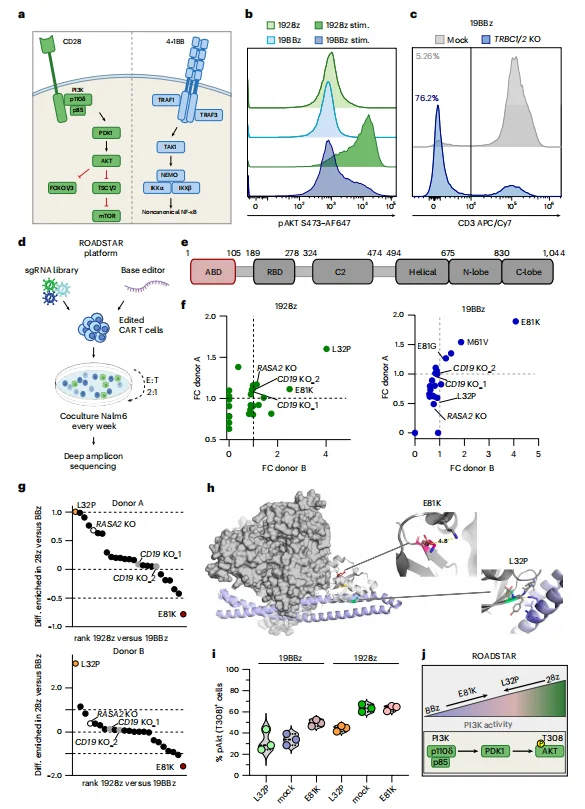
Fig. 1 | Base-editing screens of the ABD of PI3Kδ in 1928z and 19BBz CAR T cells identify beneficial point mutations.
2. E81K Enhances the Antitumor Efficacy of 4-1BBz CART Cells
E81K editing increased activation and promoted an effector-memory phenotype in 4-1BBz CAR-T cells, enhancing proliferation and cytotoxicity. In a leukemia model, E81K-edited CAR-T cells achieved superior tumor control and prolonged survival, while promoting in vivo expansion and reducing exhaustion markers. Effector-memory T cells were the dominant functional subset.
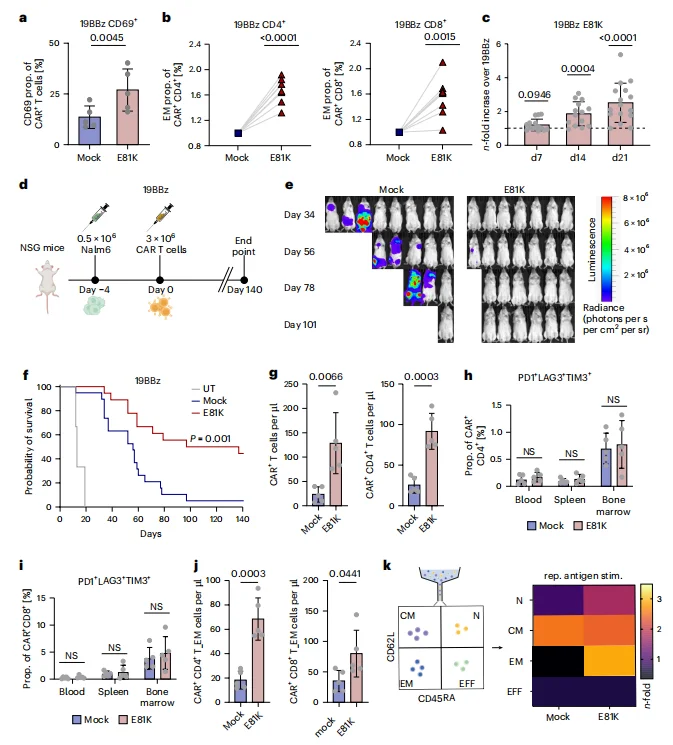
Figure 2. E81K enhances the antitumor efficacy of 19BBz CAR T cells in vivo by increasing activation and effector memory profiles while preventing exhaustion.
3. E81K Confers Long-Term Functional Persistence to BBz CAR-T Cells and Improves Solid-Tumor Efficacy
E81K conferred long-term functional persistence to 4-1BBz CAR-T cells, enabling them to resist tumor rechallenge without recurrence. In a solid tumor model, E81K editing significantly suppressed tumor growth and prolonged survival, increasing intratumoral CAR-T cell numbers and the proportion of effector-memory cells, thereby effectively overcoming the solid-tumor efficacy bottleneck.
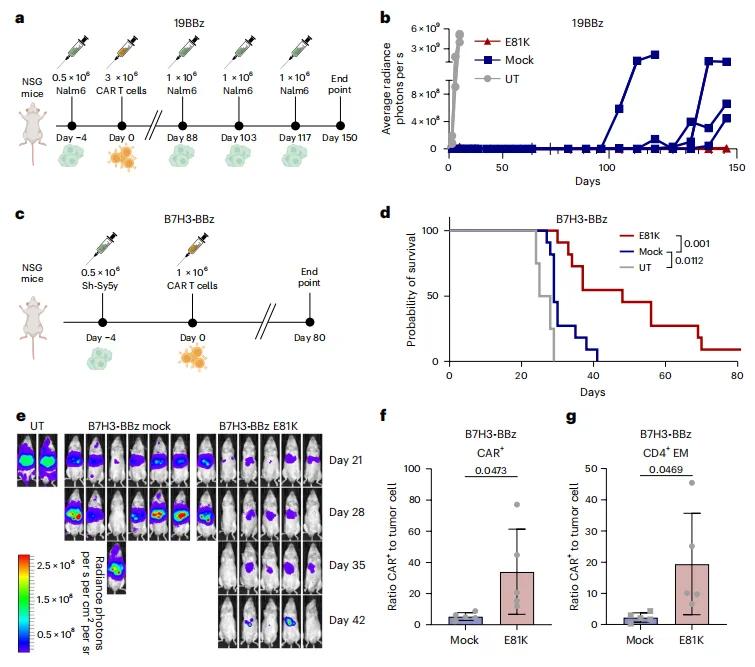
Figure 3. The E81K edit induces functional persistence of BBz CART cells and improves tumor control in vivo.
4. E81K Enhances Metabolic Fitness in BBz CAR-T Cells
E81K drives metabolic reprogramming to optimize 4-1BBz CAR-T cell functions, increasing cytotoxic and high-metabolism subsets while reducing exhaustion. It enhances glycolysis, mitochondrial respiration, spare respiratory capacity, and NADH levels, thereby promoting sustained T-cell fitness from a metabolic perspective.
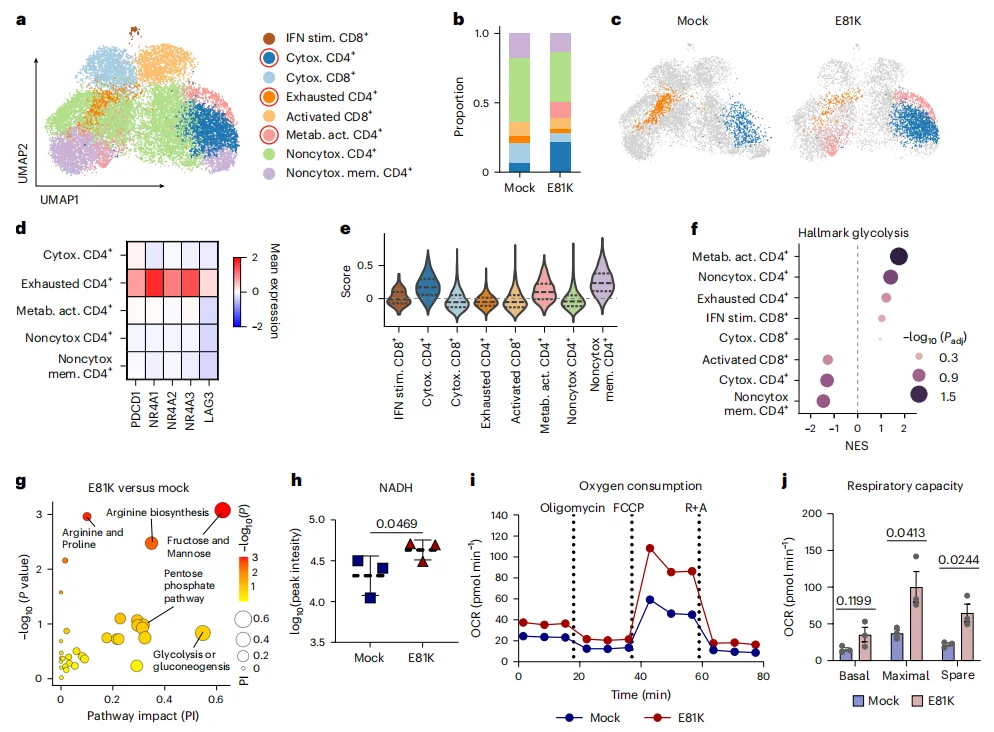
Figure 4. Increased PI3K activity in E81K-edited 19BBz CAR T cells is associated with enhanced effector function and metabolic fitness.
5. L32P Optimizes 28z CAR-T Cells, Promoting Memory Formation and Enhancing Solid-Tumor Efficacy
L32P attenuated PI3K signaling in 28z CAR-T cells, reducing overactivation, enhancing proliferation, and promoting a central memory phenotype. This approach maintains potent cytotoxicity while minimizing exhaustion and improving persistence, significantly enhancing the therapeutic efficacy of 28z CAR-T in solid tumors.
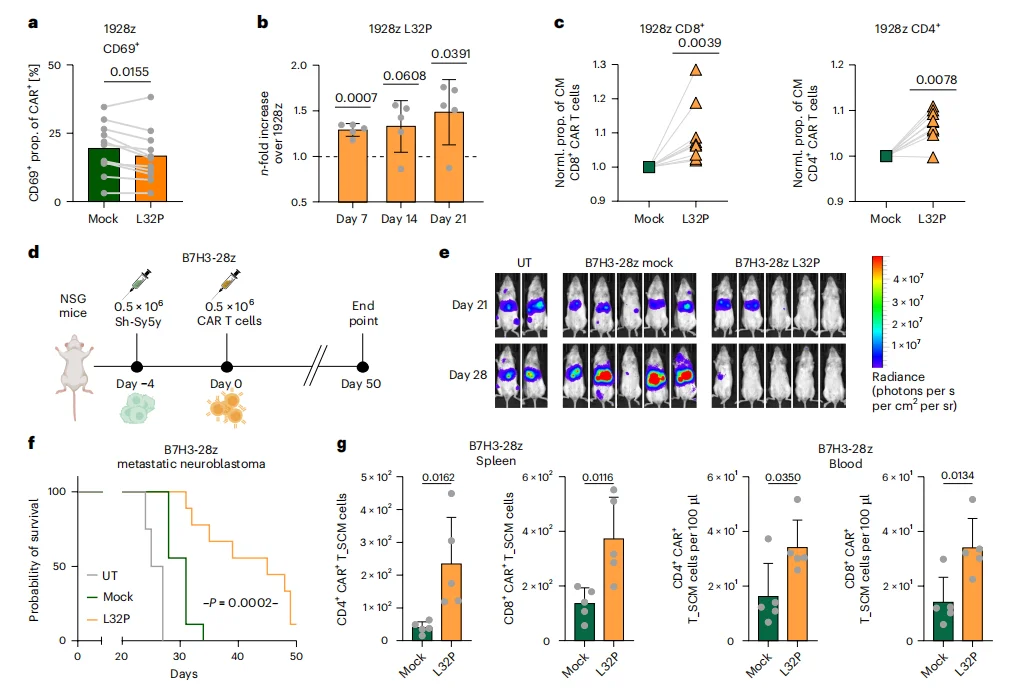
Figure 5. The L32P substitution enhances antitumor efficacy of 28z-based CAR T cells in vivo by increasing memory formation.
Significance and Innovations
- First description of CAR-adapted precision base editing (ROADSTAR) , shifting from a “one-size-fits-all” genetic modification to “one CAR, one mutation” customized optimization. Reveals a bidirectional tuning rule for PI3Kδ signaling: activation → enhances 4-1BBz; attenuation → optimizes 28z.
- Simultaneously addresses the major bottlenecks of the two mainstream CAR designs: insufficient effector function in 4-1BBz and susceptibility to exhaustion in 28z. Base editing is safe, non-oncogenic, and applicable to multiple targets, facilitating rapid clinical translation. Elucidates that the CAR scaffold dictates the optimal signaling strength, refining the CAR-T signaling-metabolism-fate regulatory network.
Summary
This study established the ROADSTAR precision base-editing platform and identified CAR-specific point mutations in PIK3CD: E81K enhances the effector function, metabolic fitness, and long-term persistence of 4-1BBz CAR-T cells by activating PI3Kδ; L32P improves memory formation and in vivo persistence of 28z CAR-T cells by attenuating PI3Kδ. Both mutations significantly improved efficacy against hematologic and solid tumors and demonstrated a favorable safety profile. This work establishes a new paradigm for personalized T-cell engineering adapted to different CAR scaffolds and provides core technologies and targets for next-generation CAR-T cells with high performance, long persistence, and robust solid-tumor efficacy.
Ubigene Point Mutation Services
Based on its proprietary EZ-editor™ platform, Ubigene Biosciences has developed the next-generation editing system – EZ-HRex™ technology . By introducing the U + molecule, this technology achieves an HDR genotype proportion of up to 90% at the cell-pool level, significantly improving the efficiency of point mutation and fragment knock-in.
Ubigene offers 4 editing solutions to meet diverse mutation requirements:
RNP method | Prime editing | Base editing | Antibiotic-based knock-in
We recommend the do-it-yourself point mutation cell package! With the innovative HDR-U + molecule, homologous recombination efficiency is boosted to 90%, allowing you to easily complete point mutation experiments starting at just $4980. Custom gene point mutation services are also available. Please contact us for more information!
For inquiries, please contact us >>> Promotions