
CRISPR/Cas9 Knock-In: Optimized Approaches for Stable Cell Line Development and Versatile Applications

In recent years, CRISPR/Cas9 has emerged as a central tool in molecular biology and genetic engineering, owing to its simplicity, high efficiency, and precision in genome editing. Its application in generating gene knock-in cell lines is particularly significant: not only does it enable precise site-specific modifications of target genes, but it also allows the insertion of exogenous proteins or reporter genes into defined genomic loci. These capabilities have unlocked tremendous potential in basic biological research, disease modeling, drug discovery, and the future of gene therapy.
In this work, we provide a step-by-step exploration of how CRISPR technology can be harnessed to construct knock-in cell lines—from the fundamental principles of genome editing to the complete workflow required to achieve stable expression in engineered cell lines. We further compare traditional approaches with state-of-the-art strategies, highlighting their respective strengths and limitations, and propose practical methodologies to markedly improve knock-in efficiency. Finally, we expand the discussion to examine the broad spectrum of emerging applications across multiple research domains.
Background and Advances
The CRISPR/Cas9 system was originally discovered as an adaptive immune defense mechanism in bacteria and archaea against viral invasion. Soon after, its remarkable potential in genome editing was rapidly recognized. This system employs a single-guide RNA (sgRNA) that is designed to target specific DNA sequences and directs the Cas9 endonuclease to introduce double-strand breaks (DSBs) at the designated sites. Following the formation of DSBs, cellular repair is primarily mediated through two pathways: non-homologous end joining (NHEJ) or homology-directed repair (HDR), thereby enabling gene knockout, point mutation, or knock-in.
In the construction of gene knock-in cell lines, the activation of homology-directed repair (HDR) is a critical step. By utilizing donor templates with long homology arms, exogenous DNA sequences can be precisely integrated into predetermined genomic loci, providing an effective means of generating stable cell lines with controlled expression levels. In recent years, innovative approaches such as the Easi-CRISPR method—which employs long single-stranded DNA donors together with CRISPR ribonucleoprotein complexes—have markedly improved knock-in efficiency, representing a revolutionary advancement for the development of both animal models and engineered cell lines.
CRISPR Knock-In Protocol: Key Principles & Step-by-Step Guide
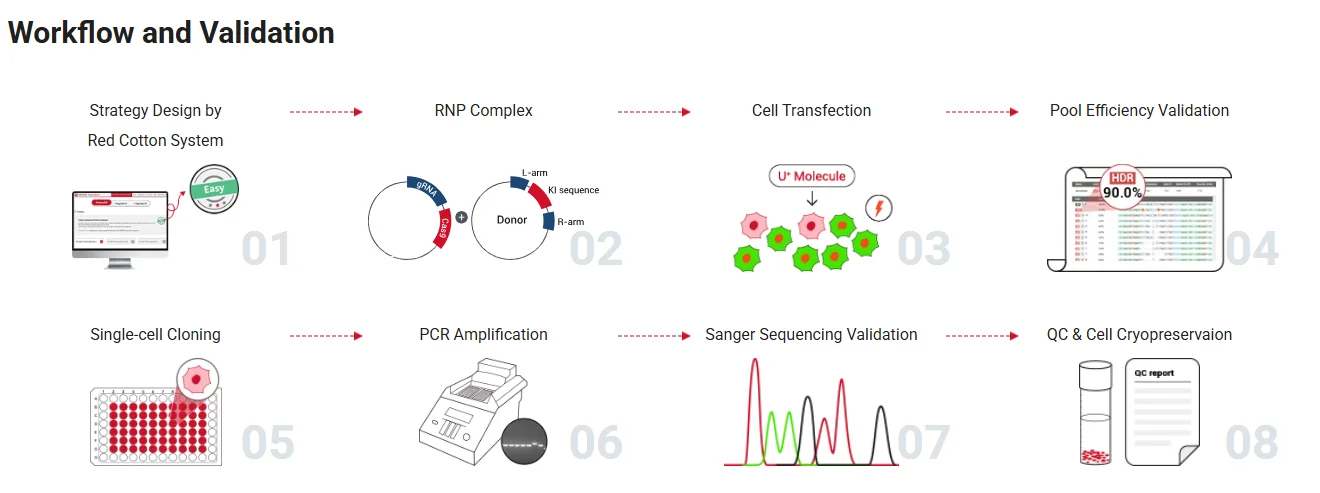
The overall workflow for generating CRISPR knock-in cell lines can be divided into the following key steps:
Step 1. Design of sgRNA and Target Site
After selecting the target gene, the first step is to design the single-guide RNA (sgRNA) using online tools such as CHOPCHOP or CRISPR. The 20-bp spacer sequence of the sgRNA ensures perfect complementarity to the target DNA. Special considerations during sgRNA design include:
- Ensuring the presence of a protospacer adjacent motif (PAM, e.g., NGG) near the target site to enable Cas9 recognition and cleavage;
- Avoiding high sequence homology with other genomic regions to minimize off-target effects.
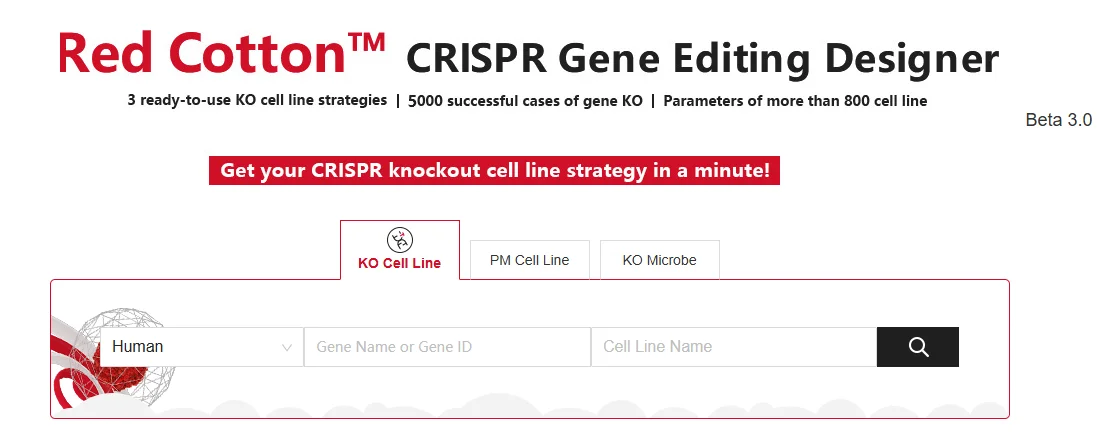
Ubigene has independently developed Red Cotton CRISPR Gene Editing Designer. Equipped with practical tools such as “Gene Risk Assessment,” “Expression Level Evaluation,” and “Copy Number Analysis,” the platform enables rapid, one-click evaluation of experimental risk and complexity. With a built-in database of over 1,400 cell parameters and more than 10,000 successful gene knockout cases, researchers can complete experimental design within a minute, significantly enhancing both efficiency and reliability.
Step 2. Donor Template Design and Construction
Donor templates typically consist of the exogenous sequence flanked by homology arms, with lengths typically ranging from several hundred to a few thousand base pairs. Depending on experimental requirements, donor templates can be designed as double-stranded DNA (dsDNA) or single-stranded DNA (ssDNA). Reporter genes, such as EGFP or Neo , can also be incorporated into the donor template to facilitate subsequent selection and quantitative analysis.
Step 3. Cell Transfection and Cas9/sgRNA Delivery
Common methods for cell transfection include plasmid-based delivery, electroporation, and viral vectors. To enhance editing efficiency, it is important to optimize transfection conditions, select suitable cell lines, and consider co-delivery of Cas9 mRNA or protein complexed with sgRNA. Following transfection, cells are typically subjected to short-term antibiotic selection or fluorescence-based assays to confirm successful integration.
Step 4. Activation of Homology-Directed Repair (HDR) and Cell Cycle Synchronization
HDR is most active during the S and G2 phases of the cell cycle; therefore, synchronizing cells can significantly enhance knock-in efficiency. For example, studies have shown that cell cycle synchronization can increase the efficiency of precise targeted gene repair three- to six-fold.
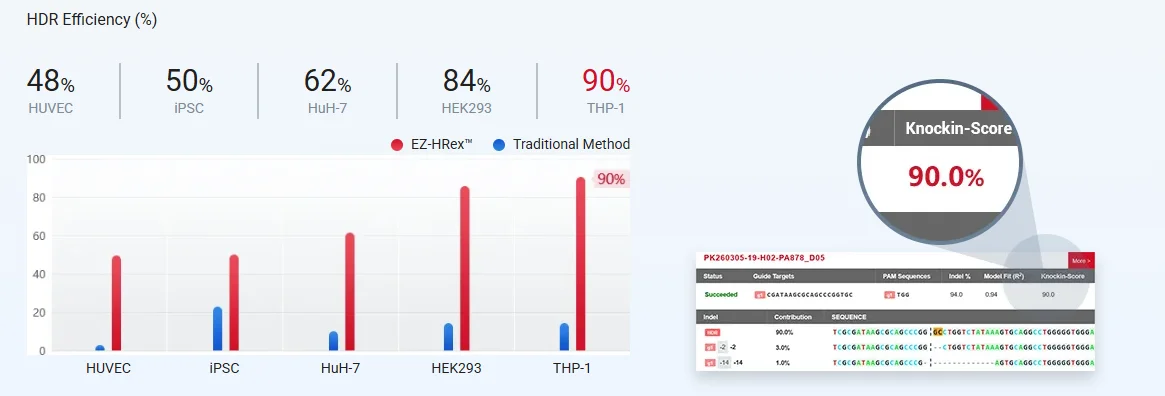
After years of R&D at Ubigene, based on the original EZ-editor™ gene-editing technique, Ubigene has upgraded it to EZ-HRex™ New Technique, by the innovative addition of the U+ molecule. This enhancement effectively regulates the cell cycle, promoting more cells to enter the S/G2 phase post-transfection. It also reduces the activity of the NHEJ pathway, thereby lowering the proportion of indel genotypes and improving HDR efficiency. Following this technological upgrade, both gene mutation and fragment knock-in efficiencies via HDR are significantly increased, with the proportion of HDR genotypes in the post-transfection cell pool reaching up to 90%.
Step 5. Screening and Validation
After successfully generating knock-in cell lines, the integration events are validated using methods such as PCR, sequencing, Western blot, or fluorescence-based assays. Combining antibiotic selection with reporter gene expression allows for the selection of positive clones, which can then be expanded through serial passaging to establish stable cell lines with consistent expression.
Ubigene's exclusively developed Genotype Analysis Tool can rapidly parse and analyze sequencing results from post-transfection cell pools in just one minute , efficiently accelerating experimental workflows.
Step 6. Establishment of Stable Cell Lines
Following successful gene integration, stable cell lines are established through single-cell cloning and expansion. Given the heterogeneity in gene expression regulation among cell lines, it is recommended to place the exogenous gene under an endogenous promoter to ensure stable and physiologically relevant expression.
What Affects Knock-In Efficiency & How to Optimize It
Enhancing CRISPR knock-in efficiency is critical for experimental success. Multiple factors influence the outcome, primarily including the following aspects:
Homology-Directed Repair (HDR) and Cellular DNA Repair Mechanisms
Cells primarily repair double-strand breaks (DSBs) via two pathways: non-homologous end joining (NHEJ) and homology-directed repair (HDR). While NHEJ is highly efficient, it frequently introduces small insertions or deletions (indels). HDR, on the other hand, is the preferred pathway for precise gene knock-in, although its efficiency is generally lower.
Optimization Strategy: After years of R&D of Ubigene, based on the original EZ-editor™ gene-editing technique, Ubigene has upgraded it to EZ-HRex™ New Technique, by innovatively adding U+ Molecule. This enhancement effectively regulates the cell cycle, promoting more cells to enter the S/G2 phase post-transfection. It also reduces the activity of the NHEJ pathway, thereby lowering the proportion of indel genotypes and improving HDR efficiency. Following this technological upgrade, both gene mutation and fragment knock-in efficiencies via HDR are significantly increased, with the proportion of HDR genotypes in the post-transfection cell pool reaching up to 90% .
Cell Cycle Synchronization and Treatment
As mentioned previously, HDR is more active during the S and G2 phases of the cell cycle. Synchronizing the cell population in the G2/M phase using chemical agents, such as Nocodazole or ABT , can markedly increase the frequency of precise DNA insertion.
Delivery Methods for Cas9 and Donor Templates
Efficient delivery of Cas9 and donor templates is essential for successful knock-in cell line generation. Common delivery methods include plasmid-based transfection, electroporation, viral vectors, and ribonucleoprotein (RNP) complexes.
Optimization Strategies: During cell transfection, employing RNP complexes can further reduce off-target effects and enhance editing precision. Additionally, delivery via intracellularly packaged viral vectors can achieve relatively stable expression, though biosafety considerations must be carefully addressed.
Regulation of Exogenous Gene Expression Post-Integration
In CRISPR/Cas9 knock-in approaches, exogenous genes placed under the control of endogenous promoters have a natural advantage in achieving physiologically relevant expression. However, the chromatin environment at different integration sites can significantly influence the expression levels of the exogenous gene.
Optimization Strategy: During construct design, knock-in templates can incorporate a Protein Quantification Reporter (PQR) system to ensure that the integrated gene achieves stable expression under endogenous regulatory control. Expression can subsequently be validated by fluorescence assays, Western blotting, or other orthogonal methods.
Multi-Parameter Optimization in Experimental Design
Every step from sgRNA design and donor template construction to cell transfection critically influences the final knock-in efficiency. Systematic parameter screening and optimization experiments help establish a standardized and reproducible CRISPR knock-in workflow. For example, constructing a gRNA library to identify optimal cleavage sites can reveal genotype-specific vulnerabilities in cancer models, providing a basis for subsequent therapeutic strategies.
Case Studies and Future Perspectives
Applications in Cancer and Immunotherapy
CRISPR gene knock-in technology has shown tremendous potential in cancer research and immunotherapy. For example, by knocking in reporter genes or repairing key tumor-driving genes, precise cancer cell models can be established,providing a platform for drug-target discovery, directed immune-cell engineering and therapeutic design. In T cell engineering, CRISPR enables multiplexed knock-ins, allowing the generation of CAR-T cells with enhanced anti-tumor activity, thereby making treatments more precise and durable.
Literature Example:Targeted CAR Gene Knock-In Enhances Antitumor
Activity [1]
The study targeted CD19 CAR knock-in at the TRAC locus in T cells,
achieving more uniform CAR expression and enhanced tumor clearance in a
mouse model of acute lymphoblastic leukemia (ALL).
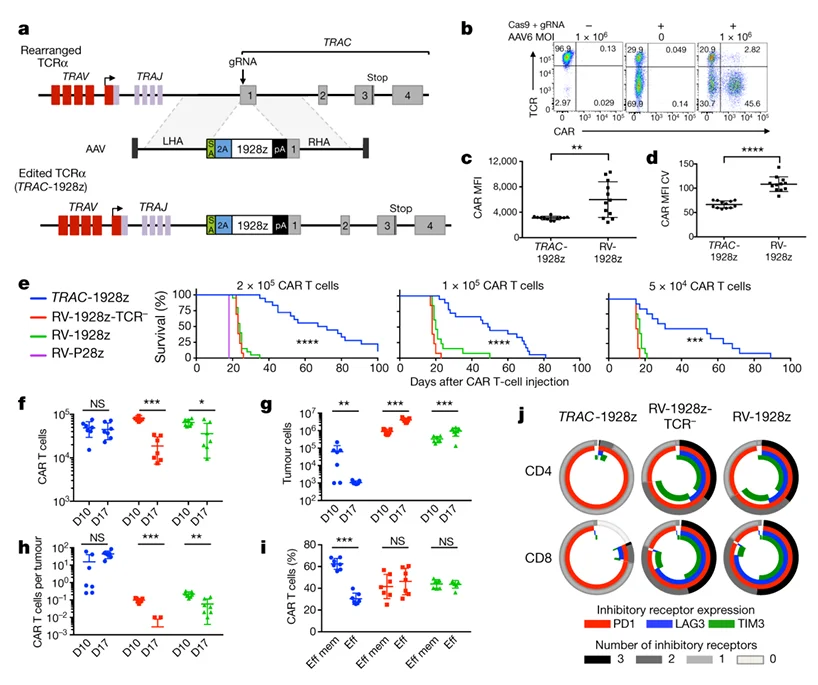
Fig 1.TRAC-CAR T cells outperform conventional CAR T cells by preventing exhaustion in vivo
Animal Models and Plant Genome Editing
Beyond cell lines, CRISPR-mediated knock-in technology plays a critical role in the generation of animal models. Notably, the Easi-CRISPR method has been successfully applied to create conditional knockout/knock-in mouse models,significantly shortening model-establishment timelines and increasing success rates. In plant genome editing, CRISPR/Cas9 has also enabled precise integration of exogenous genes, advancing crop improvement and functional gene studies.
Literature Example:Generation of Conditional Knockout and Knock-In Mouse
Models Using Easi-CRISPR[2]
The study demonstrated that mice carrying conditional or insertion
alleles can be generated in a single step using long single-stranded DNA
(ssDNA) donors and CRISPR ribonucleoprotein (RNP) complexes.
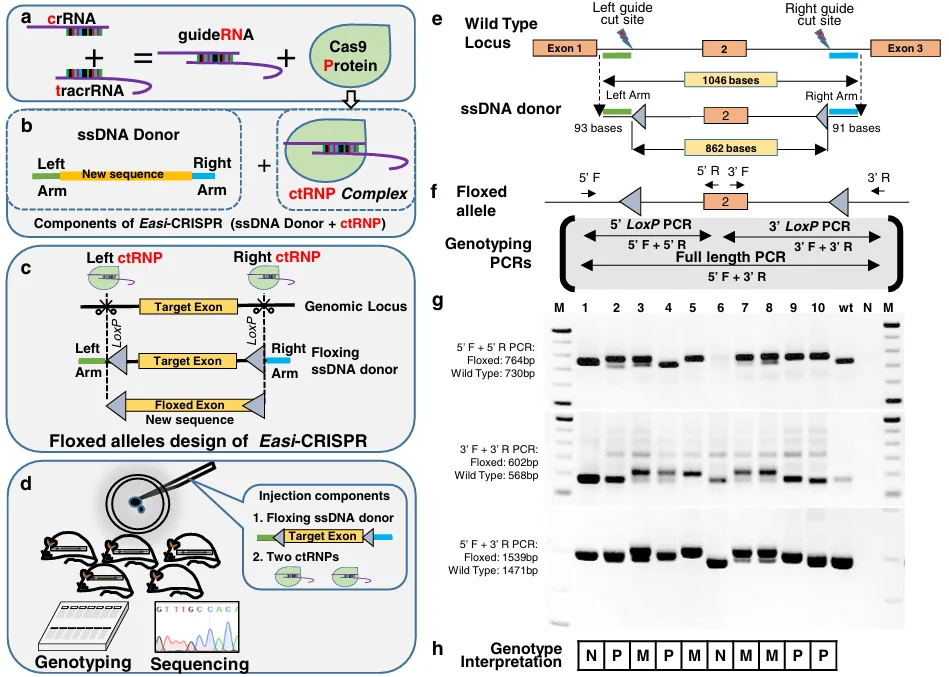
Fig 2.Generation of a floxed Pitx1 allele using Easi-CRISPR.
Future Prospects and Emerging Trends
As CRISPR technology continues to mature, several future development trends in gene knock-in applications can be anticipated:
- Improved precision through novel Cas variants and optimized sgRNA designs can reduce off-target effects, enabling safer and more accurate genome editing.
- Multiplex editing and functional screening via gRNA libraries and high-throughput sequencing allows simultaneous editing of multiple genes, providing more comprehensive insights for disease mechanism studies and precision therapies.
- Clinical translation to cancer immunotherapy and treatment of genetic disorders, targeted gene repair and replacement can translate CRISPR editing outcomes into clinical applications, while AI-assisted design helps minimize adverse effects.
- Combining CRISPR knock-in technology with stem cells and 3D organ models facilitates disease modeling and drug screening, advancing regenerative medicine and precision medicine.
Conclusion and Discussion
Overall, the use of the CRISPR/Cas9 system to generate knock-in cell lines not only enhances the precision of genome editing but also provides a solid foundation for subsequent biological functional studies and clinical applications. Although challenges remain in improving HDR efficiency and minimizing off-target effects,ongoing multi-parameter optimization and the development of novel reagents will further refine this technology. In the future, CRISPR knock-in approaches are poised to expand their applications in precision medicine and gene therapy.
Ubigene has long focused on the development and provision of gene point mutation and knock-in cell models, to provide researchers with reliable, efficient experimental solutions. Utilizing our proprietary EZ-HRex™ precise editing technology ,we overcome the limitations of traditional methods, which are often low in efficiency and time-consuming,enabling positive-clone generation within as little as six weeks, significantly shortening research timelines. Whether your focus is on studying gene function, disease mechanisms, or developing novel therapeutic targets, Ubigene is a trusted partner for your research. Contact us today to receive a customized solution and accelerate your scientific progress!
References
- [1]Eyquem, J., Mansilla-Soto, J., Giavridis, T. et al. Targeting a CAR to the TRAC locus with CRISPR/Cas9 enhances tumour rejection. Nature 543, 113–117 (2017). https://doi.org/10.1038/nature21405.
- [2]Quadros RM, Miura H, Harms DW, Akatsuka H, Sato T,et al. Easi-CRISPR: a robust method for one-step generation of mice carrying conditional and insertion alleles using long ssDNA donors and CRISPR ribonucleoproteins. Genome Biol. 2017 May 17;18(1):92. doi: 10.1186/s13059-017-1220-4. PMID: 28511701; PMCID: PMC5434640.
 Promotions