Customer Publication Highlights: How Ubigene KO Cell Lines Advance Disease Research from Cancer to Immunology

Customer Publication Highlights
From tumorigenesis and metastasis to immune regulation, viral infection, cell death, and metabolic disorders, knockout (KO) cell lines have become valuable tools for investigating disease mechanisms across a wide range of research areas. In this article, we highlight selected publications from Ubigene’s customers, spanning cancer, immunology, infectious diseases, cell death, and metabolism. Through these real-world research examples, discover how KO cell lines can facilitate gene function analysis and advance our understanding of disease mechanisms. We hope these research strategies and application examples will inspire your work and help you conduct your research more efficiently.
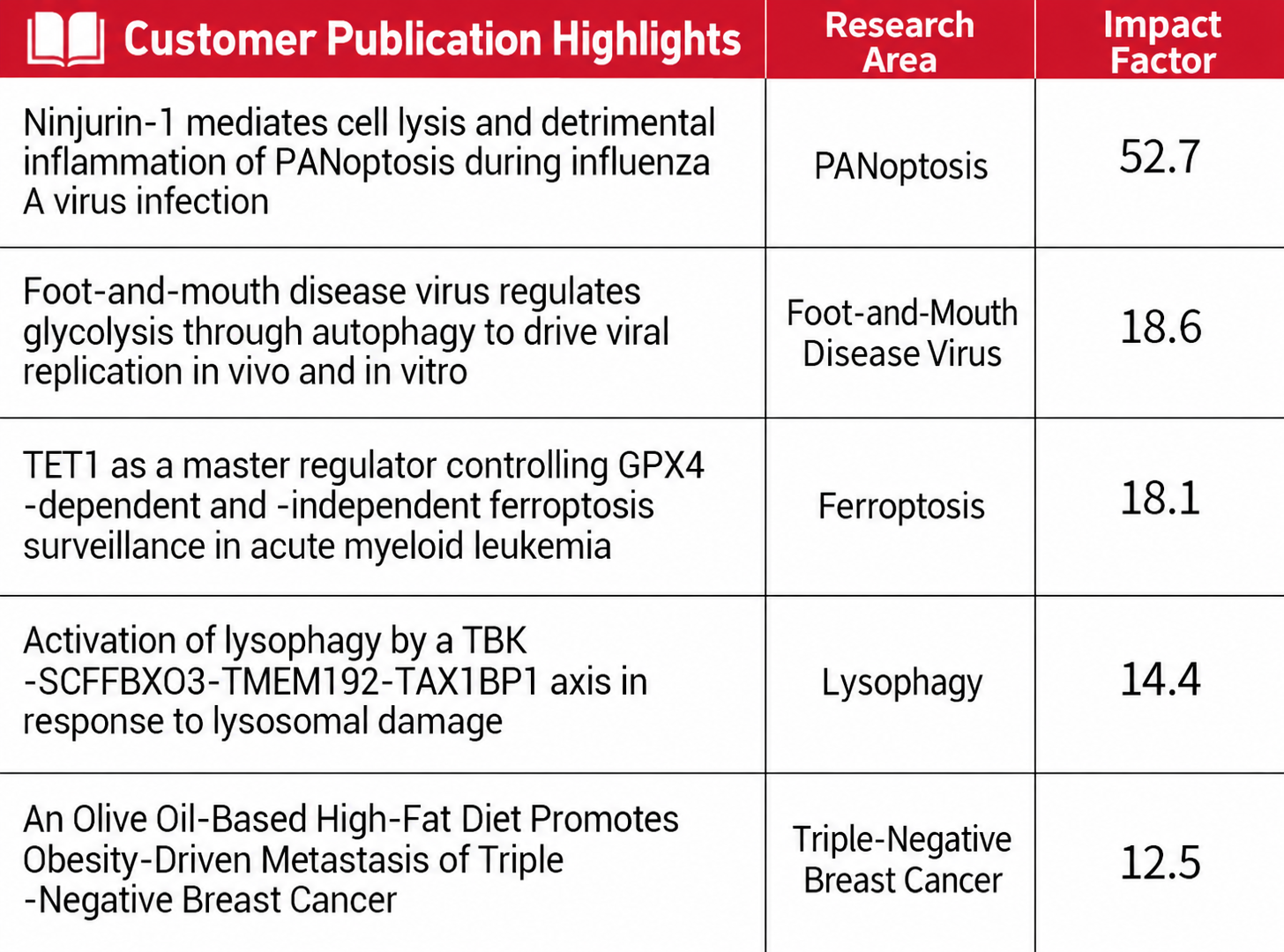
1. PANoptosis
Journal:
Signal Transduction and Targeted Therapy
IF:
52.7
Organisation:
China-Japan Friendship Hospital
Related product:
NINJ1 Knockout
A549 cells
and
THP-1 cells
Abstract:
This study not only reveals the mechanism by which NINJ1 acts as a key
downstream effector of viral infection but also highlights its potential
as a therapeutic target and biomarker for viral pneumonia [1]. Ubigene
supported this research by providing NINJ1 knockout A549 and THP-1 cell
models (#YKO-H951, #YKO-H1296), which played an important role in
elucidating how NINJ1 mediates cell lysis and inflammatory responses
during IAV-induced PANoptosis.
Case study:
Ubigene Knockout Cell Models Help Reveal the Role of NINJ1 in
Influenza-Induced PANoptosis
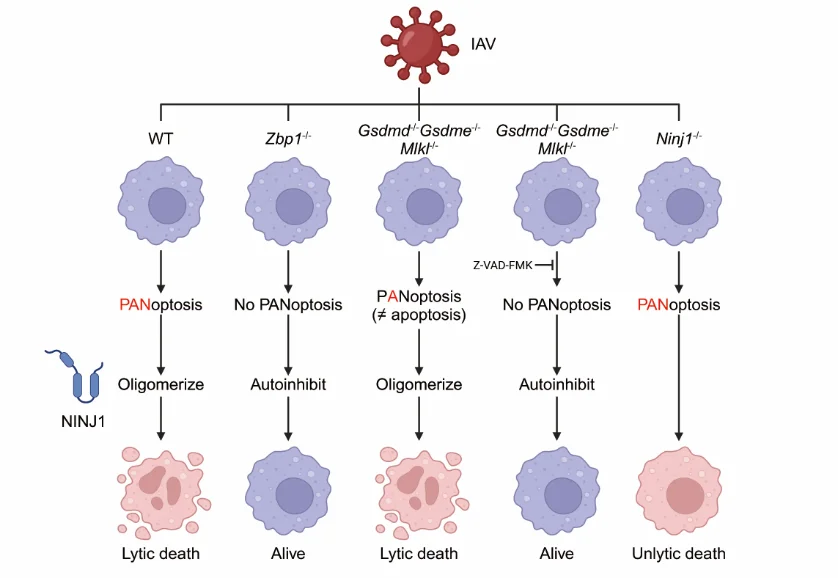
Figure 1. The coupling between NINJ1 oligomerization and PANoptosis activation in IAV-infected BMDMs
2. Foot-and-Mouth Disease Virus
Journal:
Autophagy
IF:
18.6
Organisation:
Lanzhou University
Related product:
Hif1a Knockout cell line (RAW 264.7)
Abstract:
This study elucidates the molecular mechanisms by which foot-and-mouth
disease virus (FMDV) regulates host cell glycolysis through two distinct
autophagy pathways. These findings deepen our understanding of how the
autophagy–glycolysis axis regulates viral replication and provide a
theoretical basis and new directions for developing antiviral strategies
targeting metabolic pathways [2]. Ubigene provided the Hif1a Knockout
cell line (RAW 264.7) (#YKO-M042) for this study, supporting the
validation of a key mechanism whereby FMDV induces SIRT3 downregulation
through mitophagy, activates the expression of key glycolytic enzymes in
an HIF1A-dependent manner, and reprograms host energy metabolism. This
pathway was further identified as a critical mechanism promoting FMDV
replication in vitro.
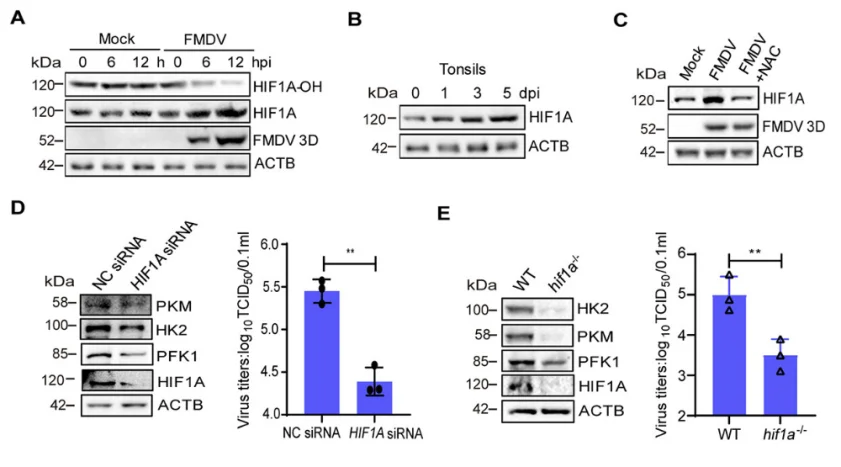
Figure 2. FMDV promotes the HK2 expression by stabilizing HIF1A
3. Ferroptosis
Journal:
Nature Communications
IF:
18.1
Organisation:
The First Affiliated Hospital of Zhejiang University School of Medicine
Related product:
Nfe2l2 Knockout cell line (RAW 264.7)
Abstract:
This study identified TET1 as a central epigenetic regulator of
ferroptosis surveillance and established a clinically translatable
strategy to overcome tumor resistance to ferroptosis, using acute
myeloid leukemia (AML) as a validation model [3]. Ubigene provided the
Nfe2l2 Knockout cell line (RAW 264.7) (#YKO-M030) to support this
research, contributing to the elucidation of the molecular pathways
through which TET1 regulates GPX4-dependent and GPX4-independent
ferroptosis surveillance in AML, as well as the investigation of how the
macrophage microenvironment modulates tumor resistance to ferroptosis.
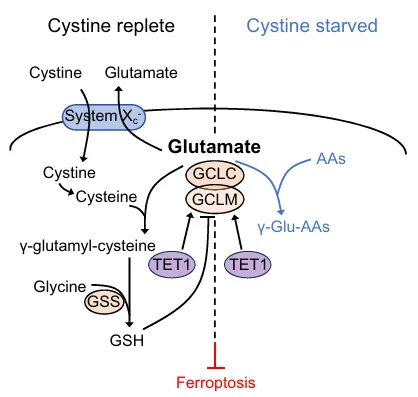
Figure 3. Schematic depiction of the TET1/GCL axis in ferroptosis surveillance
4. Lysosomal Autophagy
Journal:
Nature Communications
IF:
14.4
Organisation:
Kyungpook National University
Related product:
FBXO3 Knockout cell line (Hep G2)
Abstract:
The study highlights the importance of the TBK1–FBXO3–TMEM192–TAX1BP1
axis in lysophagy and underscore the critical role of FBXO3 in
maintaining lysosomal integrity [4]. In this study, the FBXO3 Knockout
cell line (Hep G2) provided by Ubigene played an important role in
elucidating the complete molecular mechanism by which the
TBK1–SCFFBXO3–TMEM192–TAX1BP1 signaling axis senses lysosomal damage and
initiates lysophagy.
Case study:
Ubigene KO Cells Help Uncover a Key Regulatory Mechanism of
Lysophagy
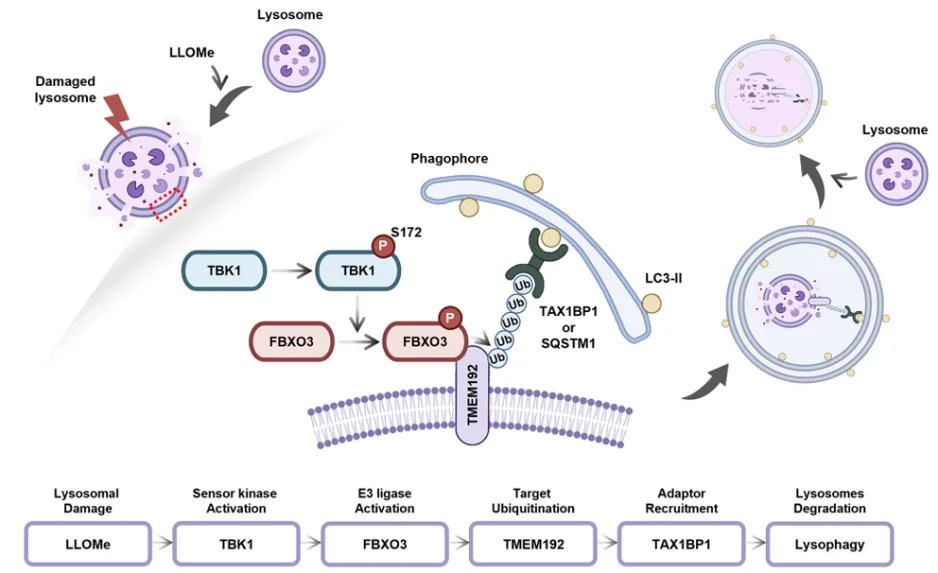
Figure 4. Lysosomal autophagy regulatory mechanism via the TBK1–FBXO3–TMEM192–TAX1BP1 axis
5. Triple-Negative Breast Cancer
Journal:
Cancer Research
IF:
12.5
Organisation:
University of Iowa
Related product:
FABP5 Knockout
4T1 cells
and
MDA-MB-231-GFP cells
Abstract:
Fatty acid-binding protein 5 (FABP5) in TNBC cells is considered
essential for oleic acid-mediated activation of the PKC/ALDH pathway.
Studies have shown that FABP5 deficiency reduces TNBC metastasis across
multiple mouse models [5]. In this study, FABP5 Knockout 4T1 cells
(#YKO-M328) and FABP5-knockout MDA-MB-231-GFP cells provided by Ubigene
helped establish FABP5 as a key mediator of oleic acid-driven TNBC
metastasis, offering insights into potential targeted therapeutic
strategies for obesity-associated triple-negative breast cancer.
Case study:
Ubigene Helps Reveal How Dietary Fat Promotes TNBC Metastasis
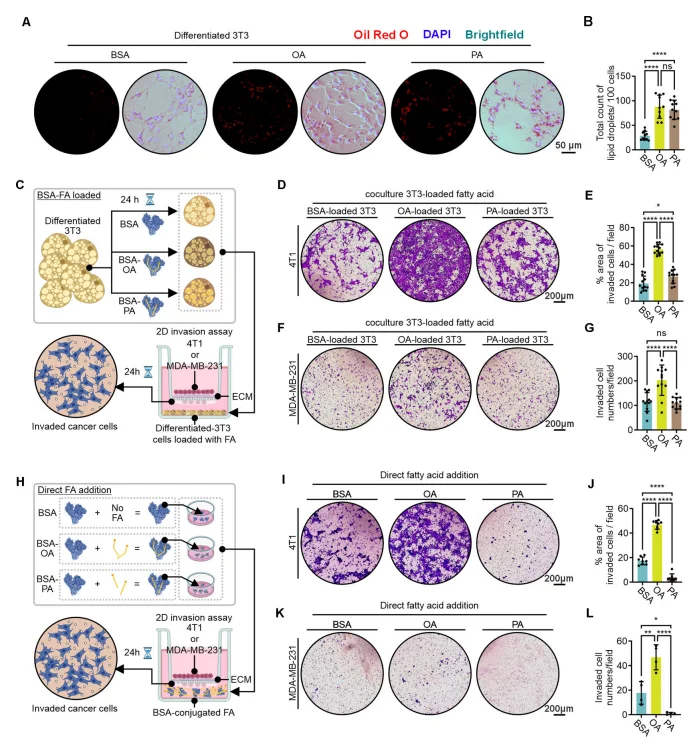
Figure 5. Oleic acid promotes the invasion of TNBC cells in vitro
Ubigene Knockout Cell Lines
With extensive expertise in gene editing, Ubigene has accumulated over 13,000 successful gene-editing cases and established a comprehensive KO cell product portfolio covering a wide range of popular targets and cell models. We offer over 10,000 KO cell products , along with professional custom KO cell line development services, to support diverse research needs, including disease research, target validation, and mechanistic studies.
To date, Ubigene has served over 10,000 life science laboratories, pharmaceutical companies, and CROs worldwide. By combining proven technologies with reliable, high-quality gene-editing solutions, we empower researchers to obtain dependable KO cell models more efficiently, advancing gene function studies and the exploration of disease mechanisms.
References
[1] Xu Y, Zheng Y, Liu Y, Wei C, Ren J, Zuo W, Gu R, Liu H, Deng X,
Liu Y, Shang X, Ge W, Li Z, Huang Y, He D, Shen X, Wang Z, Lyu C,
Wang Z, Mu Y, Zhang Z, Wu H, Li H, Cao B. Ninjurin-1 mediates cell
lysis and detrimental inflammation of PANoptosis during influenza A
virus infection. Signal Transduct Target Ther. 2025 Sep
23;10(1):307. doi: 10.1038/s41392-025-02391-9. PMID: 40983621;
PMCID: PMC12454662.
[2] Xue Q, Liu H, Dong Z, Zhu Y, Yang F, Cao W, Zhu Z, Zheng H.
Foot-and-mouth disease virus regulates glycolysis through autophagy
to drive viral replication in vivo and in vitro. Autophagy. 2026 Jul
1:1-16. doi: 10.1080/15548627.2026.2693780. Epub ahead of print.
PMID: 42338171.
[3] Yang L, Lu J, Yun W, Yang X, Sun J, Ge C, Han F, Li X, Min J,
Huang H, Wang F, Jiang X. TET1 as a master regulator controlling
GPX4-dependent and -independent ferroptosis surveillance in acute
myeloid leukemia. Nat Commun. 2026 Jan 20;17(1):1800. doi:
10.1038/s41467-026-68509-x. PMID: 41559050; PMCID: PMC12917170.
[4] Park NY, Jo DS, Yang JY, Bae JE, Kim JB, Kim YH, Kim SH, Kim P,
Lee DS, Yoshimori T, Jo EK, Yeom E, Cho DH. Activation of lysophagy
by a TBK1-SCFFBXO3-TMEM192-TAX1BP1 axis in response to lysosomal
damage. Nat Commun. 2025 Jan 28;16(1):1109. doi:
10.1038/s41467-025-56294-y. PMID: 39875384; PMCID: PMC11775327.
[5] Avellino A, Jiang X, Lee M, Yu J, Liu S, Han X, Li J, Shilyansky
J, Wang Z, Curry M, Xiong Y, Lizarraga IM, Huang Y, Sugg SL, Hao J,
Li B. An Olive Oil-Based High-Fat Diet Promotes Obesity-Driven
Metastasis of Triple-Negative Breast Cancer. Cancer Res. 2025 Dec
15;85(24):5015-5032. doi: 10.1158/0008-5472.CAN-25-0822. PMID:
40911782; PMCID: PMC12502211.
 Promotions