
Ubigene’s Genome-Wide CRISPR Library Accelerates Breakthrough in the Core Mechanism of Cisplatin Resistance in ESCC

Introduction
Esophageal Squamous Cell Carcinoma (ESCC) is a highly aggressive malignancy, with cisplatin (DDP)-based chemotherapy serving as a primary clinical treatment option. However, primary and acquired resistance severely limit therapeutic efficacy, standing as a leading cause of poor patient prognosis. Until now, the exact molecular mechanisms underlying cisplatin resistance and tumor immunosuppression in ESCC have remained under discovered. In a study published in Cell Death & Disease, Prof. Hongying Liao’s team from the Sixth Affiliated Hospital of Sun Yat-sen University utilized genome-wide CRISPR screening to identify PHKG2 as a pivotal kinase driving cisplatin resistance in ESCC; dissected how PHKG2 induces M2 macrophage polarization to foster an immunosuppressive microenvironment, while demonstrating that the PHKG2 inhibitor Prexasertib effectively resensitizes tumor cells to cisplatin. Ubigene Biosciences provided the Human Genome-Wide CRISPR Knockout Library (Cat. No.: LIBR-H002AB-LV1000) to support this discovery.
Research Background
Esophageal squamous cell carcinoma (ESCC) is a high-incidence malignancy, with cisplatin-based chemotherapy widely used as a primary treatment regimen; however, chemoresistance remains a widespread clinical challenge. Protein phosphorylation, RNA m⁶A modification, and liquid-liquid phase separation (LLPS) are all known to actively contribute to tumor chemoresistance and microenvironment remodeling.
PHKG2, a member of the phosphorylase kinase family, has been previously implicated in tumor metabolism and ferroptosis. Yet, its role in ESCC cisplatin resistance and tumor immunity remains undefined; IGF2BP3, a classic m⁶A reader protein, mediates chemoresistance by stabilizing target mRNAs. The precise regulatory crosstalk between PHKG2 and IGF2BP3, as well as their downstream effector pathways, remains to be elucidated. Therefore, uncovering a complete signaling axis is urgently required to overcome current therapeutic bottlenecks in ESCC.
Research Methods
- Multi-omics integrative screening identified PHKG2 as a key driver of cisplatin resistance in ESCC;
- In vitro and in vivo validation demonstrated that PHKG2 promotes cisplatin resistance and malignant phenotypes;
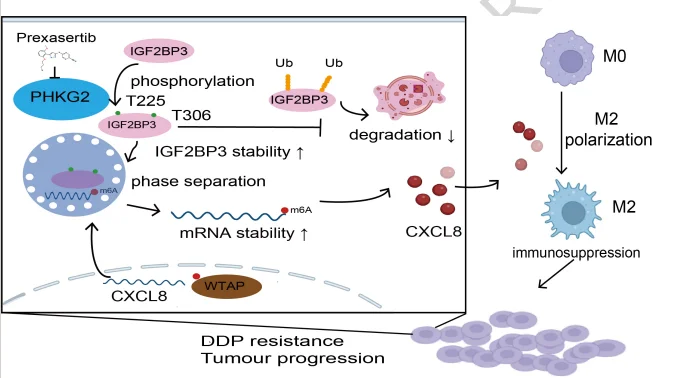
- Mechanistic studies reveal that PHKG2 phosphorylates IGF2BP3 at the T225 and T306 sites, thereby preventing its ubiquitination-mediated degradation;
- The phosphorylation was confirmed to regulate IGF2BP3 liquid–liquid phase separation, which stabilizes CXCL8 mRNA in an m⁶A-dependent manner;
- CXCL8 was verified to mediate M2 polarization of macrophages, constructing an immunosuppressive microenvironment;
- Prexasertib was identified as a PHKG2 inhibitor and its resistance-reversing effect was validated in PDO and PDX models.
Key Findings
1. Integrated multi-omics screening identifies PHKG2 as a key regulator of ESCC cisplatin resistance and poor prognosis
By integrating data from a CRISPR knockout library screen, transcriptomic analysis of cisplatin-resistant cells, and clinical samples with differential responses to chemotherapy, the researchers identified candidate gene PHKG2 . Cisplatin treatment induced PHKG2 upregulation, and PHKG2 remained highly expressed in cisplatin-resistant cells. Clinical analysis further demonstrated that patients with high PHKG2 expression exhibited poorer tumor differentiation, increased lymph node metastasis, reduced response rates to cisplatin-based chemotherapy, and significantly shorter overall survival and disease-free survival. Multivariate regression analysis identified PHKG2 as an independent prognostic risk factor for ESCC.
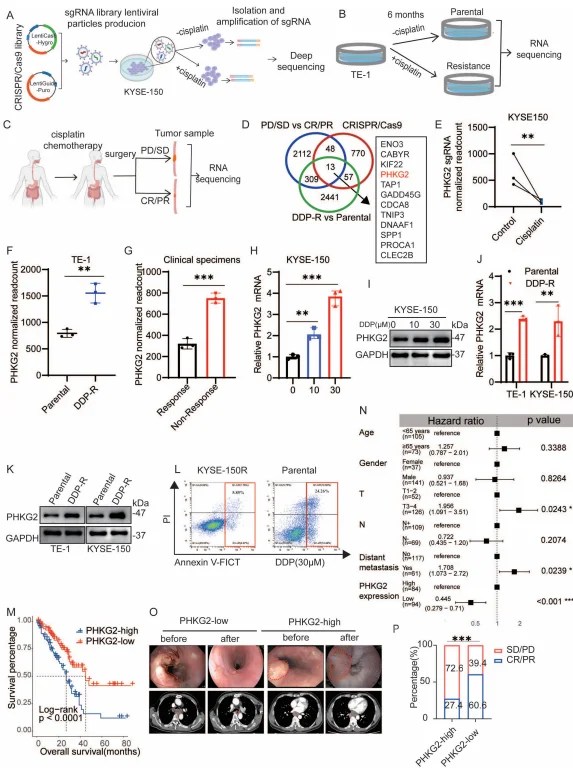
Figure 1. CRISPR screening and transcriptomic profiling of DDP-resistant cells and patient samples identify PHKG2 as a candidate driver of DDP resistance in ESCC.
2. PHKG2 enhances cisplatin resistance and promotes ESCC tumor growth in vitro and in vivo
Functional studies demonstrated that PHKG2 overexpression increased the half-maximal inhibitory concentration (IC 50 ) of cisplatin, promoted cell proliferation, and reduced cisplatin-induced apoptosis in ESCC cells. Conversely, PHKG2 knockdown or knockout restored cisplatin sensitivity. In vivo xenograft models further confirmed that PHKG2 depletion combined with cisplatin treatment significantly suppressed tumor growth, reduced tumor cell proliferation, and increased apoptosis, thereby reversing the cisplatin-resistant phenotype.
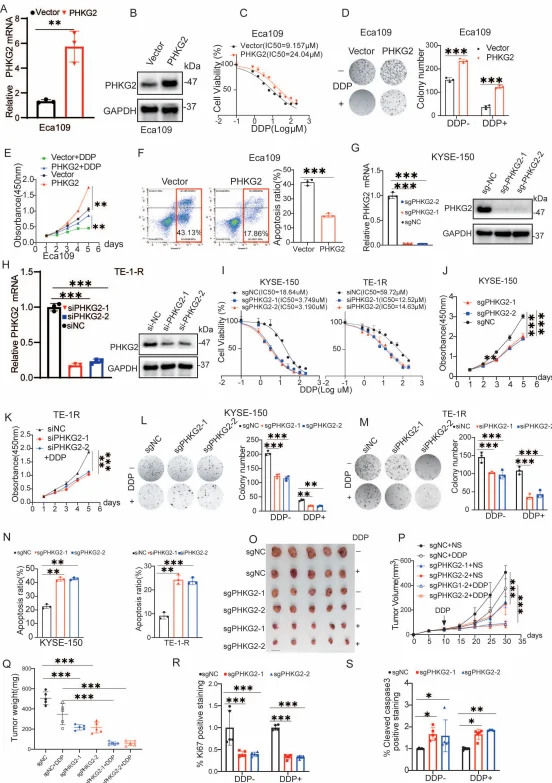
Figure 2. PHKG2 drives DDP resistance in vitro and in vivo.
3. PHKG2 stabilizes IGF2BP3 protein through phosphorylation at T225/T306 sites and prevents its ubiquitin-dependent degradation
Mass spectrometry and co-immunoprecipitation (Co-IP) analyses confirmed the interaction and co-localization between PHKG2 and IGF2BP3. PHKG2 increased IGF2BP3 protein abundance without affecting its transcriptional level; further investigation identified T225 and T306 of IGF2BP3 as phosphorylation sites mediated by PHKG2. This phosphorylation modification inhibited CHIP-mediated ubiquitination, reducing proteasomal degradation of IGF2BP3 and resulting in enhanced protein stability. Mutations at these phosphorylation sites increased IGF2BP3 ubiquitination and shortened its protein half-life.
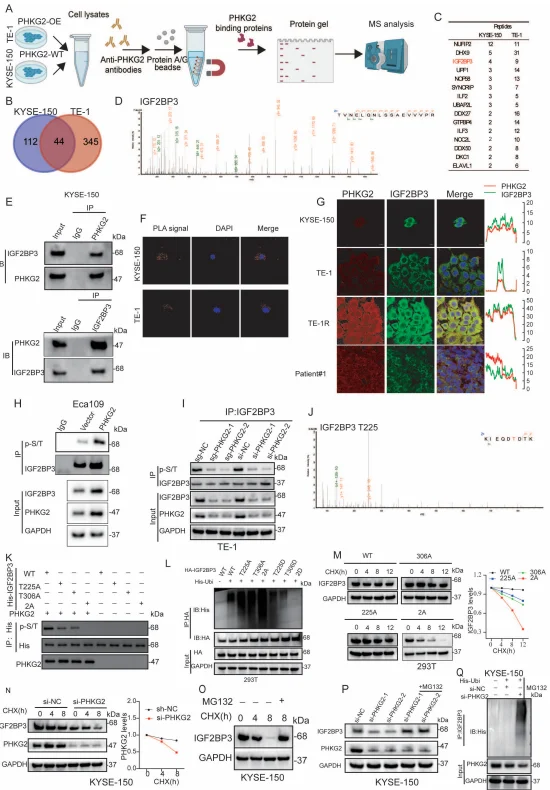
Figure 3. PHKG2 stabilizes IGF2BP3 protein through phosphorylation at T225 and T306.
4. The PHKG2–IGF2BP3 axis upregulates CXCL8 expression through m6A-dependent regulation and phase separation
As an m6A reader protein, IGF2BP3 recognizes and binds m6A-modified CXCL8 mRNA. PHKG2-mediated phosphorylation of IGF2BP3 enhances its liquid–liquid phase separation (LLPS) ability, thereby promoting CXCL8 transcript stabilization and increasing CXCL8 expression. Disruption of m6A modification or impairment of IGF2BP3 phase separation reduced CXCL8 expression, demonstrating that the PHKG2–IGF2BP3 axis regulates CXCL8 expression through an m6A-dependent mechanism.
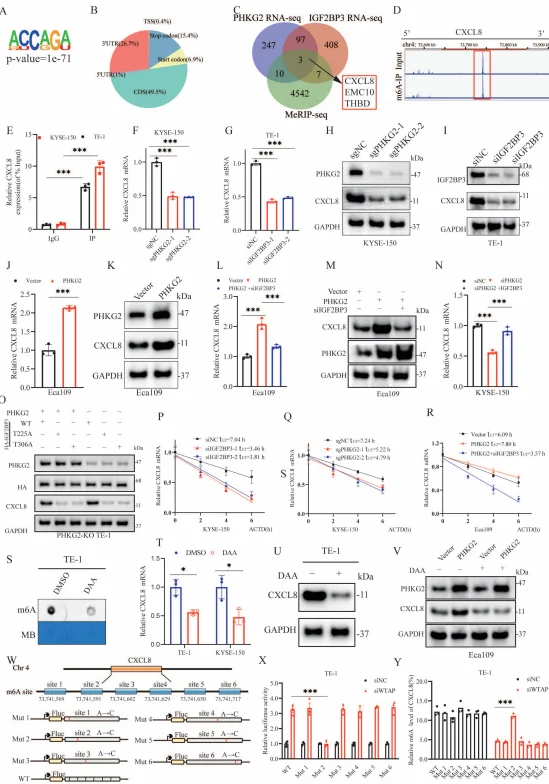
Figure 5. PHKG2 and IGF2BP3 regulate CXCL8 expression in an m6A-dependent manner
5. The PHKG2/CXCL8 axis induces M2 macrophage polarization and establishes an immunosuppressive tumor microenvironment
By promoting CXCL8 secretion, PHKG2 induces macrophage polarization toward a tumor-promoting M2 phenotype, resulting in impaired CD8⁺ T-cell function and weakened antitumor immunity within the tumor microenvironment. Treatment with a CXCL8 receptor antagonist reversed these effects, demonstrating that CXCL8 serves as a key downstream mediator connecting cisplatin resistance with immune suppression.
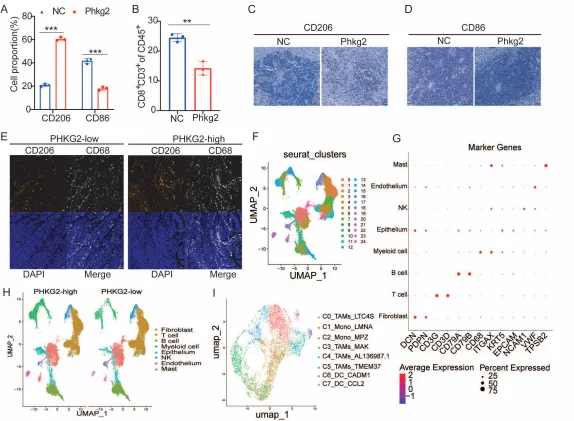
Figure 8. High expression of PHKG2 in ESCC cells is closely related to M2 polarization of macrophages
6. Targeting PHKG2 with prexasertib reverses cisplatin resistance
Binding assays demonstrated that prexasertib can directly target PHKG2. In patient-derived organoid (PDO) and patient-derived xenograft (PDX) models, prexasertib treatment alone inhibited tumor growth, while combination treatment with cisplatin produced significant synergistic effects, highlighting PHKG2 as a potential therapeutic target for overcoming cisplatin resistance in ESCC.
Significance and Innovations
- Mechanistic innovation: This study establishes the PHKG2–IGF2BP3–CXCL8 signaling axis for the first time, integrating three major regulatory mechanisms—protein phosphorylation, liquid–liquid phase separation, and m6A RNA modification—to elucidate a novel mechanism underlying cisplatin resistance in ESCC;
- Immunological insight: The study reveals that PHKG2 not only regulates chemoresistance but also remodels tumor-associated macrophage phenotypes to promote immunosuppression, uncovering a previously unrecognized link between cisplatin resistance and immune evasion;
- Therapeutic potential: The findings demonstrate that PHKG2 can serve as a potential prognostic biomarker and therapeutic target for ESCC. Its expression level may help predict patient responses to cisplatin-based chemotherapy;
- Translational innovation: The identification of the clinically applicable compound prexasertib as a PHKG2-targeting agent provides a potential strategy to overcome cisplatin resistance without the need for developing entirely new drugs, facilitating future exploration of combination therapeutic approaches.
Summary
In this study, the researchers identified the kinase PHKG2 as a key driver of cisplatin resistance and an immunosuppressive tumor microenvironment in ESCC. PHKG2 phosphorylates IGF2BP3 at the T225 and T306 sites, inhibits its ubiquitination-mediated degradation, and enhances its liquid–liquid phase separation capacity; as an m6A reader protein, IGF2BP3 stabilizes CXCL8 mRNA in an m6A-dependent manner, leading to increased CXCL8 expression. CXCL8 not only promotes cisplatin resistance in tumor cells but also induces M2 macrophage polarization and suppresses CD8⁺ T-cell antitumor function, thereby establishing a dual tumor-promoting effect. Targeting PHKG2 with prexasertib effectively reverses cisplatin resistance and suppresses tumor progression, providing a theoretical foundation and preclinical evidence for developing combined chemotherapy with targeted therapy or immunotherapy strategies for ESCC.
Ubigene Biosciences CRISPR-iScreen™ Library
CRISPR-iScreen™ is an innovative technology independently developed by Ubigene Biosciences, designed to achieve efficient CRISPR screening. Currently, Ubigene Biosciences offers over 40 types of ready-to-ship CRISPR library plasmids , covering whole-genome knockout/inhibition/activation libraries for human, mouse, green monkey, pig, and other species; in addition, there are CRISPR knockout/inhibition/activation sub-libraries constructed for kinases, cell cycle, membrane proteins, metabolism, and other related genes to help you easily achieve target screening! We also provide 150+ ready-to-ship library viruses, 1000+ library Cell Pool products, one-stop CRISPR library (in vivo/in vitro) functional screening services, and library NGS sequencing services, ready to support your research needs at any time.
Inquire Now! Promotions