
IF 12.2 | Ubigene Reveals SF3B1 Mutation Suppresses DNA Repair via circATP9B-Actin Disruption

Introduction
Spliceosome factor 3b subunit 1(SF3B1) is a splicing factor frequently mutated in myelodysplastic syndromes, hematological malignancies, and various solid tumors. SF3B1 mutations cause defects in homologous recombination repair, rendering tumors sensitive to PARP inhibitors. However, the underlying molecular mechanisms remain elusive. A recent study published in Cell Death & Disease by Rui Qian and colleagues at China-Japan Union Hospital of Jilin University revealed that the SF3B1-K700E mutation upregulates circATP9B, which mediates the ubiquitination and degradation of MYH9. This disrupts the assembly of the nuclear actin network, impairs the relocalization and clustering of DNA double-strand breaks, and suppresses homologous recombination repair. Both cellular and in vivo experiments demonstrated that knockdown of circATP9B or restoration of MYH9 expression reversed the repair defects. The K562 SF3B1-K700E mutant cell line, a key tool in this study, was provided by Ubigene.

Background
SF3B1 is an essential component of the U2 snRNP spliceosome complex, involved in the recognition of the 3' splice site of introns in pre-mRNA. SF3B1 is frequently mutated in multiple cancers, leading to a significant increase in aberrant 3' splice site selection and alternative splicing events. Extensive studies have demonstrated that aberrant pre-mRNA splicing caused by SF3B1 mutations promotes cancer progression by altering the expression of genes critical for cancer-related pathways. Cells harboring SF3B1 mutations exhibit defects in homologous recombination repair, but the molecular mechanisms underlying this DNA repair deficiency remain incompletely defined.
Circular RNAs (circRNAs) are covalently closed RNA molecules generated through back-splicing, in which the 5' splice site of a downstream intron is joined to the 3' splice site of an upstream intron. This process is dependent on the RNA spliceosome complex, including U2 snRNP. Reduced SF3B1 expression has been shown to alter circRNA expression in cells. Studies have also reported altered circRNA expression in myelodysplastic syndrome patient samples harboring SF3B1 mutations. However, systematic investigations into how SF3B1 mutations disrupt circRNA expression have not been reported.
Key Findings
To investigate how SF3B1 alters circRNA expression, the authors performed high-throughput sequencing analysis in cells carrying SF3B1 mutations. Sequencing data revealed that SF3B1 mutation altered circRNA expression across multiple cell lines , with most differentially expressed circRNAs showing cell-type specificity. However, circATP9B expression was consistently upregulated in multiple cell lines harboring SF3B1 mutations. Analysis of previously published sequencing databases showed that circATP9B was also highly expressed in myelodysplastic syndrome patient samples carrying SF3B1 mutations. SF3B1 mutation did not affect ATP9B pre-mRNA or mRNA expression, indicating that SF3B1 mutation promotes circATP9B production through enhanced back-splicing. Fluorescence in situ hybridization assays demonstrated that circATP9B was predominantly localized in the cytoplasm .
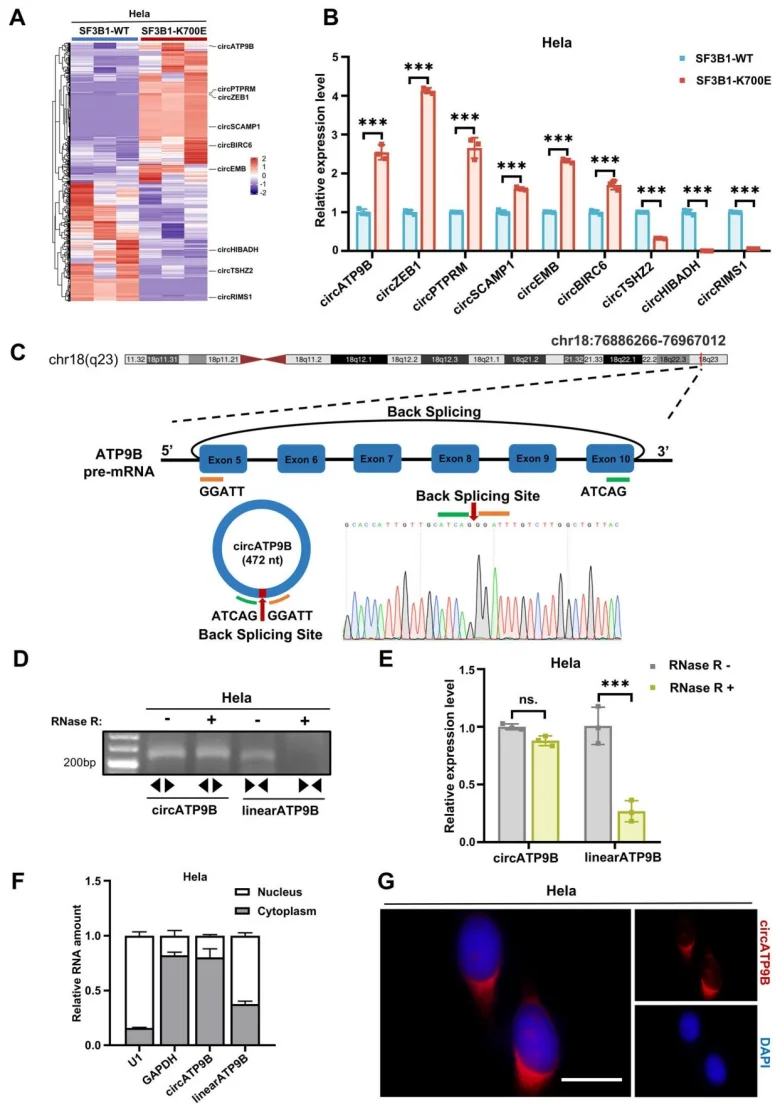
Fig. 1. Identification and Characterization of circATP9B
To explore the function of circATP9B, the authors performed mass spectrometry to identify proteins interacting with circATP9B. The results revealed a significant interaction between circATP9B and MYH9 . Overexpression of circATP9B decreased MYH9 protein levels without affecting MYH9 mRNA expression, indicating that circATP9B regulates MYH9 expression at the post-transcriptional level. Further experiments demonstrated that circATP9B overexpression reduced MYH9 protein stability and significantly increased its ubiquitination, suggesting that circATP9B promotes MYH9 degradation through the ubiquitin-proteasome pathway .
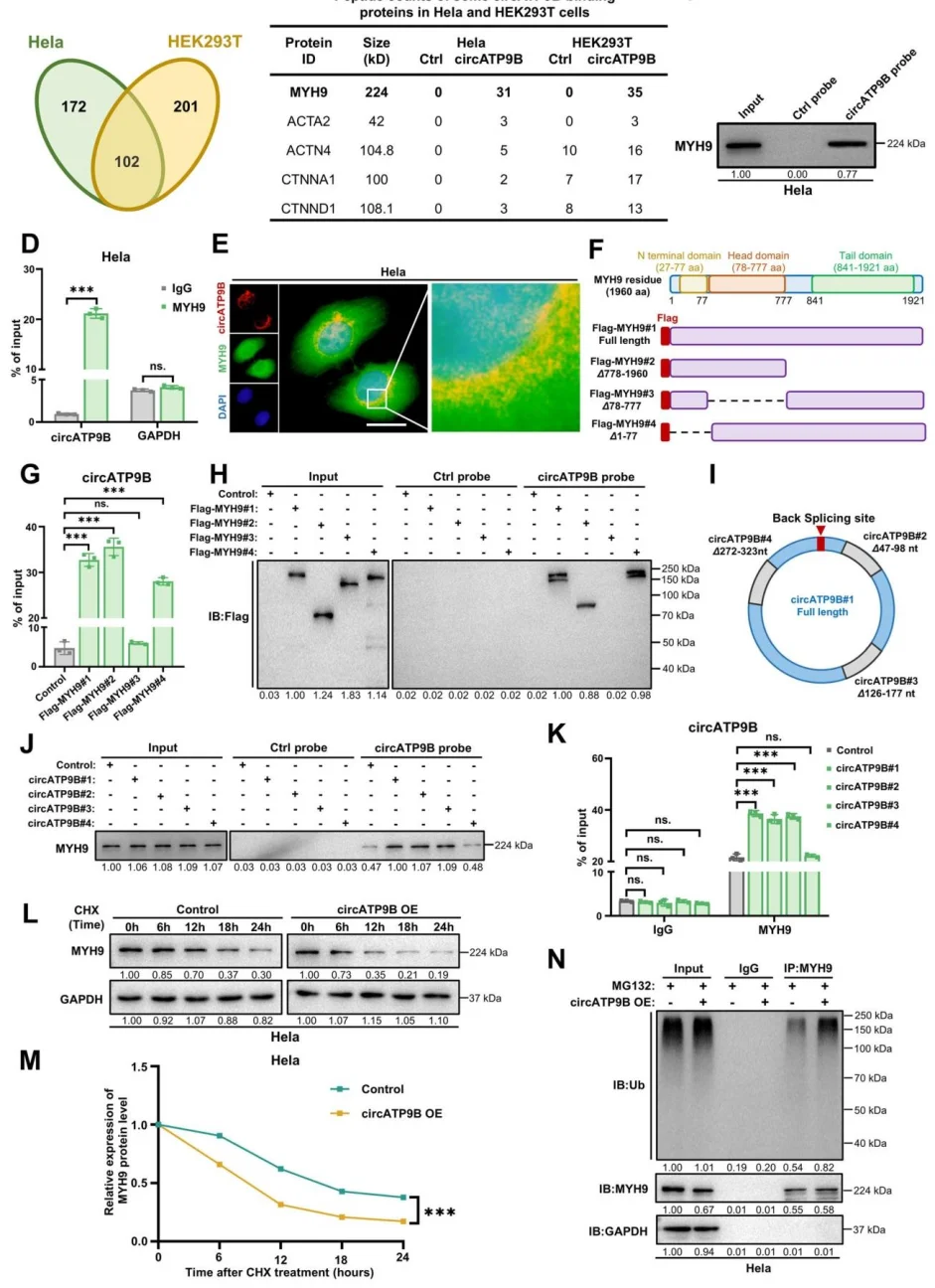
Fig. 2. CircATP9B promotes MYH9 degradation via ubiquitin-proteasome pathway
MYH9, a member of the non-muscle myosin family, maintains cell morphology and motility through the formation of actin filaments. Recent studies have shown that upon DNA double-strand breaks, actin filaments form at DNA damage sites within the nucleus and promote the movement and clustering of damage sites, thereby enhancing the accuracy and efficiency of DNA repair. The authors therefore investigated the role of MYH9 in DNA repair and nuclear actin filament formation. In cells treated with radiation to induce DNA damage, MYH9 knockdown inhibited the repair of DNA damage sites, and MYH9-knockdown cells were more sensitive to the DNA repair inhibitor olaparib, indicating that MYH9 knockdown causes DNA repair defects. Live-cell imaging revealed that MYH9 knockdown impaired the assembly of nuclear actin filaments upon DNA damage and significantly suppressed the movement and clustering of DSBs, demonstrating that MYH9 promotes DNA repair by participating in the assembly of nuclear actin filaments .
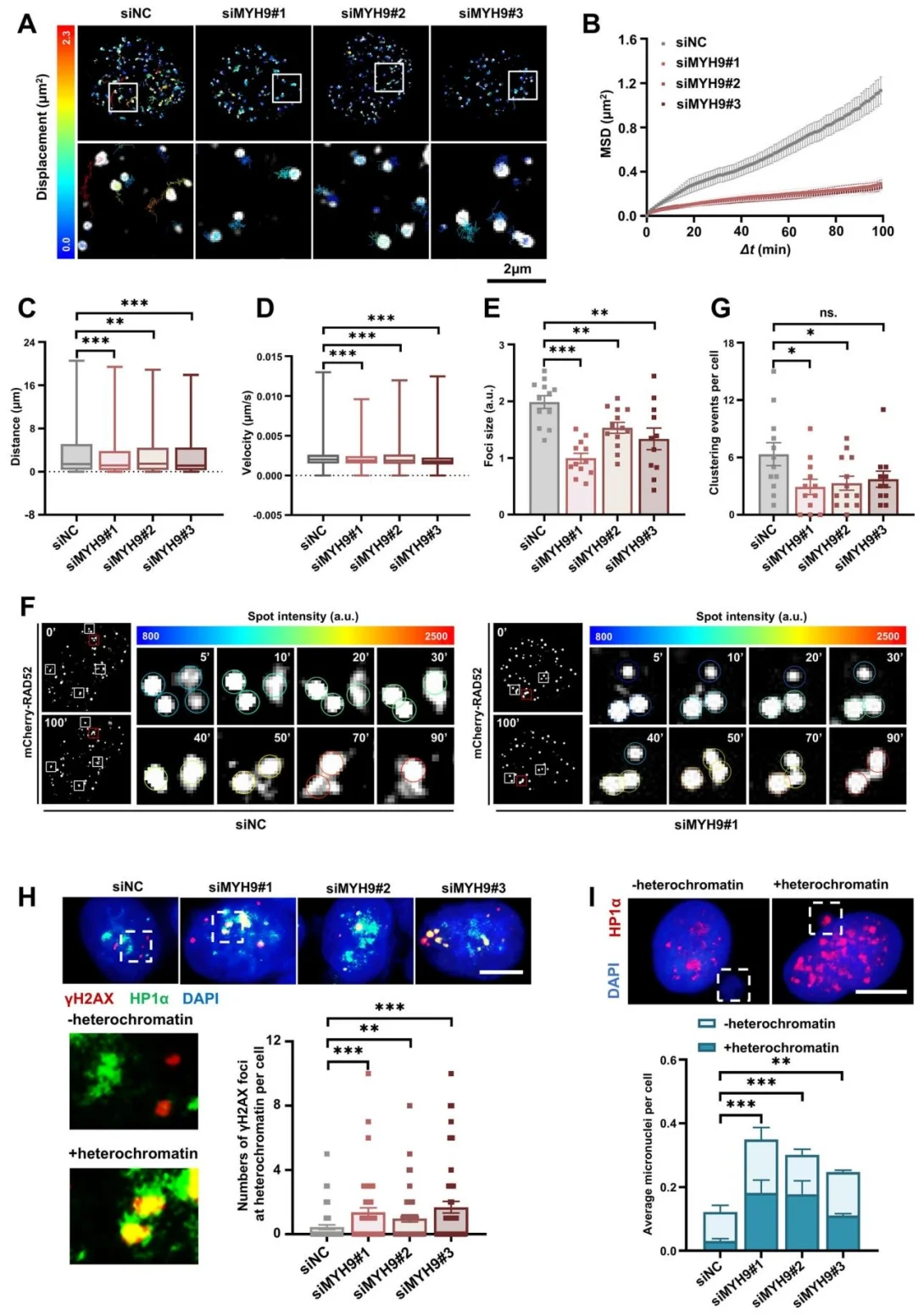
Fig. 3. MYH9 promotes the mobility and clustering of DSBs
Overexpression of circATP9B inhibited actin filament assembly and DNA repair, and these inhibitory effects were reversed by restoring MYH9 expression in circATP9B-overexpressing cells, indicating that circATP9B suppresses DNA repair through promoting MYH9 degradation. Xenograft tumor experiments showed that olaparib treatment significantly inhibited the growth of circATP9B-overexpressing tumor cells, further confirming that circATP9B suppresses DNA repair. Knockdown of circATP9B alleviated the inhibitory effect of SF3B1 mutation on nuclear actin filament assembly, improved the movement and clustering of DSBs in cells harboring SF3B1 mutations, and consequently enhanced the repair of damaged DNA, demonstrating that circATP9B mediates the suppression of DNA repair caused by SF3B1 mutation .
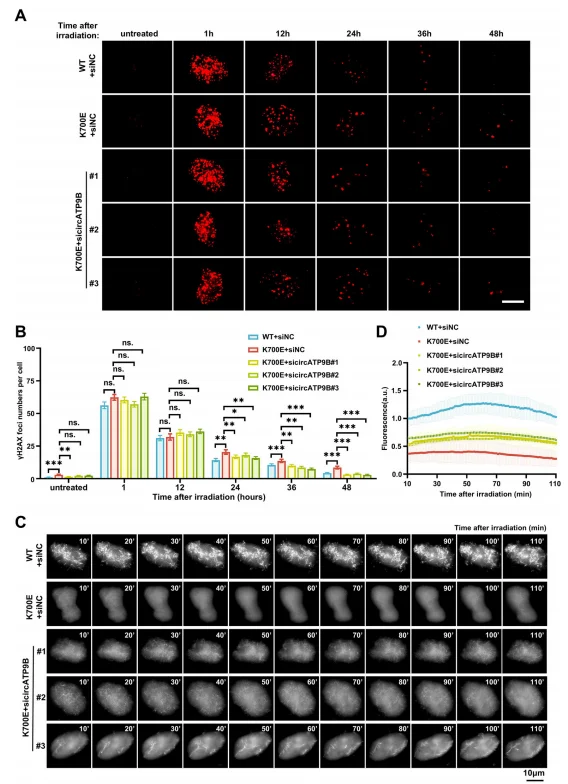
Fig. 4. CircATP9B knockdown alleviates the deficits in DNA repair caused by SF3B1 mutation
Summary
Through multi-omics screening, molecular interaction studies, live-cell dynamic tracking, and in vivo models, this study demonstrates that the tumor SF3B1-K700E mutation upregulates circATP9B, which binds to and promotes the ubiquitination and degradation of MYH9. MYH9 deficiency disrupts the assembly of the nuclear actin network, impairs the relocalization and clustering of heterochromatic DSBs, suppresses homologous recombination repair, and results in genomic instability. Inhibition of circATP9B or restoration of MYH9 reverses this repair defect, and high circATP9B expression sensitizes tumors to PARP inhibitors. This study reveals a non-canonical circRNA-mediated pathway by which SF3B1 mutation drives tumor progression, providing new insights for targeted therapy of SF3B1-mutant malignancies.
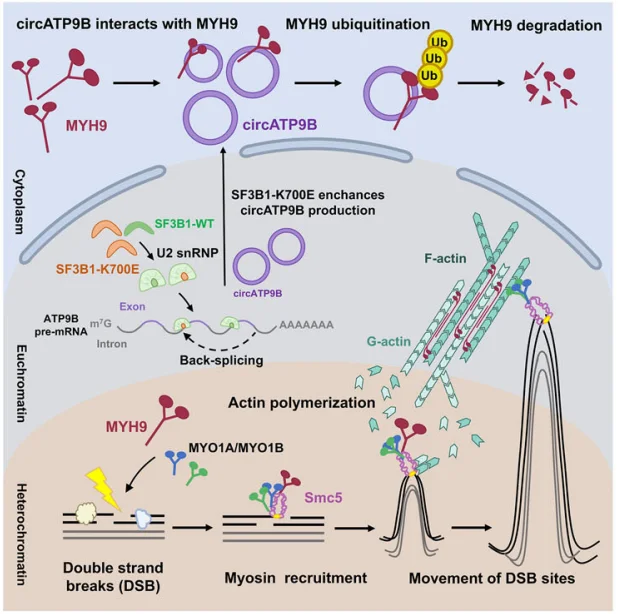
Fig. 5. Research Mechanism
Support Provided by Ubigene
In this study, the SF3B1-mutant K562 cell model provided by Ubigene played a critical role in revealing the non-canonical circRNA-mediated pathway by which SF3B1 mutation drives tumor progression.
Ubigene, built upon its proprietary EZ-editor™ gene editing platform, has launched the next-generation precision editing system — EZ-HRex™ technology. Through comprehensive technical optimization, this system significantly enhances HDR efficiency for point mutations and large-fragment knock-ins, with HDR-positive genotypes reaching up to 90% at the cell pool level.
If you have customized point mutation cell line construction needs, we offer end-to-end customized services with tailored experimental strategies to efficiently solve your gene modification challenges. Welcome to contact us for more information!
 Promotions