
Stable Cell Line Construction: Principles, Protocols, Application and FAQs

Introduction
In molecular biology and cell engineering research, stable cell lines serve as vital tools for achieving long-term stable gene expression, functional validation, and drug screening. Unlike transient transfection, which only offers short-term expression, stable cell lines integrate foreign genes into the host genome. This allows the genetic material to be stably inherited as the cells divide, making them widely utilized in protein production and disease mechanism studies.
I. Core Mechanism of Stable Cell Line Construction
The core mechanism behind developing a stable cell line is to deliver the foreign nucleic acid fragments carries the gene of interest and selection markers into host cells. These fragments are integrated into the host cell's chromosomal genome, followed by antibiotic selection and monoclonal isolation, to ultimately obtain a cell population capable of long-term, stable expression of the target gene (or continuous knockdown of an endogenous gene).
Based on the editing outcomes, these are categorized into two major application fields:
- Gene Overexpression Stable Cell Lines: Foreign functional genes are introduced and driven by strong promoters to achieve continuous transcription and translation. This upregulates target protein expression levels, making it ideal for gain-of-function studies.
- Gene Knockdown Stable Cell Lines: Utilizing technologies such as shRNA or miRNA interference vectors to target endogenous gene mRNA or modulates transcription start sites, this specifically downregulates the transcription and protein expression levels of the target gene without disrupting the genomic sequence. It is applicable for loss-of-function studies, redundant gene validation, and pathogenic gene silencing, effectively overcoming the irreversible limitations associated with gene knockout.
Exogenous gene integration relies on two mechanisms: virus-mediated site-specific integration (e.g., lentivirus), which offers high integration efficiency and low randomness; and random integration via plasmid transfection, completed through the cellular non-homologous end joining (NHEJ) pathway, which yields lower integration efficiency. The antibiotic resistance or fluorescent markers carried by the vector serve as the selection criteria for identifying positive cells.
II. General Protocol for Stable Cell Line Development
Using lentivirus-mediated overexpression stable cell line construction as an example, the overall workflow is outlined below:
1. Vector Design and Construction
- Select an appropriate expression vector (lentiviral backbone vectors with strong EF1α/CMV promoters are preferred).
- Insert the gene of interest (GOI).
- Confirm optional fusion tags (e.g., Flag, HA, GFP).
- Confirm selection markers (e.g., Puromycin).
2. Lentiviral Packaging
- Co-transfect the following components into 293T cells: Expression vector, packaging plasmid (psPAX2), and envelope plasmid (pMD2.G).
- Harvest the viral supernatant approximately 48-72 hours post-transfection.
- Purify the supernatant.
3. Cellular Transduction
- Select the target cell line (e.g., HeLa, HEK293, A549).
- Add the viral supernatant along with polybrene to enhance transduction efficiency.
- Replace with fresh culture medium after approximately 24-48 hours.
4. Antibiotic Selection
- Apply the corresponding antibiotic (the concentration should be determined beforehand via a kill curve pre-experiment on the parental cells).
- Maintain selection for 3-7 days until all cells in the non-transduced control group have died.
5. Stable Pool Expansion and Validation
- Expand the surviving cell population (stable pool).
- Validate target gene expression levels using the following methods:qPCR (mRNA level)/ Western Blot (protein level)/ Fluorescence Microscopy (if carries a GFP tag)
6. Single-cell Isolation (Optional)
- Limited dilution or fluorescence-activated cell sorting (FACS).
- Screen and expand to obtain single-cell clones with highly uniform expression.
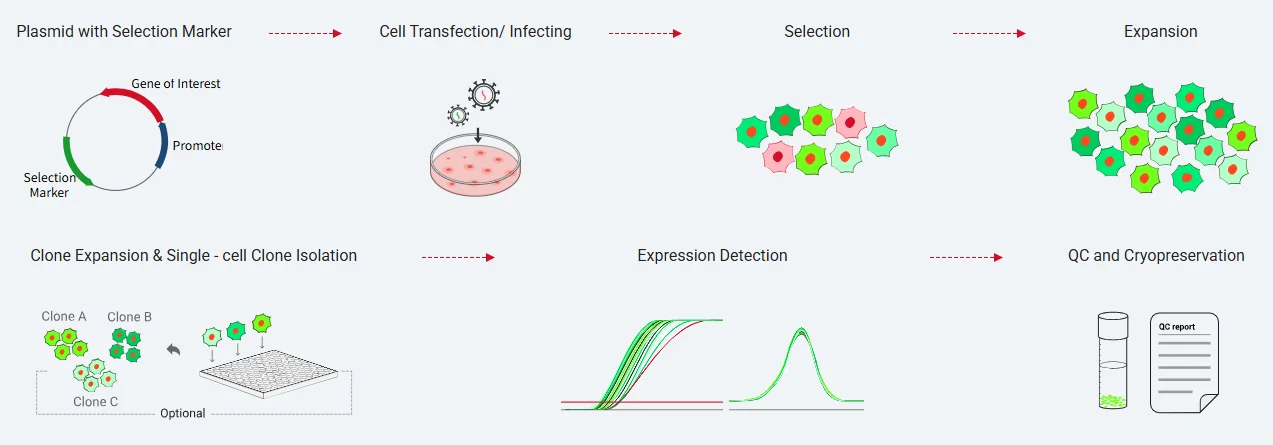
Figure 1. Workflow of Overexpression Stable Cell Line Construction by Ubigene
III. Application Cases
1. PRDX5 Protein Overexpression in LNCaP Cells
This study utilized two engineered cell lines provided by Ubigene: a CRISPR-Cas9 PRDX5 knockout 22Rv1 cell line and a lentivirus-mediated PRDX5 overexpression LNCaP cell line. The researchers uncovered a new mechanism where PRDX5 drives castration-resistant prostate cancer (CRPC) progression by modulating redox homeostasis. Furthermore, they evaluated the therapeutic efficacy of Polaprezinc (POL), a small-molecule drug targeting PRDX5, across cellular, animal, and clinical models. This study identifies a novel clinical target for prostate cancer drug resistance and highlights the therapeutic potential of combining POL with abiraterone to extend the survival lifecycle of CRPC patients.
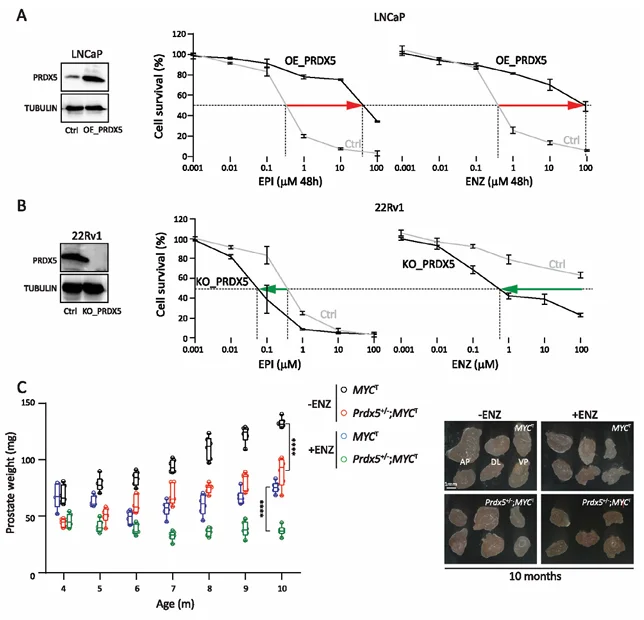
Figure 2. Crucial Role of PRDX5 in AR Inhibitor Resistance and CRPC Progression
2. ACE2 Protein Overexpression in HeLa and HepG2 Cell Lines
To validate the cellular affinity of Angiotensin-Converting Enzyme 2 (ACE2), the authors utilized ACE2-overexpressing HeLa and HepG2 cell lines developed by Ubigene. For the first time, they successfully synthesized 124I-RBD as a novel molecular targeting probe for COVID-19. Binding assays between the receptor-binding domain (RBD) and human ACE2 receptors confirmed that the RBD probe exhibits high affinity and specificity toward ACE2.
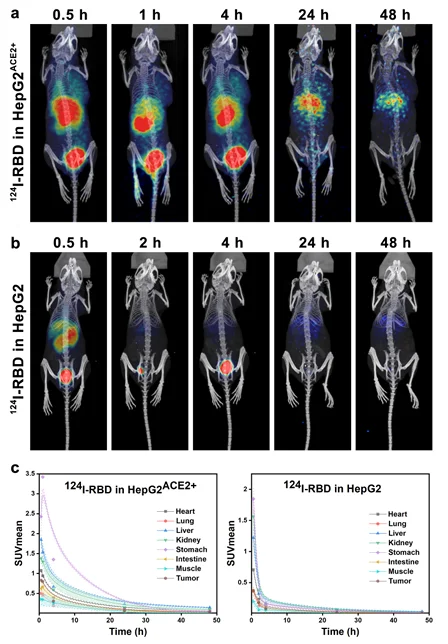
Figure 3. Micro-PET Imaging of Tumor Models
IV. FAQs
Q1: What is the difference between stable cell lines and transiently transfected cells?
A: In transient transfection, the foreign gene does not integrate into the host genome and typically expresses for only 3–7 days, making it ideal for short-term validation. In contrast, stable cell lines have the gene integrated into the genome, allowing long-term passage and expression with superior uniformity, which is essential for extended experimental timelines and industrial applications.
Q2: Is it mandatory to perform single-cell isolation for stable cell lines?
A: Single-cell isolation is not always necessary. If the stable pool exhibits uniform expression and meets experimental requirements, monoclonal isolation can be skipped. However, for applications requiring high expression uniformity, single-cell isolation is recommended.
Q3: What causes massive cell death during antibiotic selection?
A: This is highly likely due to omitting a kill curve pre-experiment, resulting in an excessively high antibiotic concentration; alternatively, it could be caused by an expression defect in the vector's resistance gene. We recommend re-optimizing the lethal concentration of the cells and verifying the integrity of the resistance cassette on the vector.
Q4: What factors lead to low transduction efficiency during stable cell line construction?
A: Common factors include an insufficient Multiplicity of Infection (MOI), inadequate or missing polybrene, poor cell condition (such as over-confluency or excessive passage numbers), or low viral titers.
V. Summary
By leveraging genomic integration, stable cell line development follows a standardized pipeline: vector construction, gene delivery, antibiotic selection, single-cell isolation, and validation. This ensures a sustainable, long-term output for either gene overexpression or knockdown. Because of their excellent uniformity and transducibility, stable cell lines remain foundational tools across basic scientific research, drug discovery, and recombinant protein manufacturing.
Ubigene Stable Cell Lines
Ubigene offers more than 2,000 off-the-shelf stable cell lines covering a broad range of research applications. Our portfolio includes Luciferase Stable Cell Lines, EGFP fluorescent cell lines, Cas9 gene editing tool cell lines, OVAL immune research tool cell lines, and a wide variety of gene overexpression cell lines. All cell lines are low-passage, highly viable, and quality-controlled to ensure optimal performance, meeting the diverse needs of academic institutions, pharmaceutical companies, and hospital research laboratories.
Our stable cell lines are generated using either lentiviral transduction or Ubigene's proprietary EZ-OE™ technology, enabling precise genomic integration and stable single-copy gene expression. Compared with conventional approaches, EZ-OE™ provides improved expression uniformity and long-term stability while significantly reducing development timelines and overall costs. This robust and efficient platform supports both basic research and industrial applications with reliable, reproducible results.
Welcome to contact us for your exclusive technical proposal and quotation! >> Promotions