
Ubigene Luc Cells in Radio-Immunotherapy Study (IF=26.6)


Introduction
Radiotherapy (RT) is used in more than half of cancer patients. However, traditional radiosensitizers mainly enhance cytotoxicity by increasing reactive oxygen species (ROS), which is less effective in hypoxic tumors and may damage healthy tissues. The team led by Prof. Yuanzeng Min at the University of Science and Technology of China published a research paper titled "X-ray activated platinum complex induces DNA damage and enhances cancer immunotherapy through abscopal effect" in Nature Biomedical Engineering (IF=26.6). This study developed an azido platinum(II) complex (Complex 1) . Upon X-ray exposure, it releases platinonitrene, which covalently binds to nucleophilic sites on DNA bases via a non-ROS dependent pathway, inducing double-strand breaks. When combined with low-dose radiotherapy and PD-1 inhibitors, it achieved complete regression of bilateral tumors in 40% of mice, demonstrating a potent abscopal effect. This provides a novel metallonitrene-mediated strategy for precision radiotherapy. Ubigene Biosciences provided GL261-Luc cells for this study, enabling efficient evaluation of therapeutic efficacy in an orthotopic brain tumor model.
Background
Radiotherapy exerts antitumor effects mainly by damaging DNA, but its efficacy on metastatic tumors is limited. Immune checkpoint inhibitors (ICIs) can synergize with RT to amplify the abscopal effect, but this is constrained by RT dose and tumor radiosensitivity. Metallonitrenes are highly reactive catalytic intermediates with the potential to react with DNA bases to enhance radiosensitivity. However, current research focuses on UV activation, which is not feasible for in vivo applications. Meanwhile, classical platinum drugs coordinate with DNA via Pt-N bonds, suffering from toxicity and resistance. There is an urgent need to develop platinum-based radiosensitizers with a completely novel mechanism of action.
Objectives
- Develop an X-ray-activated platinum complex and validate its radiosensitizing activity both in vitro and in vivo.
- Elucidate the novel molecular mechanism of DNA damage mediated by platinonitrene.
- Evaluate the antitumor efficacy, abscopal effect, and biosafety of this complex in combination with radiotherapy and immunotherapy.
- Validate its therapeutic potential in models including orthotopic glioblastoma.
Workflow
- Molecular Validation: Confirm that Complex 1 generates platinonitrene upon X-ray irradiation and binds to DNA via N–N coupling (distinct from classical Pt-N coordination).
- In Vitro Validation: Demonstrate that 1 + RT induces DNA double-strand breaks and immunogenic cell death (ICD) in a non-ROS-dependent manner.
- In Vivo Single-Tumor Validation: Show that 1 + RT inhibits tumor growth, activates antitumor immunity, and selectively reduces Treg infiltration.
- Abscopal Effect Validation: 1 + RT + αPD-1 synergistically suppresses bilateral tumors, achieving a high rate of complete regression.
- Safety and Immune Memory Validation: Assess systemic toxicity and confirm long-lasting immune memory and therapeutic potential in brain tumors.
Key Findings
1. Complex 1 generates platinonitrene upon RT and covalently binds to DNA
Upon X-ray irradiation, Complex 1 releases N₂ to generate platinonitrene. Mass spectrometry captured the reaction products of this intermediate with DMS and cytosine. DFT calculations indicate that platinonitrene binds to DNA via N–N coupling (Pt–N–N–DNA) , which is distinct from the classical Pt-N coordination structure. The binding site is the amine group of cytosine bases in the major groove of the GC step. Natural bond orbital analysis confirmed the platinonitrene character of Pt(II)–N, with a Pt–N Mayer bond order of 1.15, indicating a stable structure.
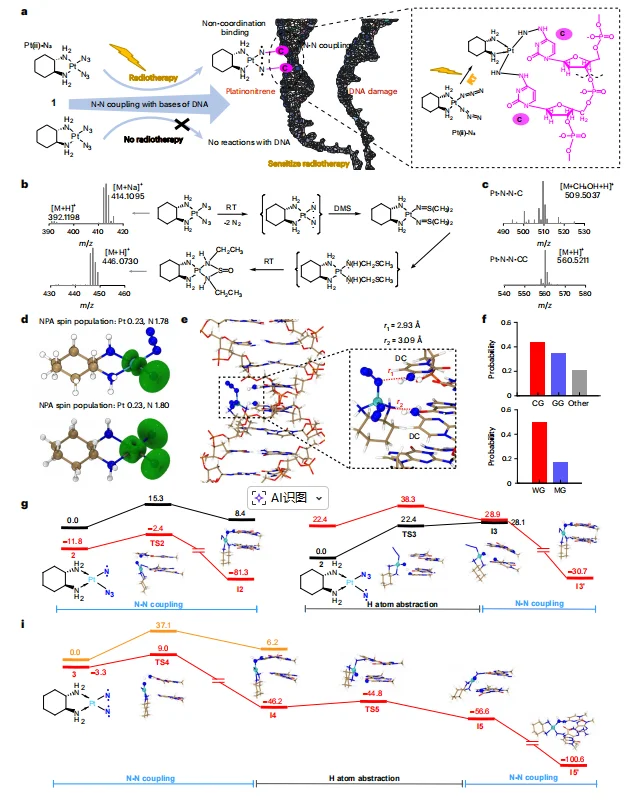
Fig. 1 Generation of platinonitrene with complex 1 upon RT and its DNA platination via N-N coupling
2. Sensitization of 1 to RT induces enhanced ICD and DNA damage
Apoptosis detection showed that the proportion of late apoptotic cells in the 1+RT group was 2.4-fold higher than that in the RT-alone group, with a significant reduction in mitochondrial membrane potential. 1+RT eliminated ROS and superoxide anions in tumor cells, confirming a non-ROS-dependent sensitization pathway. The expression of CRT and HMGB1 in tumor tissues was increased by 2-3 fold, and ATP secretion was increased by 1.5-fold. γH2AX expression was significantly elevated, and the comet assay showed the highest percentage of tail DNA, indicating the strongest double-strand break effect. The clonogenic assay confirmed a significantly enhanced killing effect of radiotherapy.
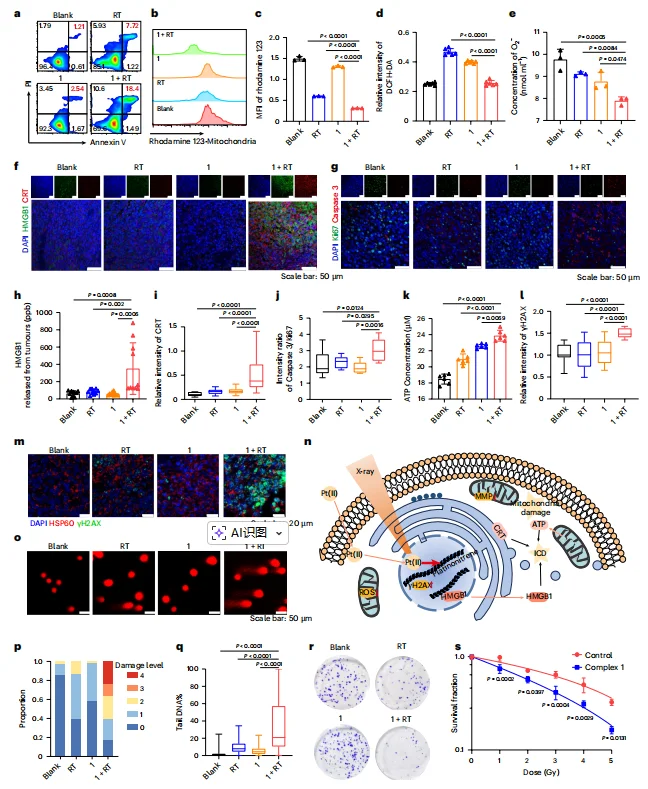
Fig. 2 Complex 1-sensitized RT induces enhanced cytotoxicity, exhibits stronger DNA damage and induces more robust immunogenic cell death in CT26 cells.
3. Complex 1 exerts potent antitumoural responses when treated with RT
In CT26 and 4T1 tumor models, tumor growth in the 1+RT group was significantly slower than in other groups, with approximately 1/3 of mice being completely cured and showing prolonged survival. In the 4T1 model, the number of lung metastasis nodules in the 1+RT group was significantly lower than in other groups. The proportion of CD80⁺CD86⁺ mature DCs in tumor-draining lymph nodes was increased by 2-3 fold. Tumor-infiltrating CD45⁺CD3⁺ T cells and CD8⁺ T cells doubled, while the proportion of Treg cells was only 16% of that in the control group. The proportions of CD8⁺IFNγ⁺ and CD8⁺CD107a⁺ cells increased, and the secretion of IFNγ and Granzyme B in tumor tissue was significantly elevated. GSEA showed an enhanced response of the PD-1/PD-L1 pathway.
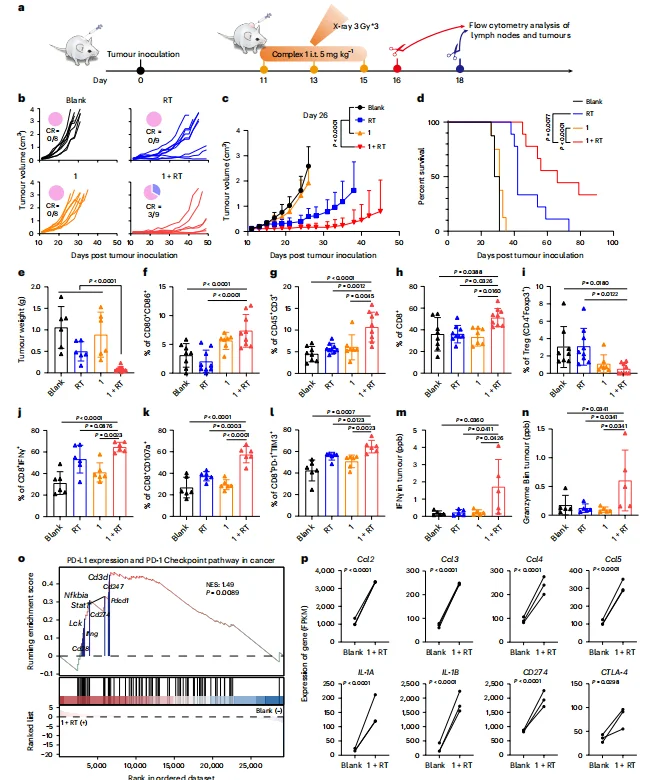
Fig. 3 Complex 1-sensitized RT effectively inhibits the growth of established CT26 tumours
4. RNA-seq confirms that Complex 1-sensitized RT remodels the tumor immune microenvironment
PCA analysis showed significant differences in gene expression profiles among groups. The 1+RT group had a unique expression pattern, with significantly higher stromal, immune, and ESTIMATE scores, and lower tumor purity. Differentially expressed genes were enriched in pathways such as innate immunity, inflammatory response, and T-cell activation, indicating a multidimensional immune response. The proportion of activated CD8⁺ T cells increased while Treg proportion decreased, consistent with flow cytometry results.
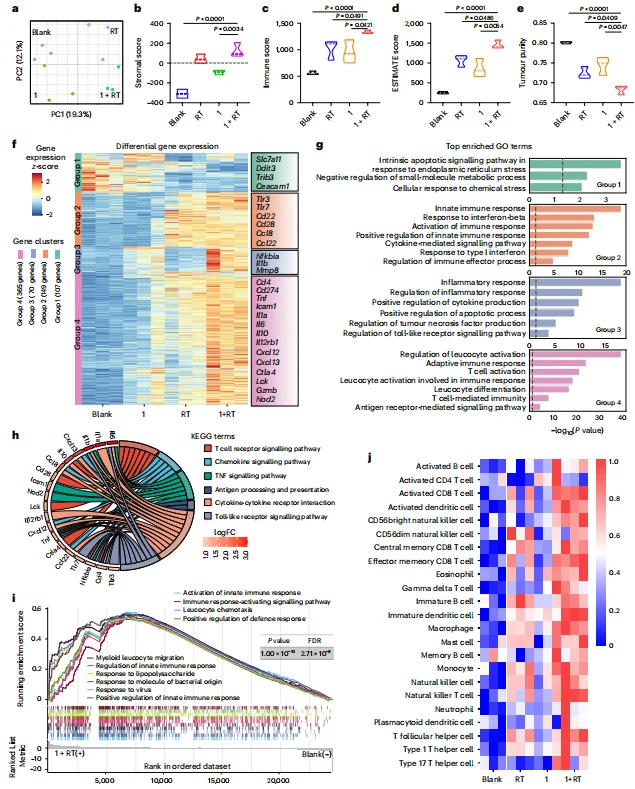
Fig. 4 RNA-seq of CT26 tumour tissues suggests that complex 1-sensitized RT induced immune cell infiltration into the TME.
5. Complex 1 selectively inhibits Treg cell proliferation
At concentrations ≥2.0 μg/ml, Complex 1 selectively inhibited Treg proliferation, without affecting CD4⁺ or CD8⁺ T cell proliferation. It reduced the Treg proportion by inhibiting proliferation rather than inducing apoptosis, with no obvious cytotoxicity at low concentrations.
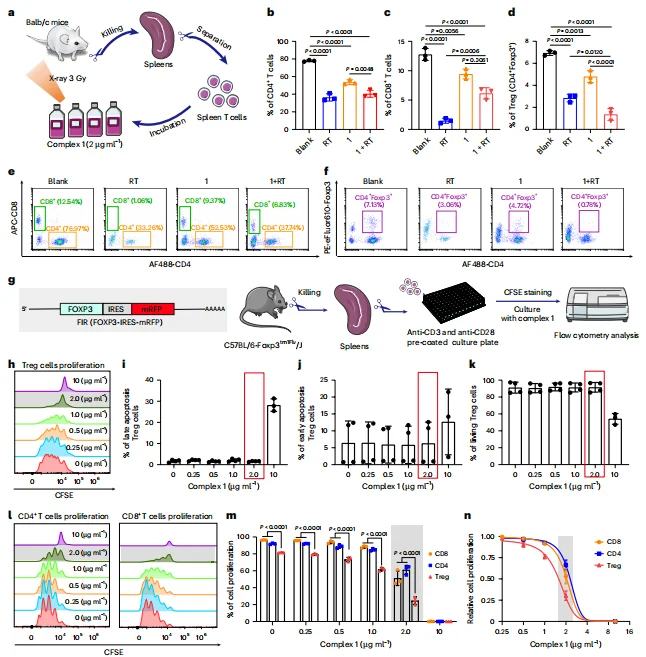
Fig. 5 Complex 1 itself could inhibit Treg cell proliferation.
6. Low-dose radiosensitization enhances the abscopal effect
In the 1+RT+αPD-1 group, the efficacy of αPD-1 was significantly improved, with 20% of mice being completely cured. When treatment was given only to the primary tumor, the 1+RT+αPD-1 group showed significant regression of both primary and secondary tumors, with 40% of mice achieving complete bilateral tumor regression. In both primary and secondary tumors, CD45⁺CD3⁺ and CD8⁺ T cells were elevated, Treg cells were reduced, and the CD8⁺/Treg and CD4⁺/Treg ratios were significantly increased. Dendritic cell maturation in draining lymph nodes was also enhanced.
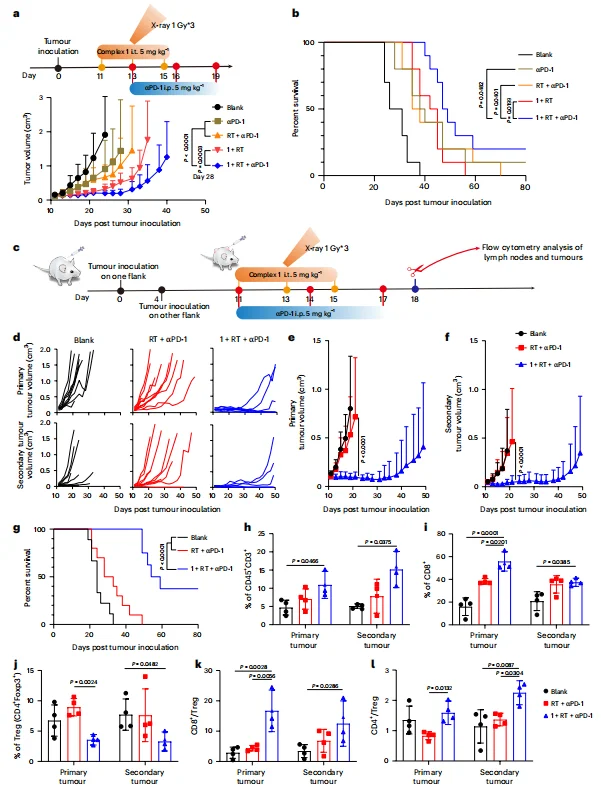
Fig. 6 Complex 1-sensitized RT enhances immunotherapy and the abscopal effect on syngeneic CT26 tumour model.
7. Reliable biosafety and long-lasting immune memory effect
Complex 1 caused no obvious damage to the heart, liver, spleen, lung, or kidneys, and showed no significant nephrotoxicity. Compared with oxaliplatin, it caused no liver or kidney damage. The proportion of effector memory T cells (CD44⁺CD62L⁻) in the peripheral blood of cured mice was significantly elevated. When rechallenged with tumor cells, the cured mice completely resisted tumor growth, demonstrating long-term protective immunity. Complex 1 was able to enter the brain, and 1+RT significantly inhibited the growth of orthotopic glioblastoma and prolonged mouse survival.
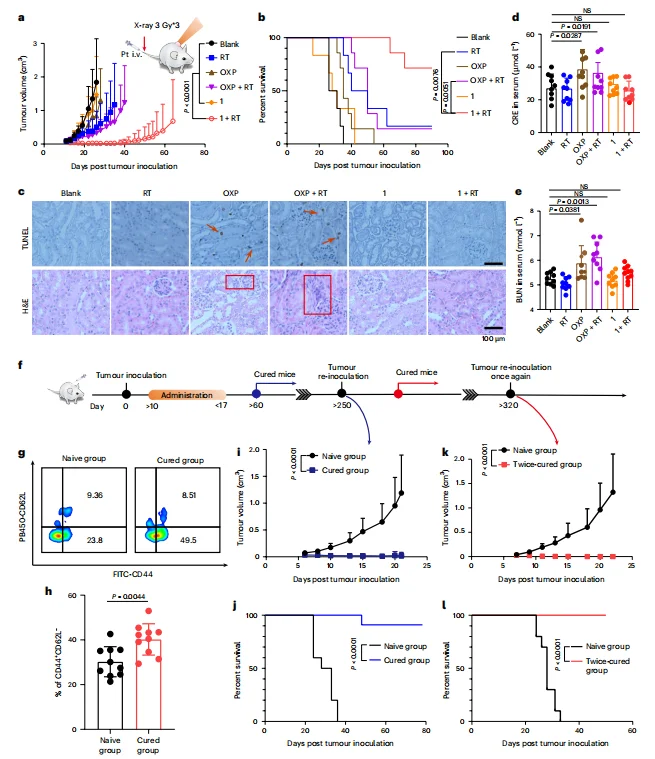
Fig. 7 Complex 1-sensitized RT has reliable biosecurity and derives long lasting immune memory effect on syngeneic CT26 tumour model.
Significance and Innovations
Developed the first X-ray-activated, non-ROS-dependent platinonitrene-based radiosensitizer, rather than the mechanism of traditional platinum drugs and radiosensitizers, and making breakthrough of radiotherapy resistance in hypoxic tumors. Possesses dual functions: radiosensitization and selective Treg inhibition. Combined with immunotherapy, it strongly amplifies the abscopal effect, offering a new strategy for metastatic tumors. Effective in orthotopic glioblastoma and other hard-to-treat solid tumors, covering a broad range of cancer types and scenarios for radio-immunotherapy.
Summary
This study successfully developed an X-ray-activatable azido platinum complex that generates platinonitrene upon radiotherapy, which covalently damages DNA through N–N coupling, sensitizing radiotherapy in a non-ROS-dependent manner. Simultaneously, it selectively inhibits Treg proliferation, remodels the tumor immune microenvironment, and achieves a potent abscopal effect and long-term immune memory when combined with PD-1 inhibitors. This strategy is safe and effective, providing a new paradigm for precision radiotherapy and cancer immunotherapy, with high potential for clinical translation.
Assistance from Ubigene Bioscieneces
In this study, Ubigene provided GL261-Luc cells as an orthotopic glioblastoma in vivo tracing model. By quantitatively comparing the bioluminescence signal with that of wild-type GL261 cells, the study visually and accurately validated the molecular mechanisms and in vivo efficacy of the X-ray-activated azido platinum complex in inhibiting brain tumors and enhancing immunotherapy.
Contact us to learn more >>>Ubigene Luc Cells
Ubigene offers over 300 Luc cell lines , validated by multiple highly cited publications, stably expressing Firefly Luciferase. It features strong specificity and high sensitivity, high imaging quality, and precisely quantifiable bioluminescence intensity. With low passage numbers, high viability, and excellent cell status, these lines efficiently support your research in transcription factor regulatory mechanisms, in vivo imaging, and cell tracing experiments.
 Promotions